menu

Spray Foam Roofing in Orlando – Minimize Downtime and Extend Asset Life for Commercial Properties

SPF roofing systems deliver superior thermal performance and waterproofing for warehouses, retail centers, and industrial facilities across Central Florida, reducing energy costs and eliminating the chronic leak cycles that disrupt operations.

Slider Image 1
Slider Image 2
Slider Image 3
Slider Image 4
Slider Image 5
Slider Image 7
Slider Image 8
Slider Image 9
Slider Image 10
Slider Image 11

Why Orlando's Climate Punishes Traditional Commercial Roofing

Orlando's subtropical climate creates a corrosive environment for commercial roofing. Sustained UV exposure, thermal expansion from 90-degree summer heat, and afternoon thunderstorms that dump two inches of rain in 30 minutes degrade conventional built-up roofing and single-ply membranes faster than national averages. You are managing a facility where roof failures trigger inventory loss, operational shutdowns, and insurance claims that impact your loss ratio.

Most commercial roofs in the Orlando metro fail prematurely because seams separate under thermal cycling. Ponding water from Florida's flat topography accelerates membrane degradation. Traditional systems require disruptive tear-offs every 15 years, forcing you to relocate operations or risk contamination from construction debris. Spray polyurethane foam roofing eliminates these failure points by creating a monolithic, seamless barrier that flexes with substrate movement and sheds water through positive drainage slopes built into the application.

The Central Florida humidity also breeds algae and mold on organic roof substrates, increasing maintenance costs and creating liability exposure. SPF roof systems resist biological growth because the closed-cell foam provides no nutrient source. For distribution centers in areas like MetroWest or medical facilities near Lake Nona, this means lower operational risk and fewer compliance headaches with indoor air quality standards.

Commercial spray foam roofing also provides a solution for aging metal roofs common in Orlando's industrial corridors. Rather than replacing corrugated panels showing rust perforation, SPF roofing restores these structures without removing the existing roof, cutting project timelines by 60 percent and keeping your facility operational.

Why Orlando's Climate Punishes Traditional Commercial Roofing
How Polyurethane Foam Roofing Delivers ROI Through Energy Efficiency and Longevity

How Polyurethane Foam Roofing Delivers ROI Through Energy Efficiency and Longevity

An SPF roof system works by applying liquid polyurethane foam that expands to create a rigid, insulating layer with an R-value of 6.5 per inch. This closed-cell structure blocks thermal transfer more effectively than any conventional commercial roofing material, directly reducing HVAC load. For a 50,000-square-foot warehouse in Orlando, this translates to measurable monthly utility savings, particularly during June through September when cooling costs peak.

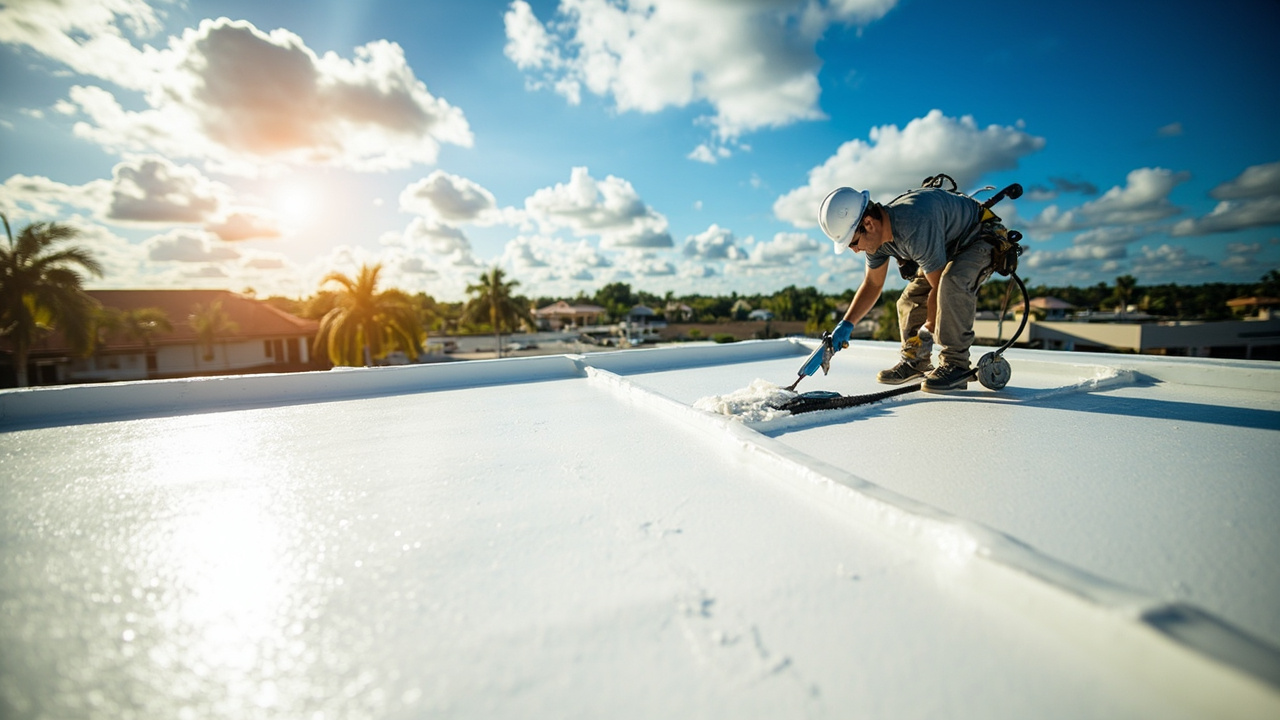
The application process begins with substrate preparation. We power wash and repair the existing roof deck, addressing any structural deficiencies before foam application. The existing roof remains in place, which eliminates landfill tipping fees and reduces project cost. We then spray the two-component polyurethane mixture in multiple passes, building thickness to meet your insulation requirements and creating positive drainage slopes to eliminate standing water.

Once the foam cures, we apply an elastomeric coating system that provides UV protection and weatherproofing. This top coat is not optional. Raw polyurethane foam degrades under direct sun exposure within months. The elastomeric layer, typically silicone or acrylic-based, creates a reflective surface that meets Title 24 and ENERGY STAR standards for cool roofing. This coating also allows for simple maintenance. Unlike membrane roofs that require full replacement when damaged, you recoat an SPF roof system every 10 to 15 years to extend service life indefinitely.

For facilities with rooftop equipment, spray foam roofing simplifies penetration management. The foam conforms to irregular shapes and seals around HVAC curbs, plumbing vents, and conduit penetrations without the complex flashing details required by membrane systems. This reduces future leak points and lowers long-term maintenance costs.

What Happens During a Commercial SPF Roof Installation

Spray Foam Roofing in Orlando – Minimize Downtime and Extend Asset Life for Commercial Properties
01

Facility Assessment and Specification

We conduct a structural load analysis to verify your roof deck can support the additional weight of the SPF system, typically three to four pounds per square foot. We document existing drainage issues, identify areas requiring substrate repair, and measure insulation requirements based on your facility's energy profile. You receive a detailed specification that defines foam thickness, coating type, and project timeline, allowing you to plan for minimal operational disruption.
02

Surface Preparation and Application

Our crew isolates the work area to prevent overspray contamination, particularly important for food service or medical facilities. We clean the existing roof surface, make structural repairs, and install temporary weather protection if needed. Foam application occurs in controlled passes, building thickness uniformly across the roof plane. We create tapered slopes to direct water toward existing drains and scuppers. The entire foam application for a typical 40,000-square-foot facility takes two to four days under favorable weather conditions.
03

Coating and Quality Verification

After foam cure, we apply the elastomeric coating system in multiple passes to achieve the specified mil thickness, typically 20 to 30 mils total. We conduct pull tests to verify adhesion strength and provide photographic documentation of the completed installation. You receive a detailed maintenance protocol outlining inspection schedules and recoating intervals. The roof is fully walkable and ready for equipment service within 24 hours of final coating application, restoring full building functionality with zero interior disruption.

Why Central Florida Facility Managers Choose Local SPF Roofing Expertise

Commercial spray foam roofing requires specific knowledge of Florida Building Code wind load requirements and High Velocity Hurricane Zone compliance. Orlando falls under the 140 mph wind speed zone, which mandates engineered attachment methods and foam density specifications that differ from standard applications. A contractor unfamiliar with these requirements creates liability exposure that surfaces during your next insurance inspection.

We understand how afternoon thunderstorms affect application schedules. Polyurethane foam reacts with moisture, creating voids and poor adhesion if applied when humidity exceeds 85 percent or when rain is imminent. Our crews monitor weather closely and adjust schedules to protect your investment. We also understand the permitting requirements specific to Orange County and surrounding jurisdictions, ensuring your project remains compliant and avoiding stop-work orders that extend timelines.

Many facility managers in Orlando deal with aging built-up roofing over lightweight concrete decks, common in structures built from the 1970s through 1990s. These substrates require specific surface preparation techniques to ensure proper foam adhesion. We have restored hundreds of these roofs across the metro area, from industrial parks in Pine Hills to retail centers in Hunters Creek. This experience means we identify substrate issues before they become project delays.

You also need a contractor who understands commercial operations. We schedule work to minimize impact on your business hours, coordinate with your facility team on equipment shutdown requirements, and maintain strict safety protocols that protect your employees. For multi-tenant properties, we manage tenant communication to address concerns about noise, access, and odor during application.

All Pro Roofing Orlando provides detailed documentation required for your facility management records, including thermal imaging reports, core samples showing installed thickness, and coating mil depth verification. This documentation supports future insurance renewals and provides a clear maintenance baseline for your asset management team.

What Your Commercial SPF Roofing Project Includes

Project Timeline and Scheduling Flexibility

Most commercial SPF roofing projects complete within one to two weeks, depending on roof size and weather conditions. We provide a detailed critical path schedule during contracting and update you daily on progress. For facilities requiring continuous operation, we phase the work to maintain access to rooftop equipment and minimize noise impact during business hours. Weather delays are communicated immediately with revised completion dates. Unlike tear-off projects that expose your facility to the elements, spray foam installation allows us to secure work areas quickly if storms approach, protecting your interior from water intrusion.

Comprehensive Roof Condition Assessment

Before providing a binding proposal, we conduct a complete roof inspection using infrared thermography to identify hidden moisture in the existing roof assembly. This prevents trapping wet insulation under the new SPF system, which would compromise performance and void warranties. We core sample the existing roof to verify substrate type and measure insulation R-value. You receive a written report detailing all findings, including photographs of problem areas and recommended repairs. This assessment typically takes two to four hours and provides the technical foundation for accurate project pricing and scope definition.

Performance Standards and Quality Control

Your completed SPF roof system will meet or exceed ASTM C1029 standards for spray-applied rigid cellular polyurethane foam and ASTM D6694 for liquid-applied silicone coatings. We conduct on-site density testing to verify the foam meets specification, typically two pounds per cubic foot for commercial applications. Pull tests confirm adhesion strength exceeds 20 psi to the substrate. The final coating thickness is verified using a mil gauge at multiple locations across the roof plane. You receive certified test results and product data sheets for all materials used, supporting your facility's compliance documentation requirements.

Long-Term Maintenance and Recoating Programs

An SPF roof system requires periodic recoating to maintain UV protection and extend service life. We provide a maintenance schedule based on your roof's exposure conditions, typically recommending inspection every two years and recoating every 10 to 15 years. Recoating involves cleaning the existing surface and applying a fresh elastomeric layer, a process that takes a fraction of the time and cost compared to full roof replacement. We also offer annual inspection programs that identify minor damage early, preventing small issues from becoming major repairs. This proactive approach maximizes your roof's lifespan and protects your capital investment.

Frequently Asked Questions

You Have Questions,
We Have Answers

Is spray foam good for roofs? +

Yes. Spray foam roofing performs well on commercial flat and low-slope roofs common in Orlando. It creates a seamless, monolithic membrane that blocks moisture infiltration and handles thermal expansion during our extreme heat cycles. The closed-cell formulation resists high humidity and provides immediate waterproofing while adding structural rigidity to aging roof decks. For commercial buildings dealing with ponding water or frequent HVAC penetrations, spray foam offers superior protection compared to traditional membranes. It also reduces cooling loads, a critical factor for Orlando warehouses and retail spaces running AC year-round.

What are the disadvantages of a spray foam roof? +

Spray foam roofing requires professional application and proper surface preparation. Overspray can drift in windy conditions, and the material needs a protective coating to resist UV degradation in Florida's intense sun. The roof substrate must be completely dry before installation, which can delay projects during Orlando's rainy season. Foam also requires regular inspections to catch punctures or coating wear before moisture intrusion occurs. For commercial properties with heavy rooftop equipment traffic, the surface can compress or damage without proper walkway pads. Budget for recoating every 10 to 15 years to maintain warranty coverage.

How long does spray foam last on a roof? +

A properly installed and maintained spray foam roof lasts 20 to 30 years in Central Florida. Lifespan depends on coating maintenance, as the protective topcoat shields foam from UV exposure and weather damage. Orlando's intense sunlight and afternoon thunderstorms accelerate coating degradation, so plan for recoating every 10 to 15 years. Commercial buildings with minimal rooftop traffic and proactive maintenance schedules see longer performance. The foam itself remains stable if protected, but neglecting inspections or delaying coating renewal shortens the system's effective life. Regular professional evaluations catch small issues before they require full replacement.

Is spray foam roofing expensive? +

Spray foam roofing costs more upfront than modified bitumen or single-ply membranes. Budget $4 to $7 per square foot installed, depending on foam thickness and building complexity. For commercial properties in Orlando, the higher initial cost offsets against energy savings and extended service life. Buildings with complex rooftop geometry or multiple penetrations see better ROI because foam eliminates seam failures. Factor in long-term maintenance costs, recoating expenses, and potential avoided tearoff fees if applying over an existing roof. The total cost of ownership often favors foam for facilities prioritizing energy efficiency and minimal business disruption during installation.

Why are insurance companies not insuring homes with spray foam insulation? +

Confusion exists between spray foam roofing and spray foam wall insulation. Insurance concerns typically involve closed-cell foam sprayed in attics or walls of residential properties, not commercial roofing applications. Underwriters worry about improper installation blocking moisture escape routes or obscuring structural issues in homes. Commercial spray foam roofing operates differently, applied as an exterior waterproofing system on flat roofs. Orlando commercial property owners should verify their coverage explicitly includes foam roofing systems and obtain documentation from certified installers. Work with your insurance broker to clarify the distinction and secure appropriate commercial property coverage.

How much does it cost to spray foam a 2000 foot attic? +

This question addresses attic insulation, not commercial spray foam roofing systems. For context, attic foam insulation costs vary widely based on access, existing conditions, and thickness requirements. Commercial roofing applications differ entirely in scope, material specifications, and cost structure. Orlando commercial properties considering spray foam roofing should request project-specific estimates based on square footage, substrate condition, required foam depth, and coating specifications. Attic insulation pricing does not translate to commercial roofing budgets. Focus on total building envelope performance and energy modeling to determine appropriate solutions for your facility rather than residential square footage estimates.

Why are people removing spray foam? +

Removal typically occurs in residential settings due to improper installation, moisture problems, or real estate transaction issues. In commercial roofing, foam removal happens when building owners choose complete tearoff during major renovations or when underlying deck damage requires replacement. Orlando commercial properties sometimes remove foam if coating maintenance was neglected and moisture penetrated the system. Poor initial installation without proper adhesion or ventilation blocking can force removal. However, most commercial spray foam roofs get recovered or recoated rather than removed. Proper installation and maintenance eliminate most reasons for premature removal in commercial applications.

Why is it hard to sell a house with spray foam insulation? +

Sales challenges occur primarily with residential spray foam wall or attic insulation, not commercial roofing systems. Buyers fear hidden moisture damage, installation defects, or future insurability issues. Home inspectors may call out foam if improperly installed or blocking necessary ventilation. Commercial real estate transactions evaluate spray foam roofing differently, focusing on remaining service life, maintenance records, and energy performance documentation. Orlando commercial properties with well-maintained foam roofs and documented coating schedules typically face no marketability issues. Provide buyers with installation certifications, maintenance logs, and infrared scan reports to demonstrate system integrity and remaining warranty coverage.

Why are lenders rejecting homes with spray foam insulation? +

Lender resistance applies mainly to residential properties with spray foam insulation in walls or attics. Underwriters worry about concealed structural damage, moisture entrapment, or code violations that affect collateral value. Appraisers may flag foam if local comparables lack it or if installation documentation is missing. Commercial lenders evaluate spray foam roofing based on remaining useful life, deferred maintenance, and property cash flow impact. Orlando commercial properties should provide lenders with roof certifications, contractor credentials, maintenance history, and energy savings documentation. Commercial underwriting focuses on building performance and net operating income rather than residential insurability concerns that affect home mortgages.

Can mold grow behind spray foam insulation? +

Mold grows when moisture and organic material meet. Closed-cell spray foam blocks moisture transmission and contains no organic content, so mold cannot grow on the foam itself. Problems occur if moisture enters from roof leaks, poor installation, or condensation issues that trap water between foam and substrate. In Orlando's humid climate, improper vapor barrier placement or inadequate surface preparation before foam application can create conditions for mold growth on underlying materials. Commercial buildings must ensure proper drainage, address any leaks immediately, and verify correct foam density and thickness during installation. Regular infrared inspections detect hidden moisture before mold develops.

How Orlando's Hurricane Risk and Building Codes Shape Commercial SPF Roofing Decisions

Orlando sits in a high-risk hurricane zone where wind uplift and wind-driven rain create unique challenges for commercial roofing systems. The Florida Building Code requires that spray polyurethane foam roofing meet FM 4450 wind uplift ratings, which mandate specific attachment methods and foam density to resist wind forces. Facilities within five miles of the coast face even stricter requirements under the High Velocity Hurricane Zone provisions. Polyurethane foam roofing provides superior wind resistance because the foam bonds directly to the substrate across the entire roof plane, eliminating the mechanical fastener points where membrane systems typically fail during storm events.

The Central Florida commercial real estate market includes significant institutional ownership by REITs and national retailers who require contractor prequalification and specific insurance limits. We maintain commercial general liability coverage that meets these institutional requirements and carry manufacturer certifications from major SPF system providers. Our familiarity with local building departments in Orange, Seminole, and Osceola counties streamlines the permitting process, reducing approval times that can delay project starts. For facility managers and property owners in the Orlando metro, this local expertise translates to smoother project execution and reduced risk.
Roofing Services in The Orlando Area

Our service area spans across the Orlando region and beyond, bringing our expert roofing solutions to homes and businesses throughout the community. We are proud to serve our neighbors and are dedicated to providing fast, reliable service right where you are. View our location and our extensive service area on the map below, and feel free to reach out to us directly to see if we can bring our professional roofing services to your neighborhood.

Address:
All Pro Roofing Orlando, 618 E South St, Orlando, FL, 32801

Additional Services We Offer

Our news updates

Latest Articles & News from The Blogs

Energy independent roofing in Wedgefield: What works and what doesn't When you live in Wedgefield zip codes 32833 and 32820…

The best roofing setups for energy independent living in the Wedgefield area

Energy independent roofing in Wedgefield: What works and what doesn't When you live in Wedgefield zip codes 32833 and 32820…

Why replacing your skylights during a full roof job in Bay Hill saves thousands later

Why replacing your skylights during a full roof job in Bay Hill saves thousands later Bay Hill homeowners with aging…

Choosing between concrete and clay tiles for your Windermere estate

Choosing between concrete and clay tiles for your Windermere estate Tile roofing dominates Central Florida's luxury market, and for good…

Contact Us

Contact First Choice Roofing Atlanta at (689) 268-2855 to schedule a facility roof evaluation. We provide detailed condition reports with thermal imaging, cost analysis, and ROI projections specific to your building. No pressure, just technical data to support your capital planning decisions.