menu

Emergency Tarping Service in Orlando – Active Storm Response Teams Dispatched Within 90 Minutes

When your roof is compromised during severe weather, our emergency tarping service protects your Orlando property from further water intrusion with rapid response, professional storm damage roof tarping, and insurance documentation assistance.

Slider Image 1
Slider Image 2
Slider Image 3
Slider Image 4
Slider Image 5
Slider Image 7
Slider Image 8
Slider Image 9
Slider Image 10
Slider Image 11

When Storm Damage Strikes, Every Minute Counts

Orlando's position in the central Florida hurricane corridor means roof damage happens fast and escalates faster. A tree puncture or missing shingles from high winds transforms into thousands of dollars in interior damage within hours once water starts flowing through your ceiling.

The combination of intense afternoon thunderstorms, tropical systems, and sudden wind events creates immediate roofing emergencies across Baldwin Park, College Park, and the greater metro area. Your attic insulation absorbs water like a sponge. Your drywall begins to sag. Mold spores start colonizing within 24 to 48 hours in Orlando's humid environment.

You need 24 hour roof tarping before the next rain band arrives. You need it done correctly so the temporary roof covering services actually stop water infiltration instead of just creating a false sense of security. A poorly secured tarp becomes a sail in the next storm, causing additional damage to an already compromised roof deck.

Emergency roof tarp installation is not a permanent fix. It is a critical damage control measure that buys you time to file insurance claims, get proper estimates, and schedule permanent repairs without watching your ceiling collapse in the meantime. When you are standing in your living room with a trash can catching drips, you are past the point of waiting until Monday morning.

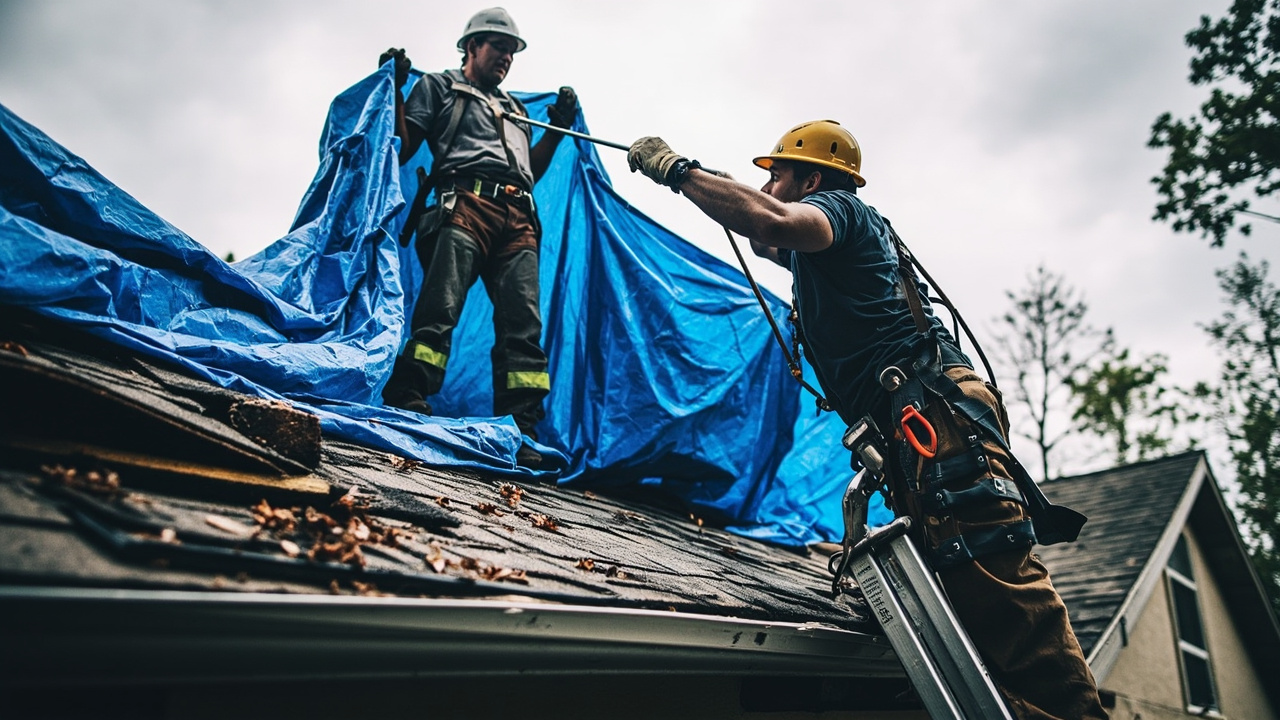
Urgent roof tarping means our crews arrive with commercial-grade reinforced tarps, proper fastening materials, and the experience to secure your roof even in active weather conditions. We document the damage for your insurance adjuster while we work.

When Storm Damage Strikes, Every Minute Counts
How Professional Storm Damage Roof Tarping Actually Protects Your Property

How Professional Storm Damage Roof Tarping Actually Protects Your Property

Amateur tarping fails because people underestimate wind uplift and water channeling. A blue tarp from the hardware store flaps loose in 30 mph winds. Water pools in the center and seeps through nail holes. The tarp itself becomes a battering ram against your remaining shingles.

Our emergency roof tarp installation uses heavy-duty reinforced polyethylene tarps with heat-sealed seams, not the thin material that rips when you unfold it. We anchor these tarps with proper fastening techniques that distribute stress across multiple attachment points. For asphalt shingle roofs, we use batten boards secured through the tarp into solid roof decking, never just into compromised sheathing. For tile roofs common in Orlando's Mediterranean Revival homes, we use specialized techniques that protect the remaining tiles while creating a watertight seal.

Water does not just flow downward. It migrates horizontally under tarps through capillary action. We overlap and seal sections to create drainage planes that direct water away from penetrations. We extend coverage beyond the visible damage because the initial breach often undermines surrounding areas. The decking around a tree impact softens from moisture before it shows obvious failure.

Our crews carry moisture meters to identify hidden saturation. We mark compromised areas for your insurance documentation. We photograph the damage from multiple angles before covering it because you will need that evidence. We understand flashing integration points where tarps must tie into valleys, chimneys, and wall intersections without creating new leak paths.

This is structural first aid performed by people who understand roof systems, not just tarp placement. We protect your property while preserving evidence for your claim.

What Happens When You Call for Emergency Roof Tarping

Emergency Tarping Service in Orlando – Active Storm Response Teams Dispatched Within 90 Minutes
01

Immediate Dispatch and Assessment

You call our emergency line and speak to a person, not a voicemail system. We dispatch the nearest available crew to your Orlando property within 90 minutes during active storm events. Our field supervisor conducts a safety assessment to determine if immediate tarping is possible or if conditions require waiting for a brief weather window. We communicate realistic arrival times and keep you updated via text.
02

Damage Documentation and Securing

Before we place a single tarp, we photograph and document all visible damage for insurance purposes. Our crew identifies the primary breach point and any secondary damage areas. We remove debris only when it poses a safety risk or prevents proper tarp placement. We secure the tarp using methods appropriate for your specific roof type, extending coverage to protect against wind-driven rain and standing water accumulation.
03

Insurance Coordination and Follow-Up

You receive a detailed incident report with photos, damage description, and our emergency service invoice for your insurance claim. We provide a preliminary assessment of permanent repair needs without obligating you to use our services for the restoration. We schedule a follow-up inspection within 48 hours to check tarp integrity and discuss next steps for permanent repairs once your adjuster completes their assessment.

Why Orlando Properties Need Local Emergency Roofing Expertise

All Pro Roofing Orlando operates from a local facility, not a regional call center that dispatches the closest available contractor from two counties away. Our crews know the difference between securing a barrel tile roof in Thornton Park's historic district and tarping a flat commercial roof on International Drive. That distinction matters when you are working against incoming weather.

Orlando's building department requires permits for permanent repairs but not emergency tarping. We understand that distinction and document our temporary measures appropriately. We know which insurance carriers operate in central Florida and what documentation they require for emergency mitigation expenses. We have worked with every major carrier's preferred vendor programs and independent adjusters who service this market.

Our trucks stock materials suitable for Florida's specific roofing profiles. We carry Miami-Dade approved fasteners because we understand wind load requirements. We maintain relationships with local suppliers who remain open during emergencies when national chains close. When a hurricane approaches and everyone needs tarps simultaneously, those relationships mean we can still source materials.

We have tarped roofs in Windermere's luxury estates and College Park's 1920s bungalows. We understand how Orlando's afternoon thunderstorms create localized damage clusters. We have secured roofs during active tropical storm conditions when winds made ladder work dangerous but leaving the breach open was worse.

This is not a side business we operate during storm season. Emergency response is a core competency we maintain year-round. Our crews train on rapid deployment techniques and work safely under pressure. When your roof fails at midnight during a squall line, you need professionals who have done this hundreds of times, not a handyman with a tarp and a staple gun.

What to Expect During Emergency Roof Tarping

Response Time and Availability

Our emergency line operates 24 hours per day, seven days per week, including holidays. During active storm events affecting Orlando, we staff multiple crews to handle simultaneous calls. Standard response time is 90 minutes to two hours from your call to crew arrival under normal emergency conditions. During widespread damage events like hurricanes, we triage calls based on severity and work through our queue as safely and quickly as possible. We provide realistic time estimates and update you if conditions change. You will not wait days wondering when help arrives.

On-Site Assessment Process

Our crew supervisor performs a complete roof inspection to identify the full extent of damage, not just the obvious breach. We use moisture detection equipment to find hidden water intrusion that will cause problems later. We photograph damage from ground level and roof level when safe access is possible. We provide you with a verbal assessment of what we found, what the tarp will accomplish, and what permanent repairs will likely involve. This assessment helps you communicate accurately with your insurance company and make informed decisions about next steps.

Quality of Temporary Protection

You receive commercial-grade temporary roof covering that will withstand Orlando's weather conditions for weeks or months if necessary. Our tarps feature reinforced corners, UV-resistant material, and proper anchoring that prevents wind uplift and water pooling. We do not just throw a tarp over the hole. We create a weatherproof barrier integrated with your existing roof structure. The tarp remains secure through subsequent rain events and typical wind conditions. If extreme weather damages the temporary covering, we return to reinforce or replace it at no additional charge for the first 30 days.

Insurance Documentation Support

You receive a comprehensive emergency service report with timestamped photos showing damage before tarping, during the installation process, and after completion. This documentation includes a written description of the damage, materials used, labor performed, and our professional assessment of causation. We provide itemized invoicing that meets insurance company requirements for emergency mitigation expenses. Most carriers reimburse emergency tarping costs as part of your claim. We can communicate directly with your adjuster if needed to explain our findings and methods. This documentation protects your claim and establishes the damage timeline.

Frequently Asked Questions

You Have Questions,
We Have Answers

How much does emergency roof tarping cost? +

Emergency roof tarping in Orlando typically ranges from $200 to $1,500, depending on roof size, damage extent, and accessibility. Smaller residential tarps cost less, while larger or multi-story homes require more materials and labor. Storm damage after hurricanes often spikes demand, affecting availability and price. Most insurance policies cover emergency tarping as part of immediate damage mitigation. Get documentation and photos before and after tarping. The key is speed. Water intrusion worsens fast in Orlando's high humidity, causing mold and structural rot. Act within hours, not days, to protect your home and your claim.

How much does insurance pay for tarping? +

Most homeowners insurance policies in Florida cover emergency tarping as a necessary mitigation expense. Policies typically reimburse the actual cost, often $200 to $1,500, depending on your deductible and coverage limits. Keep all receipts, photos, and contractor invoices. Tarping prevents additional damage, which insurers require you to stop immediately. If you delay and water damage spreads, your claim may be partially denied. File your claim fast. Orlando's humidity accelerates mold growth within 24 to 48 hours. Your adjuster will verify the tarping was reasonable and necessary. Do not wait for approval to tarp. Protect your property first.

Will Fema put a tarp on my roof? +

FEMA does not directly install tarps on roofs. After federally declared disasters like hurricanes, FEMA may contract the U.S. Army Corps of Engineers to provide free temporary blue tarps through Operation Blue Roof. This program targets homeowners with storm-damaged roofs in affected counties, including parts of Central Florida. Eligibility is limited and prioritized by severity. You must apply online or by phone. Wait times can stretch days or weeks. If you need immediate protection in Orlando, hire a local contractor to tarp your roof now. Do not wait for FEMA. Water damage escalates fast in Florida's climate.

How do I get a new roof if I can't afford it? +

If you cannot afford a new roof in Orlando, explore these options. File an insurance claim if storm damage caused the need. Many policies cover replacement costs. Check for financing through roofing contractors who offer payment plans or low-interest loans. Apply for FHA Title I home improvement loans or a home equity line of credit. After disasters, FEMA may offer grants or low-interest disaster loans. Some nonprofits and local programs assist low-income homeowners with emergency repairs. Avoid predatory lenders. Get multiple quotes. A temporary tarp buys time while you secure funding. Do not ignore a failing roof. Leaks worsen fast.

How much to put a roof on a 2000 sq ft house? +

Replacing a roof on a 2,000-square-foot home in Orlando depends on material, pitch, and complexity. Costs vary widely based on shingle type, underlayment, and local building codes requiring wind-rated materials for hurricane zones. Factors include removal of old layers, flashing replacement, and ventilation upgrades. Orlando's heat and storm exposure demand durable materials. Architectural shingles outlast basic three-tab in Florida's climate. Get three local estimates. Beware of storm chasers after hurricanes. Check contractor licenses and reviews. Permits and inspections add time but ensure code compliance. Plan for a multi-day project depending on weather and crew size.

How long do Fema tarps last? +

FEMA-issued blue tarps last three to six months under normal conditions. In Orlando's intense sun, high humidity, and frequent afternoon thunderstorms, expect shorter lifespans. UV exposure degrades the polyethylene material, causing tears and brittleness. Wind from tropical storms can rip tarps loose. Tarps are temporary emergency solutions, not permanent fixes. Inspect tarps weekly for damage or detachment. Secure edges and add reinforcement if needed. Water pooling accelerates breakdown. Schedule permanent roof repairs as soon as possible. Do not rely on a tarp beyond one storm season. Prolonged exposure invites leaks, mold, and structural damage in Florida's demanding climate.

What not to say to a roof insurance adjuster? +

Never tell your insurance adjuster the damage is old, pre-existing, or unrelated to the recent storm. Do not speculate about causes or admit fault. Avoid exaggerating or downplaying damage. Stick to facts. Do not sign anything immediately or agree to a settlement before reviewing your policy and consulting a public adjuster or attorney if needed. Never say you are unsure if you want to file a claim. In Orlando, where hurricanes and wind damage are common, adjusters scrutinize claims closely. Document everything with photos and timestamps. Be honest but cautious. Your words can reduce or deny your payout.

How long will a tarped roof last? +

A properly installed emergency tarp lasts 90 days in ideal conditions. In Orlando, expect 30 to 90 days due to intense UV exposure, high heat, humidity, and afternoon storms. Tarps degrade faster on steep pitches or in direct sun. Wind from tropical systems can tear or displace tarps. Check weekly for gaps, tears, or water pooling. Reinforce edges and add sandbags if needed. Tarps are temporary stopgaps, not permanent roofing. Schedule repairs immediately. Water intrusion under a failing tarp causes mold, rot, and ceiling damage within days in Florida's climate. Do not let a tarp become your roof.

What is the 80% rule in homeowners insurance? +

The 80% rule requires you to insure your home for at least 80% of its replacement cost to receive full claim payouts. If you underinsure, the insurer reduces payment proportionally. Example: Your home costs $300,000 to rebuild. You insure it for $200,000. You are underinsured. A $50,000 roof claim gets reduced based on the ratio. In Orlando, where hurricane damage and construction costs fluctuate, review your coverage annually. Replacement costs rise due to labor shortages and material price spikes after storms. Confirm your policy reflects current values. Underinsurance leaves you paying out of pocket for repairs.

How old may a roof be before insurance claims it's too old? +

Florida insurers often restrict or deny coverage for roofs 15 to 20 years old, depending on material and policy terms. Some carriers require roof inspections or limit coverage to actual cash value instead of replacement cost for older roofs. After hurricanes, insurers tighten underwriting standards. Orlando homeowners with aging roofs may face non-renewal or higher premiums. Asphalt shingles typically last 15 to 20 years in Florida's heat and storm exposure. Metal and tile last longer but cost more. If your roof nears 15 years old, document its condition with inspections. Consider replacement before filing claims to preserve full coverage.

Hurricane Season and Florida Storm Patterns Make Emergency Tarping Essential in Orlando

Orlando sits in the crosshairs of Atlantic hurricane tracks and Gulf Coast tropical systems. The area experiences an average of 113 days per year with thunderstorm activity, many producing straight-line winds exceeding 60 mph. These sudden wind events snap branches from the mature oak trees lining older neighborhoods, sending them through roofs without warning. The June through November hurricane season brings additional risk from organized storm systems with sustained high winds and prolonged rainfall. A compromised roof during a multi-day rain event means continuous water intrusion that destroys ceilings, ruins insulation, and saturates structural framing. Emergency tarping stops that cascade of damage before it multiplies your loss.

Florida building codes specific to the high-velocity hurricane zone require proper emergency mitigation to protect your insurance coverage. Failure to prevent additional damage after an initial loss can result in claim denials for subsequent water damage. Orlando's roofing contractors who specialize in emergency response understand these requirements and document services accordingly. Local expertise means understanding how afternoon convective storms differ from tropical cyclone damage, knowing which materials perform in central Florida's heat and humidity, and maintaining the supplier relationships that keep us operational when everyone else runs out of tarps. When you need urgent roof protection, local knowledge translates directly into faster, more effective damage control.
Roofing Services in The Orlando Area

Our service area spans across the Orlando region and beyond, bringing our expert roofing solutions to homes and businesses throughout the community. We are proud to serve our neighbors and are dedicated to providing fast, reliable service right where you are. View our location and our extensive service area on the map below, and feel free to reach out to us directly to see if we can bring our professional roofing services to your neighborhood.

Address:
All Pro Roofing Orlando, 618 E South St, Orlando, FL, 32801

Additional Services We Offer

Our news updates

Latest Articles & News from The Blogs

Energy independent roofing in Wedgefield: What works and what doesn't When you live in Wedgefield zip codes 32833 and 32820…

The best roofing setups for energy independent living in the Wedgefield area

Energy independent roofing in Wedgefield: What works and what doesn't When you live in Wedgefield zip codes 32833 and 32820…

Why replacing your skylights during a full roof job in Bay Hill saves thousands later

Why replacing your skylights during a full roof job in Bay Hill saves thousands later Bay Hill homeowners with aging…

Choosing between concrete and clay tiles for your Windermere estate

Choosing between concrete and clay tiles for your Windermere estate Tile roofing dominates Central Florida's luxury market, and for good…

Contact Us

Your roof is failing right now. Stop the damage before it spreads. Call All Pro Roofing Orlando at (689) 268-2855 for immediate emergency tarping dispatch. Our crews are standing by 24 hours per day to protect your property.