
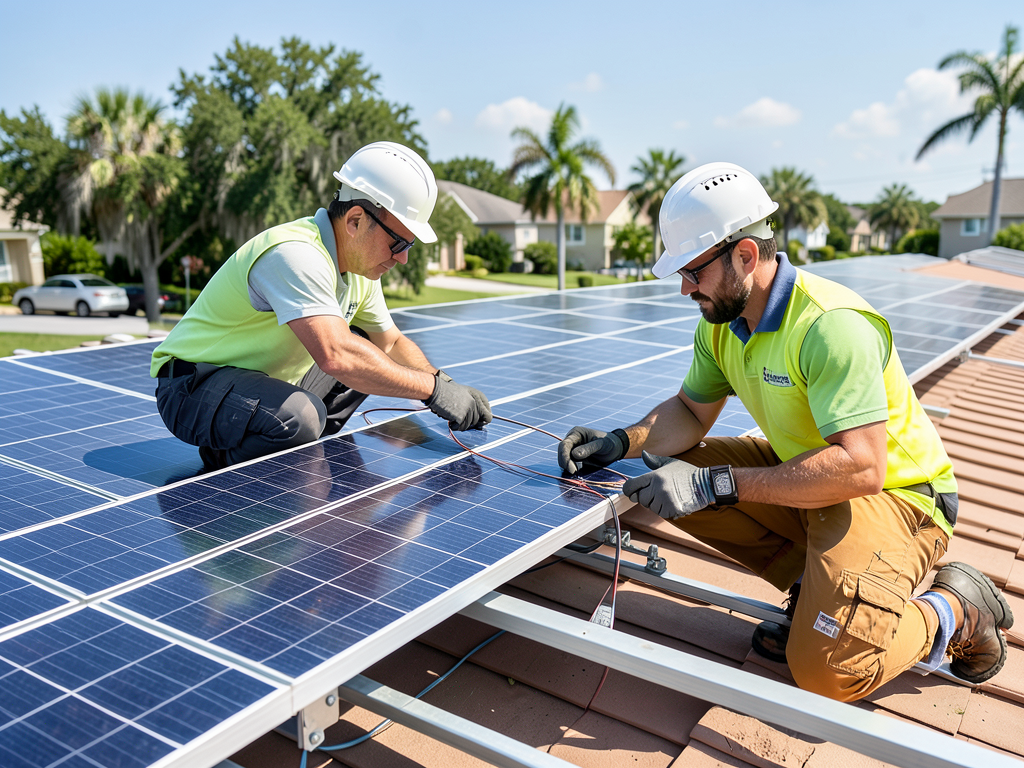
What happens to your Lake Nona solar panels when you need a new roof?
The moment you realize your roof needs replacement while solar panels sit on top, you’re facing a complex coordination challenge unique to modern Orlando homes. Your solar investment doesn’t disappear during roof work, but it requires careful handling to protect both systems and maintain warranties. Orlando Utilities Commission guidelines.
Here’s what actually happens: licensed roofing contractors work with certified solar technicians to safely disconnect your photovoltaic system, remove panels, store them properly, complete your roof replacement, then reinstall and reconnect everything to code. This ‘detach and reset’ process typically takes 3-5 days total, depending on system size and roof complexity. Is Solar Roofing Actually Worth the Investment for Orlando Residents?.
Lake Nona’s rapid growth means many homes now feature solar arrays installed during the initial construction boom. These systems often sit on roofs approaching their 15-20 year lifespan, creating the exact scenario where homeowners need both services simultaneously. The good news? When handled by experienced professionals, your solar panels can be removed and reinstalled without damage, and your roof warranty remains intact.
The process starts with a thorough site assessment. Technicians document your system layout, photograph wiring configurations, and test all electrical components before any work begins. This baseline documentation proves invaluable if any issues arise during reinstallation.
Why Lake Nona’s Solar-Ready Homes Need Specialized Expertise
Lake Nona’s building boom coincided with solar technology becoming mainstream, resulting in thousands of homes with roof-mounted systems. These installations weren’t just slapped on top of shingles they required structural engineering, electrical permits, and utility coordination through OUC or Duke Energy.
The challenge? Many original installers have since moved or gone out of business. When roof replacement becomes necessary, homeowners often discover their solar contractor is unavailable, leaving them to coordinate between separate roofing and electrical companies. This fragmentation creates risk: improper removal can void solar warranties, while inexperienced roofers might damage mounting hardware or create leak points. Choosing Between Shingle and Tile Roofs for Your Central Florida Home.
Lake Nona’s specific building characteristics add complexity. Many homes feature barrel tile roofs popular in Florida, which require different mounting approaches than asphalt shingles. The community’s elevation near the Econlockhatchee River also means higher wind loads require additional structural considerations during reinstallation. Florida Building Code requirements.
The Step-by-Step Solar Panel Removal Process
Understanding the sequence helps you know what to expect and when to be available for decisions.
- System Shutdown and Documentation
Technicians disconnect the system from the inverter, then from the main electrical panel. They photograph every connection point and create a wiring diagram specific to your setup.
- Physical Panel Removal
Panels are carefully detached from mounting rails. Each panel receives a protective covering and is stored on padded racks in a shaded, secure location.
- Mounting Hardware Assessment
While panels are off, technicians inspect all roof penetrations, mounting brackets, and flashings. Salt-air exposure in Lake Nona can corrode aluminum components, requiring replacement.
- Roof Deck Inspection
With panels removed, contractors can now see the actual roof deck condition. This often reveals hidden damage that would have gone unnoticed with panels in place.
The inspection phase frequently uncovers issues that make the project more complex. Corroded mounting brackets, deteriorated sealant, or hidden water damage under panels all require attention before reinstallation can proceed. Reliable Roof Inspection Services for Home Buyers in Winter Garden.
Roof Replacement While Panels Are Off
This is where specialized expertise becomes critical. Your roofing contractor must understand solar mounting systems to avoid damaging existing hardware and ensure proper reinstallation. Best Roofing Materials for Older Bungalows in Thornton Park.
During the roof replacement phase, several Lake Nona-specific factors come into play:
- Florida Building Code compliance requires enhanced wind uplift ratings for solar mounting points, especially in areas near large bodies of water
- Secondary water barriers must be installed at all former panel mounting locations to prevent future leaks
- Flashing techniques differ significantly between tile, shingle, and flat roof applications
The roofing team works systematically, replacing underlayment and flashing around existing mounting points. They document every penetration location to ensure the solar team can remount panels in their original configuration. TPO vs EPDM Roofing Guide.
Solar Reinstallation: Getting It Right the Second Time
Solar reinstallation isn’t simply reversing the removal process. Several critical factors determine success:
Electrical Safety Testing Every connection point gets tested for continuity and proper grounding. Florida’s humidity and lightning frequency make proper bonding essential for system longevity.
Wind Load Certification Orlando’s hurricane-prone location means mounting systems must meet specific uplift resistance requirements. The reinstallation team verifies all hardware meets current Florida Building Code standards.
Utility Reconnection After installation, OUC or Duke Energy must inspect and approve the system before net metering resumes. This inspection typically takes 2-3 business days after completion.
The final system testing includes voltage checks, inverter functionality verification, and production monitoring setup. Your system should be producing power within one week of roof completion.
Lake Nona Cost Factors for Solar Detach and Reset
Understanding the cost structure helps you budget appropriately and avoid surprises. Several factors specific to Lake Nona affect pricing:
| Cost Factor | Typical Range | Lake Nona Impact |
|---|---|---|
| System Size (kW) | $0.25 – $0.40 per watt | Larger systems = higher costs |
| Roof Pitch | 15-30% premium | Steeper roofs require additional safety equipment |
| Mounting Hardware | $500 – $2,000 | Salt-air corrosion often requires bracket replacement |
| Electrical Permits | $200 – $500 | Orange County fees apply |
| Utility Reconnection | $150 – $300 | OUC/Duke Energy inspection fees |
Most Lake Nona homeowners with 6-8 kW systems can expect total detach and reset costs between $2,500 and $4,500, in addition to roof replacement costs.
Insurance and Warranty Considerations
Your homeowner’s insurance may cover solar removal and reinstallation if the roof replacement is insurance-funded due to storm damage. However, many policies treat this as a separate line item requiring specific documentation.
Solar manufacturers typically require certified technicians to perform removal and reinstallation to maintain warranties. Using unqualified contractors can void 25-year panel warranties or 10-year inverter warranties.
Roofing warranties also come into play. Some manufacturers void warranties if solar mounting hardware penetrates new roofing materials improperly. Working with contractors who understand both systems protects all your investments.
Timeline Management During Peak Seasons
Lake Nona’s construction schedule often aligns with Florida’s weather patterns. Summer afternoon thunderstorms can delay outdoor work, while hurricane season (June-November) creates urgency for roof repairs.
Typical project timeline:
- Planning Phase (1-2 weeks): Assessment, permitting, scheduling
- Removal Phase (1 day): Panel disconnect and removal
- Roof Replacement (3-5 days): Weather dependent
- Reinstallation Phase (1-2 days): Mounting and electrical work
- Utility Approval (2-3 days): Inspection and net metering restart
During hurricane season, many contractors offer priority scheduling for homes with compromised roofs, understanding the safety implications of exposed solar mounting points.
Finding the Right Contractor in Lake Nona
Not all roofing companies understand solar systems, and not all solar companies handle roofing. The ideal contractor combines both expertise or has established relationships with certified solar technicians.
Key qualifications to verify:
- Florida Roofing License (CCC license required for solar-related roofing work)
- NABCEP Certification for solar technicians performing electrical work
- Manufacturer Certifications for both roofing and solar equipment brands
- Insurance Coverage including liability for both trades
Ask potential contractors about their experience with Lake Nona’s specific building characteristics. Have they worked on tile roofs? Do they understand the community’s architectural guidelines? Can they coordinate directly with OUC or Duke Energy?
Common Problems and How to Avoid Them
Several issues commonly arise during solar roof projects. Understanding these helps you prevent costly mistakes.
Mounting Point Misalignment occurs when roofers don’t document original panel locations. This forces solar technicians to remeasure and potentially relocate panels, affecting system performance.
Flashing Failures happen when roofers use inappropriate materials around mounting points. Florida’s high UV exposure and temperature swings require specific flashing types.
Electrical Connection Issues arise when solar technicians unfamiliar with local codes make improper connections. Orlando’s lightning frequency demands specific grounding approaches.
Timeline Compression creates problems when roofing and solar teams don’t coordinate properly. Weather delays on one phase cascade through the entire project.
Frequently Asked Questions
How long can my solar panels stay off the roof?
Most systems can remain disconnected for 2-3 weeks without issues. However, extended disconnection beyond 30 days may require utility inspection and system recertification.
Will my solar production decrease after reinstallation?
If panels are remounted in their original orientation and angle, production should remain consistent. However, any changes to tilt or direction can affect output by 5-15%.
Do I need permits for both roof replacement and solar work?
Yes. Roof replacement requires building permits from Orange County. Solar disconnect/reconnect requires electrical permits. Some contractors handle both permit processes.
Can I upgrade my solar system during roof replacement?
Absolutely. With panels already removed, this is an ideal time to add capacity, upgrade inverters, or install newer panel technology.
What happens if it rains while panels are off?
Professional contractors use temporary coverings and work systematically to minimize exposure. Most projects complete roof replacement within the 3-5 day window before significant weather becomes a concern.
Making the Right Decision for Your Lake Nona Home
The decision to proceed with simultaneous roof replacement and solar panel work requires balancing several factors: your immediate safety needs, system warranty protection, and long-term energy production goals.
Consider these questions when evaluating contractors:
- Do they provide detailed documentation of the entire process?
- Can they coordinate directly with your utility company?
- Do they offer warranties that cover both roofing and solar mounting points?
- Are they familiar with Lake Nona’s specific building requirements?
The right contractor views your project holistically, understanding that your roof and solar system work together as one integrated building system. They’ll protect your investments while ensuring your home remains safe and energy-efficient throughout the process.
Don’t let the complexity of coordinating multiple contractors delay necessary roof repairs. The longer you wait, the more risk you accept from potential water damage, mounting point deterioration, and system failures.
Ready to protect your Lake Nona home and solar investment? Call (689) 268-2855 today to schedule your comprehensive assessment. Our experienced team handles every aspect of solar panel removal and reinstallation, ensuring your project stays on schedule and your warranties remain intact.
Pick up the phone and call (689) 268-2855 before the next storm hits. Your home deserves expert care that understands both roofing and solar technology inside and out.
{
“@context”: “https://schema.org”,
“@type”: “BlogPosting”,
“headline”: “What happens to your Lake Nona solar panels when you need a new roof?”,
“description”: “Lake Nona homeowners need expert solar panel removal and reinstallation during roof replacement. Learn the process, costs, and why local experience matters in Orlando.”,
“wordCount”: 1727,
“datePublished”: “2026-03-20T08:52:00.000Z”,
“dateModified”: “2026-03-20T08:52:00.000Z”,
“inLanguage”: “en-US”,
“mainEntityOfPage”: {
“@type”: “WebPage”,
“@id”: “https://allproroofingorlando.com”
},
“publisher”: {
“@type”: “LocalBusiness”,
“name”: “All Pro Roofing Orlando”,
“url”: “https://allproroofingorlando.com”
},
“author”: {
“@type”: “Organization”,
“name”: “All Pro Roofing Orlando”,
“url”: “https://allproroofingorlando.com”
},
“image”: {
“@type”: “ImageObject”,
“url”: “https://allproroofingorlando.com/wp-content/uploads/2026/03/what-happens-to-your-lake-nona-solar-panels-when-y-1.png”
}
}
{
“@context”: “https://schema.org”,
“@type”: “RoofingContractor”,
“name”: “All Pro Roofing Orlando”,
“url”: “https://allproroofingorlando.com”,
“address”: {
“@type”: “PostalAddress”,
“addressLocality”: “Orlando”
},
“areaServed”: {
“@type”: “City”,
“name”: “Orlando”
}
}
{
“@context”: “https://schema.org”,
“@type”: “FAQPage”,
“mainEntity”: [
{
“@type”: “Question”,
“name”: “How long can my solar panels stay off the roof?”,
“acceptedAnswer”: {
“@type”: “Answer”,
“text”: “Most systems can remain disconnected for 2-3 weeks without issues. However, extended disconnection beyond 30 days may require utility inspection and system recertification.”
}
},
{
“@type”: “Question”,
“name”: “Will my solar production decrease after reinstallation?”,
“acceptedAnswer”: {
“@type”: “Answer”,
“text”: “If panels are remounted in their original orientation and angle, production should remain consistent. However, any changes to tilt or direction can affect output by 5-15%.”
}
},
{
“@type”: “Question”,
“name”: “Do I need permits for both roof replacement and solar work?”,
“acceptedAnswer”: {
“@type”: “Answer”,
“text”: “Yes. Roof replacement requires building permits from Orange County. Solar disconnect/reconnect requires electrical permits. Some contractors handle both permit processes.”
}
},
{
“@type”: “Question”,
“name”: “Can I upgrade my solar system during roof replacement?”,
“acceptedAnswer”: {
“@type”: “Answer”,
“text”: “Absolutely. With panels already removed, this is an ideal time to add capacity, upgrade inverters, or install newer panel technology.”
}
},
{
“@type”: “Question”,
“name”: “What happens if it rains while panels are off?”,
“acceptedAnswer”: {
“@type”: “Answer”,
“text”: “Professional contractors use temporary coverings and work systematically to minimize exposure. Most projects complete roof replacement within the 3-5 day window before significant weather becomes a concern.”
}
}
]
}
{
“@context”: “https://schema.org”,
“@type”: “HowTo”,
“name”: “Solar Panel Removal Process”,
“step”: [
{
“@type”: “HowToStep”,
“position”: 1,
“name”: “System Shutdown and Documentation”,
“text”: “Technicians disconnect the system from the inverter, then from the main electrical panel. They photograph every connection point and create a wiring diagram specific to your setup.”
},
{
“@type”: “HowToStep”,
“position”: 2,
“name”: “Physical Panel Removal”,
“text”: “Panels are carefully detached from mounting rails. Each panel receives a protective covering and is stored on padded racks in a shaded, secure location.”
},
{
“@type”: “HowToStep”,
“position”: 3,
“name”: “Mounting Hardware Assessment”,
“text”: “While panels are off, technicians inspect all roof penetrations, mounting brackets, and flashings. Salt-air exposure in Lake Nona can corrode aluminum components, requiring replacement.”
},
{
“@type”: “HowToStep”,
“position”: 4,
“name”: “Roof Deck Inspection”,
“text”: “With panels removed, contractors can now see the actual roof deck condition. This often reveals hidden damage that would have gone unnoticed with panels in place.”
}
],
“image”: “https://allproroofingorlando.com/wp-content/uploads/2026/03/what-happens-to-your-lake-nona-solar-panels-when-y-1.png”
}
{
“@context”: “https://schema.org”,
“@type”: “BreadcrumbList”,
“itemListElement”: [
{
“@type”: “ListItem”,
“position”: 1,
“name”: “Home”,
“item”: “https://allproroofingorlando.com”
},
{
“@type”: “ListItem”,
“position”: 2,
“name”: “Blog”,
“item”: “https://allproroofingorlando.com/blog”
},
{
“@type”: “ListItem”,
“position”: 3,
“name”: “What happens to your Lake Nona solar panels when you need a new roof?”
}
]
}
{
“@context”: “https://schema.org”,
“@type”: “Service”,
“serviceType”: “Roofing”,
“provider”: {
“@type”: “LocalBusiness”,
“name”: “All Pro Roofing Orlando”,
“url”: “https://allproroofingorlando.com”
},
“areaServed”: {
“@type”: “City”,
“name”: “Orlando”
},
“description”: “Lake Nona homeowners need expert solar panel removal and reinstallation during roof replacement. Learn the process, costs, and why local experience matters in Orlando.”
}