
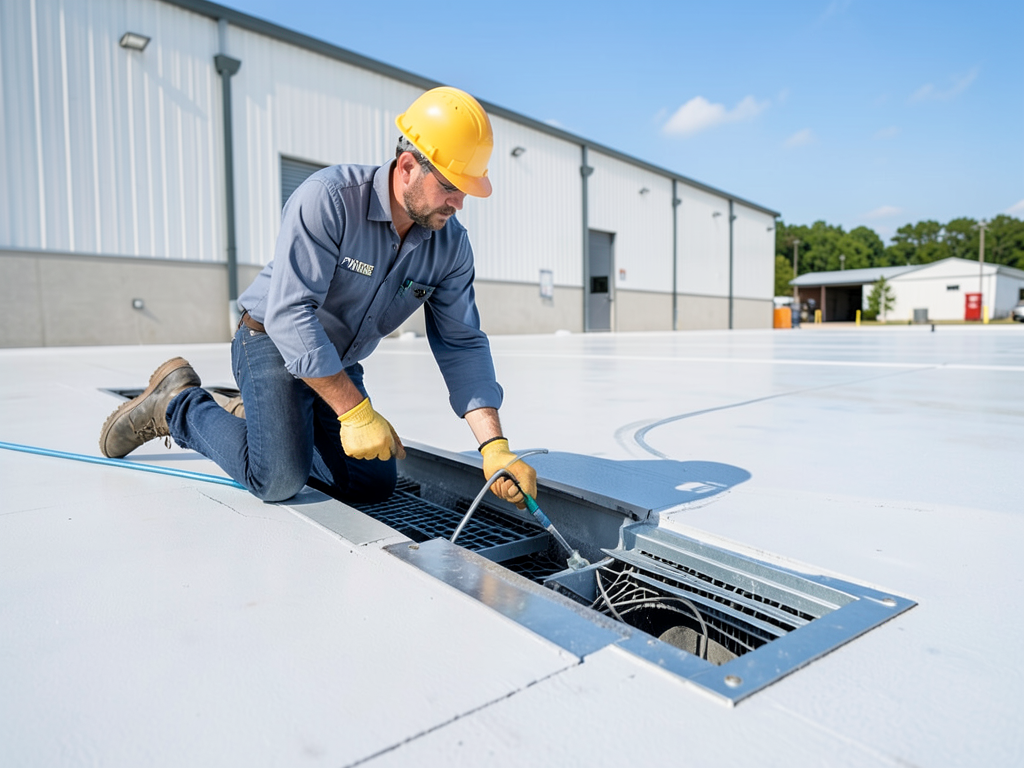
Solving Drainage Problems on Flat Roof Commercial Buildings in Pine Castle
Commercial flat roofs in Pine Castle face unique drainage challenges due to Orlando’s intense summer thunderstorms and hurricane season. Standing water on your roof doesn’t just look bad—it accelerates membrane deterioration, increases structural load, and can lead to costly interior damage. Understanding proper drainage design and maintenance is essential for protecting your investment and ensuring compliance with Florida Building Code requirements. Florida Building Code.
Why Flat Roof Drainage Matters in Pine Castle
Pine Castle’s commercial buildings sit in a low-lying area near Lake Conway, where the water table is high and drainage infrastructure can be overwhelmed during heavy rainfall. The area receives an average of 50 inches of rain annually, with most falling between June and September. This concentrated precipitation creates ponding water that can exceed 12 inches in depth, adding thousands of pounds of weight to your roof structure. Choosing Between Shingle and Tile Roofs for Your Central Florida Home.
Beyond structural concerns, standing water in Pine Castle’s humid climate promotes algae growth and accelerates membrane degradation. The combination of heat, moisture, and organic matter creates the perfect environment for roof deterioration. Property managers who ignore these issues often face emergency repairs during the rainy season when roofing contractors are busiest. Is Solar Roofing Actually Worth the Investment for Orlando Residents?.
Common Drainage Systems for Commercial Flat Roofs
Commercial buildings in Pine Castle typically use one of three drainage systems, each with specific advantages for the local climate and building codes.
Internal Roof Drains
Internal drains sit flush with the roof surface and connect to concealed piping below. These systems work well for large commercial buildings where aesthetics matter and freezing temperatures aren’t a concern. In Pine Castle’s climate, internal drains require regular maintenance to prevent clogging from algae, leaves, and debris carried by summer storms.
The key advantage is their ability to handle high water volumes without creating trip hazards or interfering with rooftop equipment. However, when they fail, water can back up quickly since the drainage path is hidden from view.
Scuppers and Overflow Drains
Scuppers are openings in parapet walls that allow water to drain off the roof edge. They serve as both primary and secondary drainage, with overflow scuppers positioned higher to activate when primary drains clog. In Pine Castle’s commercial buildings, scuppers are often paired with conductor heads and downspouts to direct water away from the foundation.
The visual advantage of scuppers is that you can immediately see if they’re functioning properly. During heavy rain, you’ll notice water flowing freely or backing up—a clear diagnostic signal that something needs attention.
Gutters and Downspouts
While less common on truly flat commercial roofs, gutters and downspouts are sometimes used on slightly sloped sections or around rooftop equipment. In Pine Castle, these systems face constant challenges from oak leaves, pine needles, and the intense UV exposure that degrades plastic components.
Commercial gutters require oversized downspouts—typically 4 to 6 inches in diameter—to handle Orlando’s heavy rainfall rates. Standard residential sizing simply cannot keep up with the volume of water during summer thunderstorms.
Florida Building Code Requirements for Commercial Drainage
The Florida Building Code (FBC) Section 1503 mandates specific drainage requirements for commercial buildings. Section 1503.4 requires secondary (overflow) drainage when the primary system is blocked. This means your Pine Castle commercial building needs redundant drainage paths to prevent catastrophic failure during heavy rains.
Section 1503.4.1 specifies that overflow drains or scuppers must be placed at least 2 inches above the roof surface or primary drain connection. This elevation ensures water can escape even when primary drains are completely clogged with debris or ice (though ice is rare in Pine Castle).
The code also requires that overflow systems discharge at a location observable by building occupants or maintenance personnel. This requirement exists because hidden drainage failures can go unnoticed until significant damage occurs. In Pine Castle’s commercial buildings, this often means routing overflow water to visible areas or installing water-level indicators.
Common Drainage Problems in Pine Castle Commercial Buildings
Commercial property managers in Pine Castle frequently encounter specific drainage issues that stem from the local climate and building practices.
Ponding Water
Ponding water is defined as water that remains on the roof for more than 48 hours after rainfall. In Pine Castle, this commonly occurs due to inadequate roof slope, clogged drains, or structural settling. A 1-inch depth of water over a 100-square-foot area weighs approximately 52 pounds—multiply that by your entire roof area and the structural load becomes significant.
Beyond weight concerns, ponding water accelerates membrane deterioration by keeping the surface continuously wet. The constant moisture breaks down adhesives and promotes algae growth, which can create slippery conditions for maintenance personnel.
Drainage System Clogs
Pine Castle’s commercial buildings face constant clogging challenges from local vegetation. Live oak trees shed leaves year-round, while pine trees drop needles that accumulate in drain sumps. During summer thunderstorms, this organic material washes into drains and creates blockages.
Another common issue is sediment accumulation in drain sumps. The area’s sandy soil can wash onto roofs during heavy rains, settling in low spots around drains. Over time, this sediment reduces drain capacity and creates ideal conditions for algae growth.
Structural Settling
Many commercial buildings in Pine Castle were constructed on fill dirt that has settled over time. This settling creates low spots where water accumulates, overwhelming drainage systems designed for a level surface. The problem is exacerbated by the area’s high water table, which can cause soil expansion and contraction.
Buildings near the Butler Chain of Lakes face additional challenges as seasonal water level changes affect soil stability. This geological reality means drainage systems must be designed with extra capacity to handle both rainfall and subsurface water movement.
Preventive Maintenance for Commercial Roof Drainage
Effective drainage maintenance in Pine Castle requires a proactive approach that addresses both seasonal and year-round concerns.
Quarterly Inspection Schedule
Commercial property managers should inspect drainage systems four times per year, with specific timing aligned to Orlando’s weather patterns. The most critical inspection occurs in May, before hurricane season begins. This inspection should verify that all drains are clear, scuppers are unobstructed, and overflow systems are functional. Reliable Roof Inspection Services for Home Buyers in Winter Garden.
Follow-up inspections in August, November, and February catch problems that develop during peak usage periods. Each inspection should include drain flow testing, where water is poured into drains to verify proper function and identify slow-draining areas that indicate partial blockages.
Debris Removal Protocol
Debris removal requires different approaches depending on the type of material. Large leaves and branches should be removed manually to prevent them from breaking down into smaller particles that clog drain strainers. Fine sediment and organic matter require pressure washing to restore drain sumps to their designed capacity.
In Pine Castle, where oak pollen creates yellow dust coatings on everything during spring, this fine material can wash into drains and create a sticky residue that traps additional debris. Regular pressure washing prevents this cumulative buildup.
Drainage Component Testing
Every drainage component should be tested during inspections. This includes verifying that drain strainers are securely fastened, checking that downspout connections are watertight, and ensuring that overflow scuppers are at the correct elevation. The testing process should also include checking for signs of corrosion on metal components, which accelerates in Pine Castle’s salty coastal air.
During testing, listen for gurgling sounds in drain pipes, which can indicate partial blockages or inadequate venting. These sounds often precede complete drain failures and provide an early warning system for maintenance teams.
Advanced Drainage Solutions for Pine Castle Commercial Buildings
When standard drainage systems prove inadequate, commercial property managers in Pine Castle can implement advanced solutions designed for the local climate.
Tapered Insulation Systems
Tapered insulation creates positive slope on flat roofs, directing water toward drains and eliminating ponding areas. In Pine Castle, where many commercial buildings were constructed with minimal slope to reduce construction costs, tapered insulation retrofits can dramatically improve drainage performance.
These systems use precisely cut insulation panels that create slopes of 1/4 inch per foot toward drains. This gentle slope is sufficient to move water while remaining subtle enough to avoid creating visible depressions in the roof surface. The insulation also improves energy efficiency, providing a dual benefit for property owners.
Siphonic Drainage Systems
Siphonic systems use engineered fittings and full-bore pipes to create vacuum conditions that rapidly remove water from the roof surface. These systems can handle rainfall rates exceeding 8 inches per hour, making them ideal for Pine Castle’s intense summer thunderstorms.
The key advantage is their ability to drain the entire roof surface quickly, preventing the initial accumulation that leads to ponding. However, siphonic systems require precise engineering and cannot be retrofitted to existing buildings without significant modifications to the roof structure.
Smart Drainage Monitoring
Modern commercial buildings in Pine Castle are increasingly adopting smart drainage monitoring systems that use water level sensors and flow meters to detect problems before they cause damage. These systems can alert property managers via smartphone when drains begin to clog or when water levels exceed predetermined thresholds.
The technology is particularly valuable for buildings with large roof areas where manual inspections are time-consuming. Early detection allows for scheduled maintenance rather than emergency repairs during rainstorms. Emergency Tarping Service.
Cost-Benefit Analysis of Drainage Improvements
Property managers often hesitate to invest in drainage improvements, not realizing the long-term cost savings these systems provide.
Emergency Repair Costs
Emergency roof repairs during the rainy season in Pine Castle typically cost 40-60% more than scheduled maintenance. Roofing contractors are busiest during summer months, and emergency calls command premium pricing. A single emergency repair can cost thousands of dollars, while preventive maintenance might cost a few hundred dollars per year. Best Roofing Materials for Older Bungalows in Thornton Park.
Beyond direct repair costs, emergency situations often require interior damage restoration, business interruption, and potential liability claims if water damage affects tenants or customers.
Energy Efficiency Benefits
Proper drainage prevents water from saturating roof insulation, which significantly reduces its R-value. Wet insulation conducts heat rather than resisting it, forcing HVAC systems to work harder and increasing energy costs. In Pine Castle’s hot climate, this effect can add hundreds of dollars to monthly utility bills.
Additionally, standing water on roofs creates humidity that can affect interior comfort levels, causing air conditioning systems to run longer than necessary. The energy savings from proper drainage often offset the maintenance costs within a few years.
When to Call a Professional
While basic maintenance can be handled by facility staff, certain situations require professional roofing expertise.
Call a professional if you notice persistent ponding water that doesn’t drain within 48 hours, if you see water stains on interior ceilings, or if your drains make unusual sounds during rainfall. Also contact a roofing contractor if you observe cracks in parapet walls near scuppers, as these can indicate structural movement affecting drainage performance.
Professional inspections should include core sampling to check for moisture in the roof assembly, infrared scanning to identify wet insulation, and detailed documentation of all drainage components. This documentation proves invaluable for insurance claims and future maintenance planning.
Don’t wait until the next storm to address drainage issues. Call (689) 268-2855 today to schedule your commercial roof inspection. Our team understands Pine Castle’s unique drainage challenges and can provide solutions that protect your property and comply with all Florida Building Code requirements.
Frequently Asked Questions
How often should commercial roof drains be cleaned in Pine Castle?
Commercial roof drains in Pine Castle should be cleaned quarterly at minimum, with additional cleanings after major storms or during fall when leaf debris is heaviest. Buildings near wooded areas or large oak trees may require monthly cleaning during peak shedding seasons.
What’s the difference between primary and secondary drainage systems?
Primary drainage systems handle normal rainfall, while secondary (overflow) systems activate when primary drains are blocked. Florida Building Code requires secondary drainage to prevent catastrophic roof failures during heavy rains. Secondary systems typically activate at a higher water level than primary drains.
Can I install additional drains on my existing commercial roof?
Yes, additional drains can be retrofitted to existing commercial roofs, but the installation requires careful planning to avoid compromising the roof membrane. The process involves cutting through the existing roofing system, installing new drain assemblies, and ensuring proper integration with the existing drainage network.
How much slope does a commercial flat roof need for proper drainage?
Commercial flat roofs should have a minimum slope of 1/4 inch per foot toward drains. This slope is sufficient to move water while remaining subtle enough to avoid creating visible depressions. Many older Pine Castle buildings have less slope, which contributes to ponding problems.
What are signs that my commercial roof drainage system is failing?
Signs of drainage system failure include persistent ponding water, water stains on interior ceilings, unusual sounds from drains during rainfall, visible debris accumulation around drain openings, and cracks in parapet walls near scuppers. Any of these symptoms indicates the need for immediate professional inspection.
How do I know if my commercial building meets Florida Building Code drainage requirements?
A professional roofing contractor can inspect your building and verify compliance with Florida Building Code Section 1503. This inspection should check for proper secondary drainage, correct overflow scupper elevations, and adequate drain sizing for your roof area and local rainfall patterns. Documentation of compliance is essential for insurance and liability purposes.
Protect Your Pine Castle Commercial Property
Commercial flat roof drainage problems in Pine Castle don’t fix themselves—they get worse with every passing storm. The combination of Orlando’s intense rainfall, high water table, and local vegetation creates a perfect storm for drainage failures that can cost property owners thousands in emergency repairs and business interruption.
Understanding your drainage system, performing regular maintenance, and knowing when to call professionals are the keys to protecting your investment. The Florida Building Code provides minimum requirements, but exceeding these standards with proactive maintenance and advanced drainage solutions can save you significant money and headaches over your building’s lifetime.
Ready to solve your drainage problems? Call (689) 268-2855 to speak with our commercial roofing specialists. We’ll inspect your current system, identify potential problems, and recommend solutions tailored to Pine Castle’s unique climate and building requirements. Don’t let the next summer storm catch you unprepared. For more information, visit ASCE 7 standards.
{
“@context”: “https://schema.org”,
“@type”: “BlogPosting”,
“headline”: “Solving Drainage Problems on Flat Roof Commercial Buildings in Pine Castle”,
“description”: “Flat roof drainage issues in Pine Castle? Learn how to prevent ponding water, meet Florida Building Code requirements, and protect your commercial property.”,
“wordCount”: 2398,
“datePublished”: “2026-04-24T07:57:00.000Z”,
“dateModified”: “2026-04-24T07:57:00.000Z”,
“inLanguage”: “en-US”,
“mainEntityOfPage”: {
“@type”: “WebPage”,
“@id”: “https://allproroofingorlando.com”
},
“publisher”: {
“@type”: “LocalBusiness”,
“name”: “All Pro Roofing Orlando”,
“url”: “https://allproroofingorlando.com”
},
“author”: {
“@type”: “Organization”,
“name”: “All Pro Roofing Orlando”,
“url”: “https://allproroofingorlando.com”
},
“image”: {
“@type”: “ImageObject”,
“url”: “https://allproroofingorlando.com/wp-content/uploads/2026/03/solving-drainage-problems-on-flat-roof-commercial-1.png”
}
}
{
“@context”: “https://schema.org”,
“@type”: “RoofingContractor”,
“name”: “All Pro Roofing Orlando”,
“url”: “https://allproroofingorlando.com”,
“address”: {
“@type”: “PostalAddress”,
“addressLocality”: “Orlando”
},
“areaServed”: {
“@type”: “City”,
“name”: “Orlando”
}
}
{
“@context”: “https://schema.org”,
“@type”: “FAQPage”,
“mainEntity”: [
{
“@type”: “Question”,
“name”: “How often should commercial roof drains be cleaned in Pine Castle?”,
“acceptedAnswer”: {
“@type”: “Answer”,
“text”: “Commercial roof drains in Pine Castle should be cleaned quarterly at minimum, with additional cleanings after major storms or during fall when leaf debris is heaviest. Buildings near wooded areas or large oak trees may require monthly cleaning during peak shedding seasons.”
}
},
{
“@type”: “Question”,
“name”: “What’s the difference between primary and secondary drainage systems?”,
“acceptedAnswer”: {
“@type”: “Answer”,
“text”: “Primary drainage systems handle normal rainfall, while secondary (overflow) systems activate when primary drains are blocked. Florida Building Code requires secondary drainage to prevent catastrophic roof failures during heavy rains. Secondary systems typically activate at a higher water level than primary drains.”
}
},
{
“@type”: “Question”,
“name”: “Can I install additional drains on my existing commercial roof?”,
“acceptedAnswer”: {
“@type”: “Answer”,
“text”: “Yes, additional drains can be retrofitted to existing commercial roofs, but the installation requires careful planning to avoid compromising the roof membrane. The process involves cutting through the existing roofing system, installing new drain assemblies, and ensuring proper integration with the existing drainage network.”
}
},
{
“@type”: “Question”,
“name”: “How much slope does a commercial flat roof need for proper drainage?”,
“acceptedAnswer”: {
“@type”: “Answer”,
“text”: “Commercial flat roofs should have a minimum slope of 1/4 inch per foot toward drains. This slope is sufficient to move water while remaining subtle enough to avoid creating visible depressions. Many older Pine Castle buildings have less slope, which contributes to ponding problems.”
}
},
{
“@type”: “Question”,
“name”: “What are signs that my commercial roof drainage system is failing?”,
“acceptedAnswer”: {
“@type”: “Answer”,
“text”: “Signs of drainage system failure include persistent ponding water, water stains on interior ceilings, unusual sounds from drains during rainfall, visible debris accumulation around drain openings, and cracks in parapet walls near scuppers. Any of these symptoms indicates the need for immediate professional inspection.”
}
},
{
“@type”: “Question”,
“name”: “How do I know if my commercial building meets Florida Building Code drainage requirements?”,
“acceptedAnswer”: {
“@type”: “Answer”,
“text”: “A professional roofing contractor can inspect your building and verify compliance with Florida Building Code Section 1503. This inspection should check for proper secondary drainage, correct overflow scupper elevations, and adequate drain sizing for your roof area and local rainfall patterns. Documentation of compliance is essential for insurance and liability purposes.”
}
}
]
}
{
“@context”: “https://schema.org”,
“@type”: “BreadcrumbList”,
“itemListElement”: [
{
“@type”: “ListItem”,
“position”: 1,
“name”: “Home”,
“item”: “https://allproroofingorlando.com”
},
{
“@type”: “ListItem”,
“position”: 2,
“name”: “Blog”,
“item”: “https://allproroofingorlando.com/blog”
},
{
“@type”: “ListItem”,
“position”: 3,
“name”: “Solving Drainage Problems on Flat Roof Commercial Buildings in Pine Castle”
}
]
}
{
“@context”: “https://schema.org”,
“@type”: “Service”,
“serviceType”: “Roofing”,
“provider”: {
“@type”: “LocalBusiness”,
“name”: “All Pro Roofing Orlando”,
“url”: “https://allproroofingorlando.com”
},
“areaServed”: {
“@type”: “City”,
“name”: “Orlando”
},
“description”: “Flat roof drainage issues in Pine Castle? Learn how to prevent ponding water, meet Florida Building Code requirements, and protect your commercial property.”
}