
Preventing Spanish Moss and oak debris from rot-proofing your Winter Garden roof
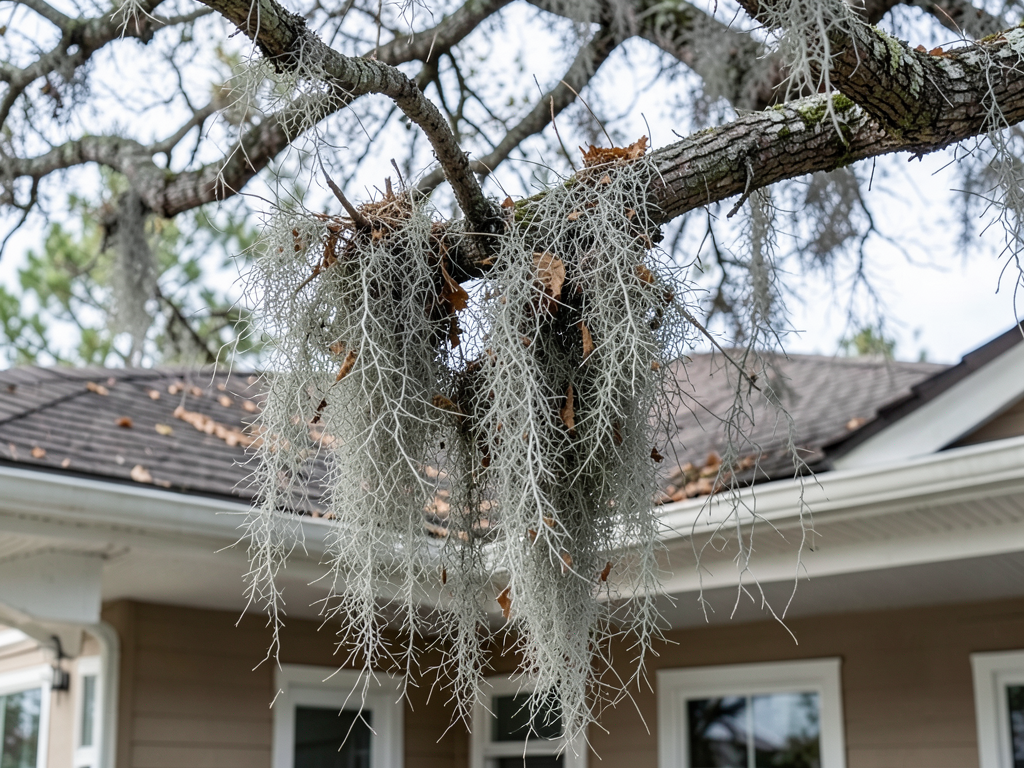
Winter Garden’s historic oak trees create a beautiful canopy but also drop Spanish Moss and debris that traps moisture against your roof like a wet sponge. This unique Central Florida environmental challenge can cause hidden damage to asphalt shingles and other roofing materials long before you notice a leak inside your home. Florida Building Code.
Spanish Moss (Tillandsia usneoides) is an epiphyte that grows on tree branches without taking nutrients from the host. While it looks harmless, the dense hanging masses catch falling oak leaves, pine needles, and other organic debris. This creates a thick layer that holds moisture against your roof surface for days after rain, creating the perfect conditions for rot, mold growth, and shingle deterioration.
The real damage happens underneath. Moisture trapped by Spanish Moss and debris seeps into asphalt shingle granules, breaking down the protective coating. Over time, this leads to granule loss, cracked shingles, and eventually water penetration into your roof deck. In Winter Garden’s humid climate, this process accelerates dramatically compared to drier regions.
How Spanish Moss Causes Structural Roof Damage
Moisture trapping and shingle rot represent the primary mechanism of damage. Spanish Moss acts like a moisture reservoir, holding water against your roof surface for 48-72 hours after rainfall. This extended exposure time allows water to penetrate microscopic cracks in shingle surfaces and work its way into the underlying materials. Best Roofing Materials for Older Bungalows in Thornton Park.
Weight load increase during Florida rainstorms compounds the problem. Spanish Moss can absorb up to 10 times its dry weight in water. During heavy afternoon thunderstorms common in Winter Garden, a single section of moss-covered roof can gain hundreds of pounds of additional weight. This stress can cause sagging in older roof structures or damage to roof decking.
Debris accumulation leading to organic decomposition creates a secondary problem. The trapped organic matter breaks down over time, releasing acids and creating a nutrient-rich environment for fungi and mold growth. These organisms further break down roofing materials and create health hazards inside your home if they penetrate the roof structure. Is Solar Roofing Actually Worth the Investment for Orlando Residents?.
Obstruction of drainage valleys and gutters prevents proper water flow off your roof. Spanish Moss can grow across roof valleys where water should channel away from your home. When combined with debris buildup, this creates dams that force water under shingles and into your attic space.
Roof Types Most Vulnerable in Central Florida
Asphalt shingles suffer the most visible damage from Spanish Moss and debris accumulation. The moisture retention accelerates granule loss, causes curling at shingle edges, and creates ideal conditions for algae growth that leaves black streaks across your roof surface. Winter Garden’s intense UV exposure combined with moisture damage can reduce asphalt shingle lifespan by 30-40%.
Clay and concrete roof tiles face different challenges. While the tiles themselves resist moisture damage, Spanish Moss can grow in the gaps between tiles and trap debris underneath. This creates areas where water pools and seeps under tiles, potentially damaging the underlayment and roof deck. The added weight of saturated moss can also cause cracking in older clay tiles. Choosing Between Shingle and Tile Roofs for Your Central Florida Home.
Metal roofing systems offer the best resistance to Spanish Moss damage. The smooth surface prevents moss from establishing strong root systems, and the non-porous material resists moisture penetration. However, debris accumulation in roof valleys and around fasteners can still cause problems if not addressed regularly.
Flat commercial roofs using TPO or EPDM membranes face unique risks. Spanish Moss and debris can grow in roof drains and scuppers, causing ponding water that accelerates membrane deterioration. The weight of saturated organic material can also stress roof structures designed for minimal loading.. Read more about Using zinc strips to keep those ugly green algae stains off your brand new roof in Heathrow.
Safe Removal vs. Dangerous DIY Methods
Pressure washing creates more damage than it prevents. High-pressure water blasts can strip asphalt shingle granules, crack clay tiles, and force water under roofing materials. This method often causes immediate visible damage while creating entry points for future moisture intrusion. Florida Building Code Section 706 specifically warns against high-pressure cleaning of roof surfaces.
Soft washing represents the professional standard for Spanish Moss removal. This method uses low-pressure water (under 500 PSI) combined with specialized cleaning solutions that kill moss and algae without damaging roofing materials. The cleaning agents typically contain biodegradable compounds that break down moss cell structures while being safe for surrounding landscaping.
Zinc or copper strips provide long-term prevention after removal. These metal strips installed along roof ridges release ions during rainfall that create an environment hostile to moss and algae growth. The gradual release of metal ions prevents new growth without requiring frequent reapplication of chemical treatments.
Professional inspection reveals hidden damage that DIY removal misses. After Spanish Moss removal, roofing professionals use moisture meters to detect water intrusion in roof decking and underlayment. They also check for structural damage caused by the added weight of saturated moss and debris over time. Reliable Roof Inspection Services for Home Buyers in Winter Garden.
When to Call an Orlando Roofing Professional
Visible moss growth covering more than 10% of your roof surface indicates the need for professional removal. At this stage, the moss has established deep root systems that DIY methods cannot effectively eliminate. Professional removal also includes inspection for existing damage that requires repair. EPA mold information.
Water stains on interior ceilings or walls suggest active roof leaks caused by moisture trapped under Spanish Moss and debris. These leaks often start small and grow larger over time as roofing materials continue to deteriorate. Professional moisture testing can locate the source even when it’s not visible from the attic.
Aged roof systems (15+ years) face compounded risks from Spanish Moss accumulation. Older shingles have already lost some protective granules and may have minor cracks or damage. The added moisture exposure from moss growth can accelerate failure dramatically in these aging systems.
Post-storm inspections become critical after hurricane season. High winds can tear sections of Spanish Moss loose, creating concentrated debris piles that dam water flow. Professional inspections after storms identify these problem areas and prevent secondary damage from water backup.
Prevention Strategies for Winter Garden Homeowners
Regular roof cleaning every 12-18 months prevents Spanish Moss from establishing strong root systems. This schedule works well for Winter Garden’s climate, where moss can grow rapidly during humid summer months. Professional cleaning includes debris removal, moss treatment, and inspection for early signs of roof damage.
Tree trimming reduces the primary source of Spanish Moss and debris. Oak branches that overhang your roof provide the perfect environment for moss growth and drop leaves directly onto your roof surface. Maintaining a 10-foot clearance between tree branches and your roof significantly reduces debris accumulation.. Read more about Dealing with massive oak tree overhang on your historic Cherokee District roof.
Gutter maintenance prevents water backup and ice dam formation during rare Central Florida freezes. Clean gutters ensure proper water drainage away from your roof and foundation. Gutter guards can reduce maintenance frequency but still require periodic cleaning to remove fine debris that passes through the guard system.
Roof ventilation improvements reduce moisture buildup in your attic space. Proper ventilation allows trapped moisture to escape rather than condense on the underside of your roof deck. This is particularly important in Winter Garden’s humid climate where daily temperature swings can create condensation cycles.
The Cost of Inaction
Structural damage from prolonged moisture exposure can cost thousands in repairs. Water-damaged roof decking requires complete replacement, not just patching. In severe cases, structural rafters may need reinforcement or replacement if they’ve been compromised by rot and fungal growth over years of neglect.
Interior damage extends beyond the roof itself. Water intrusion through a compromised roof system can damage insulation, drywall, electrical systems, and personal belongings. Mold remediation costs often exceed roof repair costs when moisture problems go unaddressed for extended periods.
Energy efficiency losses occur as roofing materials deteriorate. Damaged shingles and underlayment allow heat transfer that forces your HVAC system to work harder. In Winter Garden’s hot climate, this can increase cooling costs by 15-25% during peak summer months.
Insurance complications arise when damage results from neglected maintenance. Many homeowner insurance policies exclude coverage for damage resulting from lack of proper maintenance. Insurance companies may deny claims if they determine that Spanish Moss accumulation and resulting damage were preventable through regular maintenance.
Professional Assessment Process
Comprehensive roof inspections include moisture mapping using infrared cameras and moisture meters. These diagnostic tools detect water intrusion in areas not visible to the naked eye. Professionals document moisture levels at multiple depths to determine the extent of damage and necessary repairs.
Structural evaluation checks for damage caused by the weight of Spanish Moss and debris. This includes examining roof decking for sagging, checking rafter connections for stress cracks, and assessing the condition of support structures. The evaluation helps determine if structural repairs are needed before roof replacement.
Material assessment identifies specific damage patterns caused by moisture and organic growth. This includes checking for granule loss on asphalt shingles, cracking in clay tiles, and deterioration of underlayment materials. The assessment guides repair or replacement decisions based on the actual condition of your roofing system.
Cost estimation provides transparent pricing for recommended services. Professional assessments include detailed breakdowns of removal costs, repair needs, and prevention strategies. This allows homeowners to make informed decisions about addressing Spanish Moss and debris problems before they cause major damage.
Frequently Asked Questions
Does Spanish Moss actually harm my roof?
Yes, Spanish Moss traps moisture against your roof surface, leading to rot, shingle deterioration, and water intrusion. The damage occurs gradually but can become severe over time if not addressed.
How often should I have my Winter Garden roof inspected for moss and debris?
Professional inspections every 12-18 months are recommended for Winter Garden’s climate. More frequent inspections may be needed if you have large oak trees overhanging your roof.
Can I remove Spanish Moss myself?
DIY removal is possible but risky. Pressure washing damages roofing materials, and incomplete removal allows moss to regrow quickly. Professional removal includes inspection for existing damage and prevention strategies.
What’s the best way to prevent Spanish Moss from growing back?
Regular professional cleaning, zinc or copper strips along roof ridges, and tree trimming to reduce overhanging branches provide the most effective prevention strategy.
How much does professional Spanish Moss removal cost?
Costs vary based on roof size, moss extent, and roof type. Professional removal typically ranges from $300-$1,500, with most Winter Garden homes falling in the $500-$800 range.
Will my homeowner’s insurance cover damage from Spanish Moss?
Most policies cover sudden damage but exclude problems resulting from lack of maintenance. Regular roof maintenance including moss removal is considered the homeowner’s responsibility.
Take Action Before It’s Too Late
Spanish Moss and oak debris might look picturesque, but they’re actively working to destroy your Winter Garden roof. The combination of moisture retention, debris accumulation, and Florida’s humid climate creates a perfect storm for roof damage that often goes unnoticed until major repairs are needed.
Don’t wait until you see water stains on your ceiling or notice missing shingles. By then, the damage has already spread beyond what’s visible from the ground. Professional inspection can identify problems early when repairs are simpler and less expensive.
Call (689) 268-2855 today to schedule your comprehensive roof inspection. Our experienced technicians will assess your roof for Spanish Moss damage, debris accumulation, and any existing moisture problems. We provide detailed reports and clear recommendations for protecting your home investment.
Pick up the phone and call (689) 268-2855 before the next afternoon thunderstorm hits. Your roof protects everything inside your home, and preventing Spanish Moss damage now can save you thousands in emergency repairs later. Emergency Tarping Service.
Winter Garden’s oak trees and Spanish Moss create a unique roofing challenge that requires specific expertise to address properly. Trust the local professionals who understand our climate and have been protecting Winter Garden homes for years. Call (689) 268-2855 now to schedule your inspection and take the first step toward protecting your home from Spanish Moss damage.
{
“@context”: “https://schema.org”,
“@type”: “BlogPosting”,
“headline”: “Preventing Spanish Moss and oak debris from rot-proofing your Winter Garden roof”,
“description”: “Learn how Winter Garden’s oak trees and Spanish Moss trap moisture against your roof, causing rot and damage. Get expert prevention tips and removal methods.”,
“wordCount”: 2014,
“datePublished”: “2026-05-31T08:44:00.000Z”,
“dateModified”: “2026-05-31T08:44:00.000Z”,
“inLanguage”: “en-US”,
“mainEntityOfPage”: {
“@type”: “WebPage”,
“@id”: “https://allproroofingorlando.com”
},
“publisher”: {
“@type”: “LocalBusiness”,
“name”: “All Pro Roofing Orlando”,
“url”: “https://allproroofingorlando.com”
},
“author”: {
“@type”: “Organization”,
“name”: “All Pro Roofing Orlando”,
“url”: “https://allproroofingorlando.com”
},
“image”: {
“@type”: “ImageObject”,
“url”: “https://allproroofingorlando.com/wp-content/uploads/2026/03/preventing-spanish-moss-and-oak-debris-from-rot-pr-1.png”
}
}
{
“@context”: “https://schema.org”,
“@type”: “RoofingContractor”,
“name”: “All Pro Roofing Orlando”,
“url”: “https://allproroofingorlando.com”,
“address”: {
“@type”: “PostalAddress”,
“addressLocality”: “Orlando”
},
“areaServed”: {
“@type”: “City”,
“name”: “Orlando”
}
}
{
“@context”: “https://schema.org”,
“@type”: “FAQPage”,
“mainEntity”: [
{
“@type”: “Question”,
“name”: “Does Spanish Moss actually harm my roof?”,
“acceptedAnswer”: {
“@type”: “Answer”,
“text”: “Yes, Spanish Moss traps moisture against your roof surface, leading to rot, shingle deterioration, and water intrusion. The damage occurs gradually but can become severe over time if not addressed.”
}
},
{
“@type”: “Question”,
“name”: “How often should I have my Winter Garden roof inspected for moss and debris?”,
“acceptedAnswer”: {
“@type”: “Answer”,
“text”: “Professional inspections every 12-18 months are recommended for Winter Garden’s climate. More frequent inspections may be needed if you have large oak trees overhanging your roof.”
}
},
{
“@type”: “Question”,
“name”: “Can I remove Spanish Moss myself?”,
“acceptedAnswer”: {
“@type”: “Answer”,
“text”: “DIY removal is possible but risky. Pressure washing damages roofing materials, and incomplete removal allows moss to regrow quickly. Professional removal includes inspection for existing damage and prevention strategies.”
}
},
{
“@type”: “Question”,
“name”: “What’s the best way to prevent Spanish Moss from growing back?”,
“acceptedAnswer”: {
“@type”: “Answer”,
“text”: “Regular professional cleaning, zinc or copper strips along roof ridges, and tree trimming to reduce overhanging branches provide the most effective prevention strategy.”
}
},
{
“@type”: “Question”,
“name”: “How much does professional Spanish Moss removal cost?”,
“acceptedAnswer”: {
“@type”: “Answer”,
“text”: “Costs vary based on roof size, moss extent, and roof type. Professional removal typically ranges from $300-$1,500, with most Winter Garden homes falling in the $500-$800 range.”
}
},
{
“@type”: “Question”,
“name”: “Will my homeowner’s insurance cover damage from Spanish Moss?”,
“acceptedAnswer”: {
“@type”: “Answer”,
“text”: “Most policies cover sudden damage but exclude problems resulting from lack of maintenance. Regular roof maintenance including moss removal is considered the homeowner’s responsibility.”
}
}
]
}
{
“@context”: “https://schema.org”,
“@type”: “BreadcrumbList”,
“itemListElement”: [
{
“@type”: “ListItem”,
“position”: 1,
“name”: “Home”,
“item”: “https://allproroofingorlando.com”
},
{
“@type”: “ListItem”,
“position”: 2,
“name”: “Blog”,
“item”: “https://allproroofingorlando.com/blog”
},
{
“@type”: “ListItem”,
“position”: 3,
“name”: “Preventing Spanish Moss and oak debris from rot-proofing your Winter Garden roof”
}
]
}
{
“@context”: “https://schema.org”,
“@type”: “Service”,
“serviceType”: “Roofing”,
“provider”: {
“@type”: “LocalBusiness”,
“name”: “All Pro Roofing Orlando”,
“url”: “https://allproroofingorlando.com”
},
“areaServed”: {
“@type”: “City”,
“name”: “Orlando”
},
“description”: “Learn how Winter Garden’s oak trees and Spanish Moss trap moisture against your roof, causing rot and damage. Get expert prevention tips and removal methods.”
}