
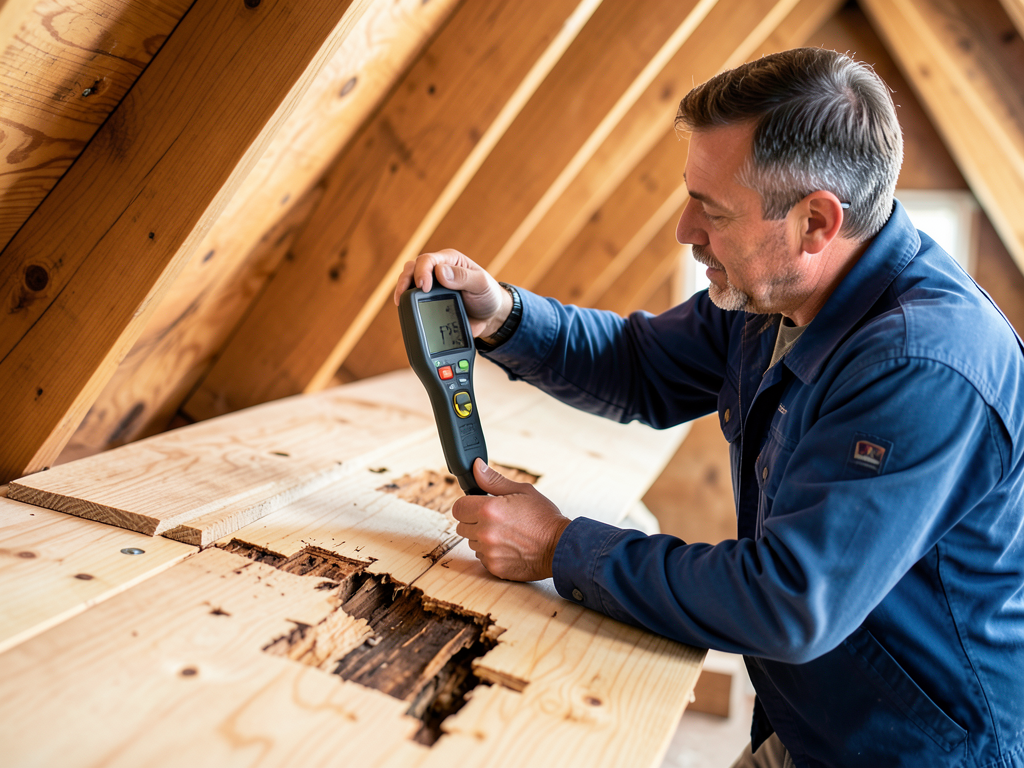
How to tell if the plywood under your shingles is rotting in the Orlando humidity
The Orlando area gets about 74% humidity year-round. That constant moisture creates the perfect environment for wood rot under your shingles. Roof decking plywood or OSB absorbs water through capillary action when ventilation is poor or leaks develop. Once moisture content exceeds 20% the wood begins to break down. This article shows you how to spot the warning signs before structural failure occurs.
Rotted decking feels spongy underfoot and loses structural integrity. The damage spreads quickly in Florida’s climate where afternoon thunderstorms and high humidity keep materials saturated. Catching problems early can mean the difference between a simple repair and a complete roof replacement. Florida Building Code requirements.
Common signs of rotted roof decking in Orlando homes
Orlando’s combination of high humidity and frequent storms creates unique challenges for roof decking. The constant moisture exposure accelerates deterioration in ways that homeowners in drier climates rarely see. Understanding these warning signs helps you act before costly damage spreads.
Visual exterior indicators
Walk around your home and look for these external clues. A wavy or undulating roofline often indicates decking has lost its structural rigidity. The plywood or OSB sheets warp and sag as they rot from within. You might notice shingles buckling or creating visible waves across the surface.
Check for areas where shingles appear to bounce or flex when you gently press them. This movement indicates the decking underneath has lost its solid support. In some cases you will see actual depressions or low spots forming along the roof surface.
Pay attention to any areas where shingles seem to lift or separate from the surface. As the wood underneath deteriorates it creates pockets of air that cause shingles to lose adhesion. This separation allows more water to penetrate and accelerates the rotting process. EPA mold and moisture guidelines.
3>
Interior warning signs
Inside your home the attic reveals critical information about decking condition. Look for dark water stains on the underside of plywood sheets. These stains indicate past or current water intrusion that has compromised the wood structure.
Check for any areas where light shines through the roof boards from outside. Even small pinholes indicate significant deterioration. The wood has become so compromised that it no longer provides a solid barrier against the elements.
Feel the plywood surface in your attic. Healthy decking feels solid and rigid. Rotted areas feel soft, crumbly, or spongy to the touch. Press gently with your finger. If the wood gives way easily or feels damp it has already begun to fail.
Look for concentrated mold growth on attic rafters or decking. While some surface mold is common in Florida attics excessive growth indicates chronic moisture problems that are destroying the wood from within.
The ‘soft spot’ test
Professional roofers use a simple diagnostic method to identify compromised decking. Walk carefully across your roof surface paying attention to how it feels underfoot. Healthy decking provides a firm consistent feel across the entire surface.
When you step on rotted areas you will notice a distinct difference. The surface feels soft or spongy rather than solid. It may even feel like the roof could give way under your weight. This sensation indicates the wood has lost its structural integrity.. Read more about How your pool cage attachment could be slowly pulling apart your Dr. Phillips roof.
Pay special attention to areas around roof penetrations like vents, chimneys, and skylights. These spots are particularly vulnerable to water intrusion and often show the first signs of rot. The constant moisture exposure around flashing creates ideal conditions for wood deterioration.. Read more about Why replacing your skylights during a full roof job in Bay Hill saves thousands later.
Listen for unusual sounds as you walk. Healthy decking produces minimal noise. Rotted areas may creak, pop, or make hollow sounds as the wood fibers separate and break down under pressure.
Understanding Orlando’s unique climate challenges
Orlando’s weather creates conditions that accelerate roof decking deterioration compared to other regions. The combination of high humidity, intense UV exposure, and frequent storms creates a perfect storm for wood rot.
The area experiences about 117 days of measurable rainfall annually. Each storm deposits water that can find its way through even small vulnerabilities in your roofing system. When water reaches the decking it begins the deterioration process. Is Solar Roofing Actually Worth the Investment for Orlando Residents?.
Afternoon thunderstorms are particularly problematic. These intense rain events often occur when roof temperatures are highest. The rapid temperature change causes thermal shock that can create tiny cracks in shingles and flashing allowing water to penetrate.
Orlando’s humidity rarely drops below 60% even during dry seasons. This constant moisture in the air means wood materials never fully dry out. The perpetual dampness creates conditions where fungi and mold can thrive and gradually consume the wood fibers. Best Roofing Materials for Older Bungalows in Thornton Park.
Termites and other wood-destroying organisms are active year-round in Central Florida. These pests are attracted to moist wood and can accelerate the deterioration process once rot has begun.
Repair versus replacement decisions
Not all rotted decking requires complete replacement. The extent of damage determines whether you can patch specific areas or need a full tear-off and reinstall.. Read more about When to get a second opinion on a roof replacement estimate in Winter Park.
Small isolated areas of rot affecting less than 10% of the total roof area can often be repaired. A professional can cut out the damaged sections and replace them with new plywood or OSB. This approach works well for spot damage around chimneys or in areas where a leak was quickly addressed.
When rot affects 20% or more of the decking surface replacement becomes more cost-effective. Multiple repairs create weak points and transition areas that can lead to future problems. A complete replacement ensures uniform strength and eliminates all compromised material.
Consider the age of your roof when making this decision. If your shingles are near the end of their lifespan it often makes sense to replace everything at once. This prevents having to remove new shingles later to address underlying decking issues.
The type of damage also matters. Surface rot that only affects the top layer of plywood can sometimes be repaired. Deep rot that penetrates through the entire thickness of the board requires complete replacement for safety reasons.
Orlando building codes and hurricane readiness
Florida Building Code requirements affect how roof decking must be installed and repaired. These regulations ensure your roof can withstand the severe weather common to the Orlando area.
Current codes require specific nail spacing and patterns for decking installation. For 7/16 inch plywood the minimum requirement is six nails per sheet placed at specified intervals. This creates a stronger attachment that resists wind uplift during storms.
Secondary water barriers are now mandatory in Florida. These self-adhering membranes install under the primary roofing material at critical areas like eaves and valleys. They provide an additional layer of protection if shingles are damaged or blown off during a hurricane. TPO vs EPDM Roofing Guide.
The code also specifies minimum thicknesses for roof decking based on rafter spacing. For 24 inch on-center spacing you need at least 7/16 inch plywood. Using thinner material or spacing rafters too far apart creates weak points that can fail during high winds.
Hurricane straps and clips must connect the roof structure to the walls according to current standards. These metal connectors prevent the roof from lifting off the building during extreme wind events. Older homes may need retrofitting to meet current requirements.
Preventing future decking rot
Proper ventilation is your first defense against moisture buildup in the attic. Building codes require minimum ventilation ratios based on attic square footage. Without adequate airflow moisture accumulates and creates conditions for rot to develop.
Attic ventilation works through a simple principle. Intake vents at the soffits allow cool air to enter. Exhaust vents at or near the ridge allow hot moist air to escape. This continuous airflow keeps decking dry and prevents moisture accumulation.
Check your attic ventilation annually. Look for blocked soffit vents covered by insulation. Ensure ridge vents or other exhaust systems are clear and functioning. Proper ventilation can extend decking life by years in Orlando’s humid climate.
Address roof leaks immediately when they occur. Even small leaks allow water to penetrate and begin the rotting process. The longer water sits on wood the more damage it causes. Quick repairs prevent minor issues from becoming major structural problems.
Keep trees trimmed back from your roof. Overhanging branches drop leaves and debris that trap moisture against the roof surface. They also provide pathways for pests to access your roof. Good clearance improves air circulation and reduces moisture problems.
Consider upgrading to moisture-resistant decking materials when replacement becomes necessary. Advantech and similar products offer better moisture resistance than standard plywood. While more expensive they can provide longer service life in Florida’s challenging climate.
Cost factors for decking repair in Orlando
Repair costs vary based on several factors specific to the Orlando market. Understanding these variables helps you budget appropriately for necessary work.
Material costs fluctuate based on current lumber market conditions. Standard 1/2 inch plywood sheets range from $25 to $40 each depending on quality and market factors. Premium moisture-resistant options cost 30-50% more but offer better long-term performance.
Labor rates in the Orlando area typically run $50 to $75 per hour for roofing work. A simple repair involving one or two sheet replacements might take 2-3 hours. More extensive repairs requiring multiple sheets take proportionally longer.
Roof accessibility affects labor costs. Steep roofs or those with multiple penetrations require more time and safety equipment. Single-story homes with simple roof designs cost less to repair than complex multi-story structures.
Emergency repairs during storm season often carry premium pricing. Roofers are busiest immediately after major weather events when many homeowners discover damage. Scheduling non-emergency repairs during slower periods can save money. Emergency Tarping Service.
Insurance coverage may offset some costs if damage results from covered events like windstorms or hail. Document damage thoroughly with photos and obtain professional assessments to support insurance claims.
Professional inspection recommendations
Annual roof inspections catch problems early when they are easiest and least expensive to fix. A professional assessment provides peace of mind and helps you plan for future maintenance needs. Reliable Roof Inspection Services for Home Buyers in Winter Garden.
Look for contractors with specific experience in Orlando’s climate challenges. Local knowledge matters because roofing problems in Central Florida differ from those in other regions. Ask about their familiarity with local building codes and common failure patterns.
During an inspection expect the contractor to check for proper ventilation, examine flashing details, and assess overall roof condition. They should provide specific recommendations rather than generic sales pitches. A thorough inspection takes 30-60 minutes depending on roof complexity.
Request written estimates that detail the scope of work, materials to be used, and warranty information. Compare multiple quotes but remember the lowest price does not always represent the best value. Quality workmanship prevents future problems.
Ask about the contractor’s license and insurance status. Florida requires roofing contractors to carry specific coverage and maintain active licenses. Verify credentials through the state licensing board before hiring anyone to work on your roof.
Consider establishing a relationship with a trusted roofing professional before emergencies occur. Regular maintenance and prompt attention to minor issues prevents the extensive damage that leads to rotted decking and expensive repairs.
Frequently Asked Questions
How long does roof decking typically last in Orlando?
Properly installed and maintained decking in Orlando’s climate lasts 20-25 years on average. Factors like ventilation quality, storm exposure, and maintenance practices significantly affect longevity. Homes with excellent ventilation and prompt leak repairs often see decking last beyond 25 years.
Can I walk on my roof to check for soft spots myself?
Walking on your roof carries risks and should only be done with proper safety equipment. If you choose to inspect personally wear rubber-soled shoes for traction and avoid walking during wet or extremely hot conditions. Consider using binoculars from the ground for initial assessment instead.
What’s the difference between OSB and plywood for roof decking?
Plywood consists of thin wood veneers layered with alternating grain directions. OSB uses wood strands oriented in specific patterns and bonded with resin. Both meet building codes but plywood typically handles moisture slightly better. OSB costs less but can swell more when exposed to water.
Take action before structural failure occurs
Rotted roof decking creates serious safety hazards. The compromised structure can fail without warning causing injury or extensive property damage. Don’t wait until you see ceiling stains or experience a collapse.
Call (689) 268-2855 today to schedule your free roof inspection. Our Orlando-based team knows exactly what to look for in Central Florida’s unique climate. We provide honest assessments and clear recommendations for protecting your home.
Pick up the phone and call (689) 268-2855 before the next storm hits. Early detection saves money and prevents the dangerous conditions that develop when rotted decking goes untreated. Your home deserves professional attention from local experts who understand Orlando’s specific challenges.
{
“@context”: “https://schema.org”,
“@type”: “BlogPosting”,
“headline”: “How to tell if the plywood under your shingles is rotting in the Orlando humidity”,
“description”: “Orlando’s humidity accelerates roof decking rot. Learn 7 warning signs from spongy spots to ceiling stains. Protect your home with our free inspection.”,
“wordCount”: 2149,
“datePublished”: “2026-05-29T11:09:00.000Z”,
“dateModified”: “2026-05-29T11:09:00.000Z”,
“inLanguage”: “en-US”,
“mainEntityOfPage”: {
“@type”: “WebPage”,
“@id”: “https://allproroofingorlando.com”
},
“publisher”: {
“@type”: “LocalBusiness”,
“name”: “All Pro Roofing Orlando”,
“url”: “https://allproroofingorlando.com”
},
“author”: {
“@type”: “Organization”,
“name”: “All Pro Roofing Orlando”,
“url”: “https://allproroofingorlando.com”
},
“image”: {
“@type”: “ImageObject”,
“url”: “https://allproroofingorlando.com/wp-content/uploads/2026/03/how-to-tell-if-the-plywood-under-your-shingles-is-1.png”
}
}
{
“@context”: “https://schema.org”,
“@type”: “RoofingContractor”,
“name”: “All Pro Roofing Orlando”,
“url”: “https://allproroofingorlando.com”,
“address”: {
“@type”: “PostalAddress”,
“addressLocality”: “Orlando”
},
“areaServed”: {
“@type”: “City”,
“name”: “Orlando”
}
}
{
“@context”: “https://schema.org”,
“@type”: “FAQPage”,
“mainEntity”: [
{
“@type”: “Question”,
“name”: “How long does roof decking typically last in Orlando?”,
“acceptedAnswer”: {
“@type”: “Answer”,
“text”: “Properly installed and maintained decking in Orlando’s climate lasts 20-25 years on average. Factors like ventilation quality, storm exposure, and maintenance practices significantly affect longevity. Homes with excellent ventilation and prompt leak repairs often see decking last beyond 25 years.”
}
},
{
“@type”: “Question”,
“name”: “Can I walk on my roof to check for soft spots myself?”,
“acceptedAnswer”: {
“@type”: “Answer”,
“text”: “Walking on your roof carries risks and should only be done with proper safety equipment. If you choose to inspect personally wear rubber-soled shoes for traction and avoid walking during wet or extremely hot conditions. Consider using binoculars from the ground for initial assessment instead.”
}
},
{
“@type”: “Question”,
“name”: “What’s the difference between OSB and plywood for roof decking?”,
“acceptedAnswer”: {
“@type”: “Answer”,
“text”: “Plywood consists of thin wood veneers layered with alternating grain directions. OSB uses wood strands oriented in specific patterns and bonded with resin. Both meet building codes but plywood typically handles moisture slightly better. OSB costs less but can swell more when exposed to water.”
}
}
]
}
{
“@context”: “https://schema.org”,
“@type”: “BreadcrumbList”,
“itemListElement”: [
{
“@type”: “ListItem”,
“position”: 1,
“name”: “Home”,
“item”: “https://allproroofingorlando.com”
},
{
“@type”: “ListItem”,
“position”: 2,
“name”: “Blog”,
“item”: “https://allproroofingorlando.com/blog”
},
{
“@type”: “ListItem”,
“position”: 3,
“name”: “How to tell if the plywood under your shingles is rotting in the Orlando humidity”
}
]
}
{
“@context”: “https://schema.org”,
“@type”: “Service”,
“serviceType”: “Roofing”,
“provider”: {
“@type”: “LocalBusiness”,
“name”: “All Pro Roofing Orlando”,
“url”: “https://allproroofingorlando.com”
},
“areaServed”: {
“@type”: “City”,
“name”: “Orlando”
},
“description”: “Orlando’s humidity accelerates roof decking rot. Learn 7 warning signs from spongy spots to ceiling stains. Protect your home with our free inspection.”
}