
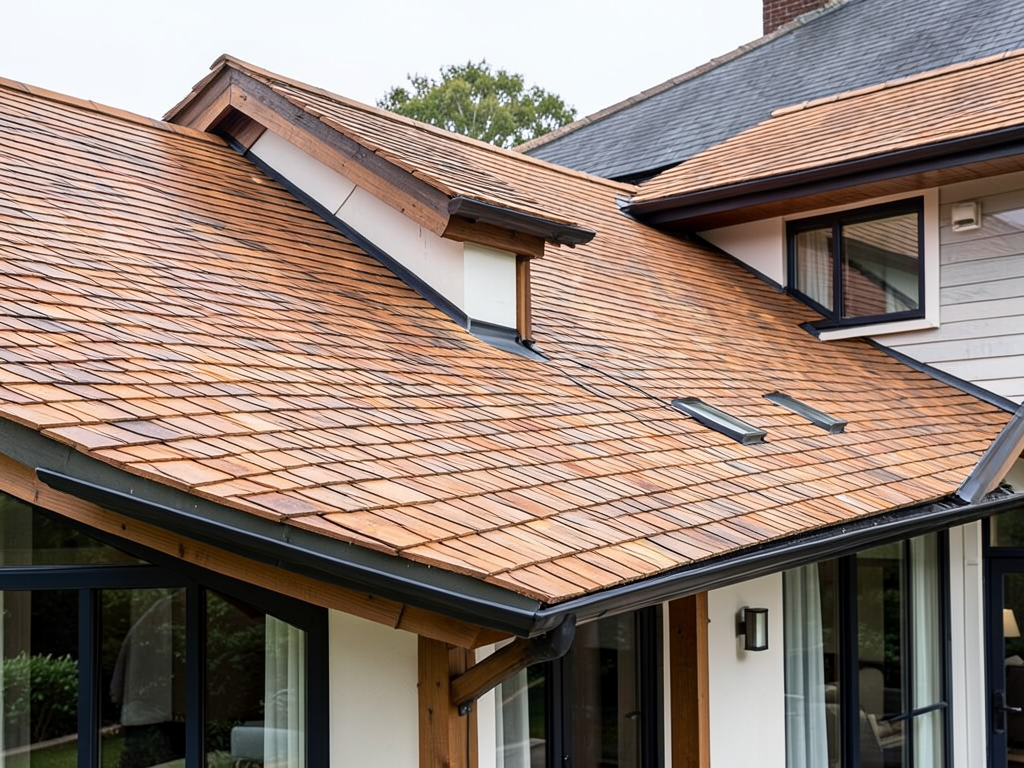
Getting the wood shake look in Isleworth with modern synthetic roofing materials
Isleworth homeowners love the rich, dimensional look of natural cedar shake roofing, but Florida’s climate makes traditional wood a poor choice. The combination of intense UV exposure, hurricane-force winds, and constant humidity causes real wood to warp, split, and rot within 10-15 years. Modern synthetic shake materials now deliver the exact same aesthetic appeal while meeting Florida’s strict building codes and lasting 40-50 years with minimal maintenance. Florida Building Code compliance requirements.
Today’s composite shake products use advanced polymer blends that resist UV degradation, algae growth, and impact damage. These materials are engineered specifically for Central Florida’s weather extremes, offering Class A fire resistance and Class 4 impact ratings that wood cannot match. For Isleworth’s luxury homes, synthetic shake provides the perfect balance of timeless beauty and practical durability. Best Roofing Materials for Older Bungalows in Thornton Park.
Why synthetic shake outperforms natural cedar in Florida
Natural cedar shake requires constant maintenance in Florida’s humid environment. The wood absorbs moisture, leading to warping, splitting, and eventual rot. Algae and mold growth create black streaks that require pressure washing every 2-3 years. In contrast, modern synthetic materials use UV-stabilized polymers that resist fading and maintain their dimensional stability through Orlando’s 90-degree temperature swings.
Fire safety represents another critical advantage. Florida’s Building Code requires Class A fire-rated materials in most residential applications. Natural cedar only achieves Class C ratings, while premium synthetic products meet Class A standards. This difference can mean lower insurance premiums and better protection during Florida’s frequent lightning storms.
Meeting Isleworth’s HOA requirements with synthetic materials
Isleworth’s architectural review board typically requires materials that maintain the community’s upscale appearance while meeting Florida’s building standards. Synthetic shake products come in various profiles that closely mimic hand-split cedar, including staggered butt patterns and varying shake widths that create authentic shadow lines.
Most HOAs in Isleworth accept synthetic materials when they demonstrate comparable aesthetic qualities to natural wood. The key is selecting products with realistic color variation and texture that avoid the uniform appearance of lower-quality alternatives. Many synthetic manufacturers offer samples and technical documentation specifically for HOA approval processes.
Understanding Florida Building Code requirements
Florida’s Building Code Section 15 (Roof Assemblies) mandates specific wind resistance ratings for Orlando’s High-Velocity Hurricane Zone (HVHZ). Most synthetic shake products achieve TAS 100 compliance, meeting the rigorous testing for uplift resistance at wind speeds exceeding 150 mph.
The code also requires secondary water barriers in roof valleys and at roof-to-wall intersections. Synthetic materials integrate seamlessly with these requirements, as their consistent dimensions allow for precise installation of self-adhering underlayment. This differs from natural wood, where irregular shake sizes can create gaps in moisture protection.
Cost comparison: synthetic vs. natural cedar
| Material Type | Initial Cost | Lifespan | Annual Maintenance |
|---|---|---|---|
| Natural Cedar Shake | $8.50-$12.00/sq ft | 12-15 years | $0.75-$1.25/sq ft |
| Synthetic Composite | $11.00-$15.00/sq ft | 40-50 years | $0.10-$0.20/sq ft |
Over a 30-year period, synthetic shake typically costs 30-40% less than natural cedar when factoring in replacement costs and maintenance. The materials also qualify for insurance premium discounts due to their Class A fire ratings and impact resistance.
Leading synthetic shake brands for Isleworth homes
DaVinci Roofscapes offers polymer-based shake tiles that replicate the random width patterns of hand-split cedar. Their products carry a 50-year limited warranty and achieve Class 4 impact ratings. The color-through technology prevents fading even in Florida’s intense UV exposure. DaVinci Roofscapes synthetic shake products.
Brava Roof Tile manufactures composite shake using recycled materials with a Class A fire rating and 145 mph wind warranty. Their products feature realistic wood grain textures and come in multiple color blends that match traditional cedar tones.
CeDUR produces polyurethane-based shakes that are 75% lighter than traditional materials, reducing structural load requirements. Their products resist algae growth naturally without chemical treatments and maintain dimensional stability in Florida’s humidity.
Installation process for synthetic shake in Isleworth
Professional installation requires specialized training due to the materials’ unique properties. The process begins with a comprehensive roof deck inspection to ensure structural integrity. Florida’s Building Code requires 5/8-inch plywood minimum for new installations. Reliable Roof Inspection Services for Home Buyers in Winter Garden.
The underlayment system uses self-adhering polymer-modified bitumen in valleys and at roof edges. This provides the secondary water barrier required by code. Synthetic shake tiles install using hidden fasteners that prevent water infiltration through nail holes.
Proper ventilation proves critical for synthetic materials. The installation includes ridge vents and soffit ventilation to prevent heat buildup that could affect the polymer components. Most manufacturers recommend 1 square foot of net free ventilation area per 150 square feet of attic space.
Weather performance in Central Florida
Orlando’s climate presents unique challenges for roofing materials. Summer afternoon thunderstorms bring sudden temperature drops of 20-30 degrees, causing materials to expand and contract. Synthetic shake products use flexible polymer compounds that accommodate this movement without cracking. Is Solar Roofing Actually Worth the Investment for Orlando Residents?.
UV exposure in Central Florida averages 7-8 hours daily during summer months. Premium synthetic materials incorporate UV inhibitors that prevent color fading and material degradation. Laboratory testing shows these products maintain 95% of their original color after 10 years of Florida sun exposure.
Algae and mold growth plague many roofing materials in Florida’s humidity. Synthetic shake products resist biological growth naturally due to their non-organic composition. The smooth surface prevents algae spores from establishing footholds, eliminating the black streaks common on natural materials. TPO vs EPDM Roofing Guide.
Energy efficiency benefits
Synthetic shake materials can improve home energy efficiency through reflective color technology. Light-colored synthetic products reflect up to 40% of solar radiation, reducing cooling costs during Orlando’s long summers. The materials also create an insulating air gap between the tile and roof deck. Choosing Between Shingle and Tile Roofs for Your Central Florida Home.
Many synthetic products qualify for Energy Star ratings when installed with proper ventilation. This can provide additional utility rebates beyond insurance premium discounts. The materials’ consistent dimensions also prevent gaps that allow conditioned air to escape.
Maintenance requirements for synthetic shake
Unlike natural cedar, synthetic shake requires minimal maintenance. Annual inspections should check for loose tiles, damaged flashing, and proper ventilation. Most manufacturers recommend cleaning every 3-5 years using low-pressure washing to remove debris.
The polymer composition resists the biological growth that plagues natural materials. However, tree debris accumulation can trap moisture against the roof surface. Keeping gutters clean and trimming overhanging branches prevents this issue.
Impact damage from falling branches or hail requires immediate attention. While Class 4 rated materials resist most impacts, severe damage can crack tiles. Replacement involves removing affected tiles and installing new ones with matching profiles and colors.
Environmental considerations
Many synthetic shake products use recycled content, typically 20-40% post-consumer materials. The long lifespan reduces landfill waste compared to replacing natural cedar every 12-15 years. At end-of-life, most synthetic materials are recyclable into new products.
The manufacturing process for synthetic materials requires less energy than harvesting and processing natural cedar. Transportation impacts are also lower, as synthetic products are lighter and more compact for shipping. These factors contribute to a lower carbon footprint over the product’s lifetime.
Insurance implications
Insurance companies often provide premium discounts for Class A fire-rated and Class 4 impact-resistant roofing. These discounts can range from 5-15% of the annual premium. Some insurers require specific product certifications for maximum discounts.
The impact resistance also reduces the likelihood of claims from hail or wind-blown debris. This can improve insurability in high-risk areas and prevent premium increases after weather events. Many synthetic manufacturers provide documentation specifically for insurance underwriting purposes.
Frequently Asked Questions
How long does synthetic shake roofing last in Florida?
Quality synthetic shake products typically last 40-50 years in Florida’s climate. This lifespan exceeds natural cedar by 3-4 times and includes comprehensive manufacturer warranties covering material defects and color fading.
Can synthetic shake withstand hurricane winds?
Yes. Most premium synthetic shake products meet TAS 100 standards for Florida’s High-Velocity Hurricane Zone, withstanding wind speeds over 150 mph. The materials install with enhanced fastening systems that exceed standard requirements.
What maintenance does synthetic shake require?
Synthetic shake requires minimal maintenance compared to natural wood. Annual inspections and cleaning every 3-5 years using low-pressure washing typically suffice. The materials resist algae, mold, and UV damage without chemical treatments.
Is synthetic shake more expensive than traditional materials?
Initial installation costs for synthetic shake range from $11.00-$15.00 per square foot, compared to $8.50-$12.00 for natural cedar. However, the 40-50 year lifespan and minimal maintenance make synthetic materials more cost-effective over time.
Will synthetic shake look artificial compared to real wood?
Modern synthetic shake products use advanced molding and coloring techniques to replicate the dimensional variation and texture of hand-split cedar. From ground level, the difference is nearly indistinguishable from natural wood.
Next steps for Isleworth homeowners
Choosing synthetic shake roofing represents a significant investment in your home’s appearance and protection. The materials offer unmatched durability in Florida’s challenging climate while maintaining the luxury aesthetic Isleworth homeowners expect.
Professional installation proves crucial for optimal performance. Look for contractors with specific experience in synthetic shake systems and Florida Building Code compliance. Request references from other Isleworth installations and verify manufacturer certifications.
Before making a final decision, schedule a roof inspection to assess your current structure’s condition. This evaluation determines if any repairs or upgrades are needed before installation. Many homeowners discover that addressing underlying issues improves the new roof’s performance and longevity.
Call (689) 268-2855 today to schedule your free synthetic shake roofing consultation. Our team will provide detailed estimates, HOA documentation assistance, and explain the specific benefits for your Isleworth home. Don’t wait until storm season to upgrade your roof’s protection and beauty.
Pick up the phone and call (689) 268-2855 before the next storm hits. Our synthetic shake specialists are ready to help you achieve the perfect balance of luxury appearance and Florida-proof durability for your Isleworth home.
{
“@context”: “https://schema.org”,
“@type”: “BlogPosting”,
“headline”: “Getting the wood shake look in Isleworth with modern synthetic roofing materials”,
“description”: “Discover how synthetic wood shake roofing delivers the luxury look of cedar without the Florida maintenance. Learn about Class A fire ratings, hurricane resistance, and Isleworth-specific installation.”,
“wordCount”: 1655,
“datePublished”: “2026-03-23T07:42:00.000Z”,
“dateModified”: “2026-03-23T07:42:00.000Z”,
“inLanguage”: “en-US”,
“mainEntityOfPage”: {
“@type”: “WebPage”,
“@id”: “https://allproroofingorlando.com”
},
“publisher”: {
“@type”: “LocalBusiness”,
“name”: “All Pro Roofing Orlando”,
“url”: “https://allproroofingorlando.com”
},
“author”: {
“@type”: “Organization”,
“name”: “All Pro Roofing Orlando”,
“url”: “https://allproroofingorlando.com”
},
“image”: {
“@type”: “ImageObject”,
“url”: “https://allproroofingorlando.com/wp-content/uploads/2026/03/getting-the-wood-shake-look-in-isleworth-with-mode-1.png”
}
}
{
“@context”: “https://schema.org”,
“@type”: “RoofingContractor”,
“name”: “All Pro Roofing Orlando”,
“url”: “https://allproroofingorlando.com”,
“address”: {
“@type”: “PostalAddress”,
“addressLocality”: “Orlando”
},
“areaServed”: {
“@type”: “City”,
“name”: “Orlando”
}
}
{
“@context”: “https://schema.org”,
“@type”: “FAQPage”,
“mainEntity”: [
{
“@type”: “Question”,
“name”: “How long does synthetic shake roofing last in Florida?”,
“acceptedAnswer”: {
“@type”: “Answer”,
“text”: “Quality synthetic shake products typically last 40-50 years in Florida’s climate. This lifespan exceeds natural cedar by 3-4 times and includes comprehensive manufacturer warranties covering material defects and color fading.”
}
},
{
“@type”: “Question”,
“name”: “Can synthetic shake withstand hurricane winds?”,
“acceptedAnswer”: {
“@type”: “Answer”,
“text”: “Yes. Most premium synthetic shake products meet TAS 100 standards for Florida’s High-Velocity Hurricane Zone, withstanding wind speeds over 150 mph. The materials install with enhanced fastening systems that exceed standard requirements.”
}
},
{
“@type”: “Question”,
“name”: “What maintenance does synthetic shake require?”,
“acceptedAnswer”: {
“@type”: “Answer”,
“text”: “Synthetic shake requires minimal maintenance compared to natural wood. Annual inspections and cleaning every 3-5 years using low-pressure washing typically suffice. The materials resist algae, mold, and UV damage without chemical treatments.”
}
},
{
“@type”: “Question”,
“name”: “Is synthetic shake more expensive than traditional materials?”,
“acceptedAnswer”: {
“@type”: “Answer”,
“text”: “Initial installation costs for synthetic shake range from $11.00-$15.00 per square foot, compared to $8.50-$12.00 for natural cedar. However, the 40-50 year lifespan and minimal maintenance make synthetic materials more cost-effective over time.”
}
},
{
“@type”: “Question”,
“name”: “Will synthetic shake look artificial compared to real wood?”,
“acceptedAnswer”: {
“@type”: “Answer”,
“text”: “Modern synthetic shake products use advanced molding and coloring techniques to replicate the dimensional variation and texture of hand-split cedar. From ground level, the difference is nearly indistinguishable from natural wood.”
}
}
]
}
{
“@context”: “https://schema.org”,
“@type”: “BreadcrumbList”,
“itemListElement”: [
{
“@type”: “ListItem”,
“position”: 1,
“name”: “Home”,
“item”: “https://allproroofingorlando.com”
},
{
“@type”: “ListItem”,
“position”: 2,
“name”: “Blog”,
“item”: “https://allproroofingorlando.com/blog”
},
{
“@type”: “ListItem”,
“position”: 3,
“name”: “Getting the wood shake look in Isleworth with modern synthetic roofing materials”
}
]
}
{
“@context”: “https://schema.org”,
“@type”: “Service”,
“serviceType”: “Roofing”,
“provider”: {
“@type”: “LocalBusiness”,
“name”: “All Pro Roofing Orlando”,
“url”: “https://allproroofingorlando.com”
},
“areaServed”: {
“@type”: “City”,
“name”: “Orlando”
},
“description”: “Discover how synthetic wood shake roofing delivers the luxury look of cedar without the Florida maintenance. Learn about Class A fire ratings, hurricane resistance, and Isleworth-specific installation.”
}