
Does Your Roof Need a Lightning Rod in the Lightning Capital of the World?
Central Florida experiences the highest lightning strike density in the United States with over 25 strikes per square mile annually in Orange County. That means your Orlando home faces a real fire risk every thunderstorm season. A professionally installed lightning protection system does more than just add a rod to your roof. It creates a complete pathway that safely directs millions of volts to ground before they can damage your home or endanger your family.
Lightning protection systems work by providing a low-resistance path for electrical current to follow. When properly installed according to NFPA 780 standards and UL 96A certification requirements, these systems can reduce the risk of lightning-related fires by up to 99 percent. For Orlando homeowners this is not just about safety. It is about protecting your investment from the specific weather patterns that make our region the lightning capital of North America. NFPA 780 Standard for Lightning Protection.
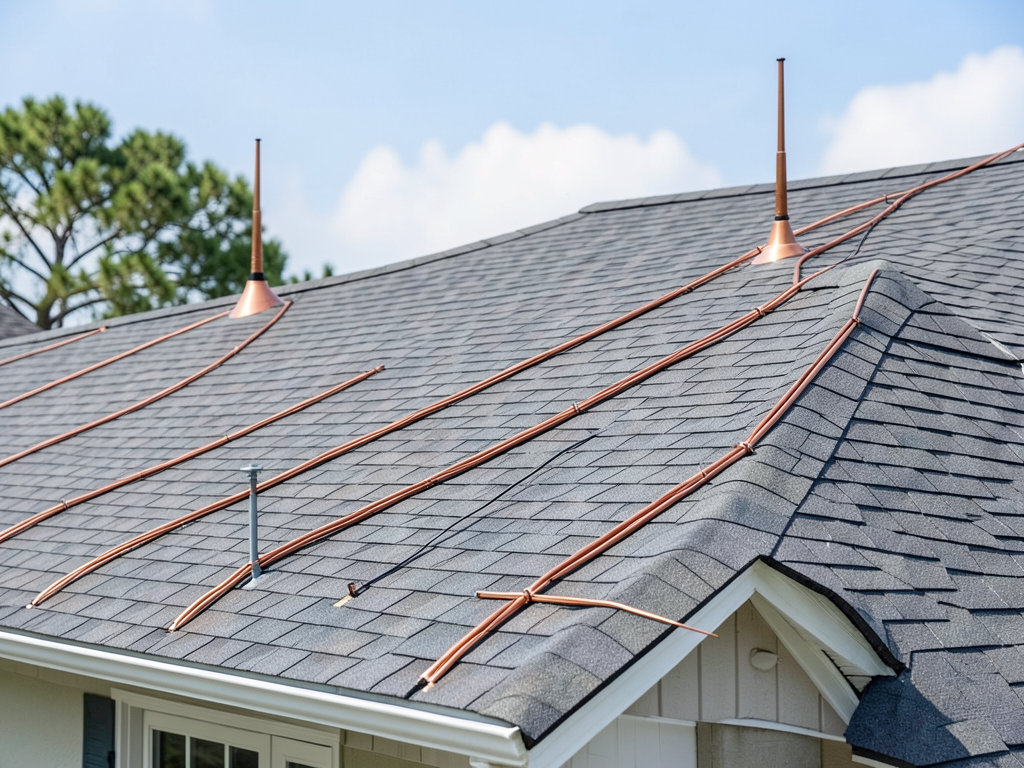
Modern lightning protection integrates directly with your roofing system. The components attach to your roof deck without compromising your shingles or tiles. They connect to a network of copper conductors that run through your attic space and terminate in a properly engineered grounding system. This design protects both your roof structure and the electrical systems inside your home from the secondary effects of a strike. Is Solar Roofing Actually Worth the Investment for Orlando Residents?.
The cost of installing a complete lightning protection system typically ranges from $1.50 to $3.00 per linear foot of roof perimeter. This investment often pays for itself through reduced insurance premiums and the prevention of costly fire damage repairs that can exceed $50,000 for a single lightning strike.
Call (689) 268-2855 today to schedule your inspection and learn how a UL-certified lightning protection system can safeguard your Orlando home.
How Lightning Protection Systems Protect Your Orlando Home
Lightning protection systems use a network of components that work together to create a Faraday cage effect around your home. This design principle channels electrical energy around the protected space rather than through it. The system starts with air terminals mounted at the highest points of your roof. These terminals provide the strike termination points that intercept lightning before it can hit unprotected areas.
From each air terminal, main conductors made of copper or aluminum run along your roof edges and down to the ground. These conductors must maintain a continuous path with no breaks or splices that could create resistance points. The conductors connect to a series of bonds that tie together all metallic components on your roof including vents, gutters, and satellite dish mounts. This bonding prevents side flashes that can occur when lightning jumps between metal objects.
The grounding system represents the most critical component of your lightning protection. In Orlando’s sandy soil conditions, special attention goes to creating adequate ground contact area. The National Fire Protection Association requires at least two ground rods driven to a depth of 10 feet each. In areas with high water tables or conductive soil, additional grounding methods may be necessary to achieve the required resistance levels.
Surge protection devices installed at your main electrical panel provide the final layer of defense. These devices clamp down on voltage spikes that enter through power lines protecting your electronics and appliances from damage even if lightning strikes nearby utility equipment.
Learn more about how lightning protection integrates with your roofing system by visiting our roofing materials guide.
Roofing Integration Without Compromising Your Warranty
Installing lightning protection requires careful coordination with your roofing system to maintain manufacturer warranties. The mounting hardware for air terminals uses specialized brackets that distribute weight across multiple shingle tabs rather than creating single-point loads. This design prevents the localized stress that could lead to premature material failure. TPO vs EPDM Roofing Guide.
For tile roofs common in Orlando’s Mediterranean-style neighborhoods, installers use adjustable mounting feet that sit on the tile surface without penetrating it. These feet allow for thermal expansion and contraction that occurs with Florida’s extreme temperature swings between afternoon thunderstorms and evening cooling. The copper conductors run in channels that protect them from UV exposure while maintaining proper spacing from the roof surface.
The flashing details around conductor entry points receive special attention. High-temperature silicone sealants rated for 400 degrees Fahrenheit create watertight seals that outlast standard roofing caulk. These sealants maintain flexibility through Orlando’s humidity cycles preventing the cracks that often develop in traditional flashing materials. Roofing Goldenrod.
During installation, technicians perform a complete roof inspection identifying existing vulnerabilities like damaged flashing or worn underlayment. This inspection often reveals issues that homeowners were unaware of providing added value beyond the lightning protection installation.
Discover how different roofing materials perform in Orlando’s climate by reading our material selection guide.
NFPA 780 and UL 96A Standards for Orlando Homes
Professional lightning protection installations must comply with NFPA 780 Standard for the Installation of Lightning Protection Systems. This standard specifies minimum requirements for system design including strike termination spacing, conductor routing, and grounding resistance values. For Orlando homes the standard requires a maximum spacing of 20 feet between air terminals on roofs with slopes under 30 degrees.
UL 96A Master Label Certification represents the highest level of quality assurance for lightning protection systems. This certification requires third-party inspection of every installation to verify compliance with both NFPA 780 and UL’s additional requirements. UL 96A certified systems carry a warranty that covers system performance for the life of your home.
The grounding requirements in Central Florida present unique challenges due to our sandy soil conditions. Standard ground rods may achieve resistance values above the maximum 25 ohms specified in NFPA 780. In these cases installers must use chemical ground enhancement materials or horizontal ground plates to achieve adequate conductivity. The soil’s high sand content and low moisture retention create conditions that require specialized grounding techniques not needed in other regions.
Building permits for lightning protection installations in Orange County require submission of detailed plans showing conductor routing and grounding electrode locations. The county’s building department reviews these plans to ensure compliance with both NFPA 780 and local amendments to the Florida Building Code.
Learn about Orlando’s building code requirements by visiting the Orange County Building Safety Department.
Insurance Benefits and Property Value Protection
Many insurance companies offer premium discounts of 5 to 15 percent for homes with UL 96A certified lightning protection systems. These discounts recognize the reduced risk of lightning-related claims which cost insurers an average of $28,000 per incident nationally. In Florida where lightning strikes occur most frequently these savings can offset a significant portion of the installation cost over time.
Beyond insurance savings a lightning protection system preserves your home’s market value by preventing the hidden damage that lightning can cause. A single strike can create electrical surges that damage wiring, appliances, and HVAC systems. These secondary effects often go undetected until months later when equipment begins failing prematurely. The cost to replace damaged electronics and appliances in a typical home can exceed $10,000.
For homes with solar panel installations lightning protection becomes even more critical. Solar inverters and charge controllers represent significant investments that standard homeowner insurance may not fully cover for lightning damage. A properly designed system includes surge protection specifically for these renewable energy components.
The peace of mind that comes with lightning protection extends beyond financial considerations. Knowing your home has a professionally installed system provides security during Florida’s frequent afternoon thunderstorms. This assurance becomes particularly valuable for families with young children or elderly residents who may be more vulnerable during severe weather events.
Call (689) 268-2855 today to schedule your inspection and learn how a UL-certified lightning protection system can safeguard your Orlando home.
Local Orlando Service Areas and Climate Considerations
Orlando’s position in the I-4 corridor places it directly in what meteorologists call Lightning Alley. This region experiences more lightning strikes per square mile than anywhere else in North America. The combination of warm Gulf air meeting Atlantic sea breezes creates the perfect conditions for afternoon thunderstorms that produce an average of 80 to 100 lightning days per year.
The high humidity and frequent rainfall in Orlando create additional challenges for lightning protection systems. Moisture in the air increases the conductivity of the atmosphere making strikes more likely to occur. This means homes in neighborhoods like Winter Park, College Park, and Baldwin Park face higher strike probabilities than homes in drier climates.
Soil conditions in Orange County vary significantly from the sandy soils near Lake Nona to the more clay-rich areas around Apopka. These variations affect grounding system design with sandy soils requiring larger ground contact areas to achieve the same resistance levels as clay soils. Professional installers test soil resistivity before designing the grounding system to ensure it meets code requirements.
The age of your home also influences lightning protection needs. Homes built before 2002 may lack the secondary water barriers and improved roof deck attachments that provide better protection against wind-driven rain that often accompanies lightning storms. Older electrical panels may also lack adequate surge protection making whole-home surge devices even more important.
Learn about protecting your home from Orlando’s severe weather by reading our guide on storm damage prevention.
Maintenance and Inspection for Long-Term Protection
Lightning protection systems require annual inspections to maintain their effectiveness. These inspections check for loose connections, corrosion, and physical damage that can occur from wind, debris, or wildlife. In Orlando’s climate where salt air from the coast accelerates corrosion, more frequent inspections may be necessary for homes within 10 miles of the Atlantic shoreline.
The inspection process includes testing grounding resistance using a specialized earth resistance tester. This test verifies that the system maintains the required 25 ohms or less resistance to ground. If resistance increases due to soil drying or corrosion the technician will recommend remediation steps such as adding ground enhancement materials or additional ground rods.
Visual inspections check for bent or missing air terminals, damaged conductor insulation, and loose mounting hardware. Even small issues like a missing screw can compromise system performance by creating gaps in the continuous conductor path. The inspection also verifies that all bonds to metallic roof components remain secure and that no new metal additions to your roof lack proper bonding.
After major storm events with high winds or hail impact inspections become particularly important. These storms can damage both the lightning protection system and your roofing materials creating vulnerabilities that compound each other. A damaged conductor left unrepaired can lead to water intrusion that damages your roof deck.
Learn about comprehensive roof maintenance by visiting our inspection services page.
Frequently Asked Questions
Does lightning protection really work or is it just a marketing gimmick?
Yes lightning protection systems work when properly designed and installed according to NFPA 780 and UL 96A standards. These systems have been proven to reduce lightning-related damage by up to 99 percent in documented cases. The science behind Faraday cage protection is well established and the systems have protected buildings for over 200 years.
Will a lightning rod make my house a target for lightning?
No lightning rods do not attract lightning. They simply provide a preferred path for lightning to follow if it strikes near your home. Without a protection system lightning may hit your roof chimney or nearby tree and then arc to your home causing side flashes and damage. The rod gives the lightning a safe path to ground.
How long does installation take and will it damage my roof?
Most residential installations take one to two days depending on roof complexity and size. Professional installers use mounting methods that preserve your roof warranty. The hardware attaches through existing shingle layers using sealants that maintain your roof’s waterproof integrity. No structural modifications to your roof deck are necessary.
Can I install lightning protection myself to save money?
DIY lightning protection is not recommended. These systems require specialized knowledge of electrical theory building codes and roof construction. Improper installation can create more hazards than it prevents. Insurance companies typically void coverage for self-installed systems and local building departments will not approve non-permitted work.
What happens if lightning hits my protected home?
If lightning strikes your protected home the system will safely conduct the electrical energy to ground. You may hear a loud crack and see a bright flash but your home should sustain no damage. The grounding system dissipates the energy into the earth. Some sensitive electronics may still be affected by the electromagnetic pulse but whole-home surge protection minimizes this risk.
Call (689) 268-2855 today to schedule your inspection and learn how a UL-certified lightning protection system can safeguard your Orlando home.
{
“@context”: “https://schema.org”,
“@type”: “BlogPosting”,
“headline”: “Does your roof need a lightning rod in the lightning capital of the world?”,
“description”: “Orlando homes face the highest lightning strike density in the nation. Learn how UL 96A lightning protection systems integrate with your roof to prevent fire damage.”,
“wordCount”: 2121,
“datePublished”: “2026-04-13T07:15:00.000Z”,
“dateModified”: “2026-04-13T07:15:00.000Z”,
“inLanguage”: “en-US”,
“mainEntityOfPage”: {
“@type”: “WebPage”,
“@id”: “https://allproroofingorlando.com”
},
“publisher”: {
“@type”: “LocalBusiness”,
“name”: “All Pro Roofing Orlando”,
“url”: “https://allproroofingorlando.com”
},
“author”: {
“@type”: “Organization”,
“name”: “All Pro Roofing Orlando”,
“url”: “https://allproroofingorlando.com”
},
“image”: {
“@type”: “ImageObject”,
“url”: “https://allproroofingorlando.com/wp-content/uploads/2026/03/does-your-roof-need-a-lightning-rod-in-the-lightni-1.png”
}
}
{
“@context”: “https://schema.org”,
“@type”: “RoofingContractor”,
“name”: “All Pro Roofing Orlando”,
“url”: “https://allproroofingorlando.com”,
“address”: {
“@type”: “PostalAddress”,
“addressLocality”: “Orlando”
},
“areaServed”: {
“@type”: “City”,
“name”: “Orlando”
}
}
{
“@context”: “https://schema.org”,
“@type”: “FAQPage”,
“mainEntity”: [
{
“@type”: “Question”,
“name”: “Does lightning protection really work or is it just a marketing gimmick?”,
“acceptedAnswer”: {
“@type”: “Answer”,
“text”: “Yes lightning protection systems work when properly designed and installed according to NFPA 780 and UL 96A standards. These systems have been proven to reduce lightning-related damage by up to 99 percent in documented cases. The science behind Faraday cage protection is well established and the systems have protected buildings for over 200 years.”
}
},
{
“@type”: “Question”,
“name”: “Will a lightning rod make my house a target for lightning?”,
“acceptedAnswer”: {
“@type”: “Answer”,
“text”: “No lightning rods do not attract lightning. They simply provide a preferred path for lightning to follow if it strikes near your home. Without a protection system lightning may hit your roof chimney or nearby tree and then arc to your home causing side flashes and damage. The rod gives the lightning a safe path to ground.”
}
},
{
“@type”: “Question”,
“name”: “How long does installation take and will it damage my roof?”,
“acceptedAnswer”: {
“@type”: “Answer”,
“text”: “Most residential installations take one to two days depending on roof complexity and size. Professional installers use mounting methods that preserve your roof warranty. The hardware attaches through existing shingle layers using sealants that maintain your roof’s waterproof integrity. No structural modifications to your roof deck are necessary.”
}
},
{
“@type”: “Question”,
“name”: “Can I install lightning protection myself to save money?”,
“acceptedAnswer”: {
“@type”: “Answer”,
“text”: “DIY lightning protection is not recommended. These systems require specialized knowledge of electrical theory building codes and roof construction. Improper installation can create more hazards than it prevents. Insurance companies typically void coverage for self-installed systems and local building departments will not approve non-permitted work.”
}
},
{
“@type”: “Question”,
“name”: “What happens if lightning hits my protected home?”,
“acceptedAnswer”: {
“@type”: “Answer”,
“text”: “If lightning strikes your protected home the system will safely conduct the electrical energy to ground. You may hear a loud crack and see a bright flash but your home should sustain no damage. The grounding system dissipates the energy into the earth. Some sensitive electronics may still be affected by the electromagnetic pulse but whole-home surge protection minimizes this risk.”
}
}
]
}
{
“@context”: “https://schema.org”,
“@type”: “BreadcrumbList”,
“itemListElement”: [
{
“@type”: “ListItem”,
“position”: 1,
“name”: “Home”,
“item”: “https://allproroofingorlando.com”
},
{
“@type”: “ListItem”,
“position”: 2,
“name”: “Blog”,
“item”: “https://allproroofingorlando.com/blog”
},
{
“@type”: “ListItem”,
“position”: 3,
“name”: “Does your roof need a lightning rod in the lightning capital of the world?”
}
]
}
{
“@context”: “https://schema.org”,
“@type”: “Service”,
“serviceType”: “Roofing”,
“provider”: {
“@type”: “LocalBusiness”,
“name”: “All Pro Roofing Orlando”,
“url”: “https://allproroofingorlando.com”
},
“areaServed”: {
“@type”: “City”,
“name”: “Orlando”
},
“description”: “Orlando homes face the highest lightning strike density in the nation. Learn how UL 96A lightning protection systems integrate with your roof to prevent fire damage.”
}