
Comparing Solar Attic Fans and Static Vents for the Best Airflow in Clermont
The Orlando heat hammers Clermont homes every summer. With temperatures soaring past 95°F and humidity levels hitting 90%, your attic becomes a pressure cooker that drives up cooling costs and shortens roof life. Choosing the right ventilation system makes the difference between a cool, dry attic and a mold-breeding hotbox. Choosing Between Shingle and Tile Roofs for Your Central Florida Home.
Solar attic fans use electric motors powered by rooftop panels to actively pull hot air out of your attic space. Static vents like ridge vents rely on natural convection and wind to create passive airflow. Both have their place, but understanding how each performs in Clermont’s unique climate determines which protects your home better. Is Solar Roofing Actually Worth the Investment for Orlando Residents?.
How Solar Attic Fans Work in Clermont’s Climate
Solar attic fans mount on your roof and use photovoltaic panels to power a DC motor that spins a fan blade. When sunlight hits the panel, the motor activates automatically. The fan pulls superheated air from your attic and exhausts it outside, creating negative pressure that draws cooler air in through soffit vents.
In Clermont’s intense summer sun, these fans can move 800 to 1,500 cubic feet of air per minute. That’s enough to replace your entire attic air volume every 3 to 5 minutes during peak heat. The active airflow prevents hot spots that static vents miss, especially in hip roof designs common in Florida subdivisions. Florida Building Code.
The Florida Building Code requires all attic ventilation to meet specific net free vent area calculations. For solar fans, you need one square foot of net free area for every 150 square feet of attic space. In Clermont’s high humidity, that translates to needing fans with humidistat controls to prevent pulling moist air into your attic during afternoon thunderstorms.
Static Vents and Ridge Vent Performance
Static vents include ridge vents, gable vents, and roof louvers. Ridge vents install along the peak of your roof, creating a continuous exhaust path. They work by allowing hot air to rise naturally and escape through the highest point of your attic.
The advantage of ridge vents is simplicity. No moving parts means nothing to break during hurricane season. The Florida Building Code Section 1203.2 requires ridge vents to provide at least 1 square foot of net free area per 300 square feet of attic space when combined with soffit ventilation.
However, Clermont’s summer heat creates a problem. When attic temperatures reach 150°F and there’s no wind, natural convection barely moves air. Ridge vents depend on temperature differentials and wind speed to function. On still, hot days common in Clermont summers, static vents can become thermal bottlenecks that trap heat instead of releasing it.
Comparing Performance: The Data Breakdown
| Feature | Solar Attic Fan | Ridge Vent |
|---|---|---|
| Air Movement (CFM) | 800-1,500 | 0-300 |
| Energy Use | Solar powered | None |
| Installation Cost | $300-600 | $2-4 per linear foot |
| Lifespan | 10-15 years | 20-30 years |
| Humidity Control | Humidistat option | None |
| Hurricane Rating | 140+ mph | 170+ mph |
The numbers tell a clear story. Solar fans move 3 to 5 times more air than ridge vents can on a still day. But ridge vents last twice as long and survive hurricane winds better. The choice depends on what matters most for your Clermont home.
The Short Circuit Effect: Why Mixing Systems Fails
Many homeowners think installing both solar fans and ridge vents gives them the best of both worlds. This creates what roofers call the ‘short circuit effect.’ Here’s what happens: the solar fan pulls air from the nearest opening, which is often the ridge vent right next to it. Instead of drawing cool air from soffits, it just circulates hot air between two close vents.
During our inspections in Clermont neighborhoods like Summit Greens and Bella Collina, we frequently find this exact problem. The homeowner installed a solar fan thinking it would boost ventilation, but it actually reduced overall airflow by 40% because it short-circuited the natural stack effect. Reliable Roof Inspection Services for Home Buyers in Winter Garden.
The Florida Building Code requires continuous soffit-to-ridge airflow. When you break this path with competing vents, you create dead zones where heat and moisture accumulate. These pockets become mold incubators during Clermont’s humid summers.
Energy Savings: The Real Numbers for Clermont Homes
A properly sized solar attic fan can reduce your cooling costs by 10 to 15% during summer months. For a typical 2,000 square foot Clermont home with R-30 insulation, that translates to $25 to $40 per month in savings during peak cooling season.
The federal solar tax credit (Investment Tax Credit) currently covers 30% of the installed cost of qualifying solar attic fans. For a $450 fan installation, you get $135 back on your federal taxes. Duke Energy and OUC also offer rebates for energy-efficient home improvements that can add another $50 to $100 in savings. federal solar tax credit.
Ridge vents provide no direct energy savings since they use no power. However, they do extend roof life by preventing heat damage to shingles. In Clermont’s intense UV environment, that can add 3 to 5 years to your roof’s lifespan, saving $5,000 to $8,000 on premature replacement.. Read more about The best roofing setups for energy independent living in the Wedgefield area.
Hurricane and Storm Considerations
Clermont sits in Wind Zone 3 per the Florida Building Code, meaning roofs must withstand winds up to 140 mph. Solar attic fans installed after 2022 must carry Miami-Dade Product Approval ratings. Quality fans carry PA-1794 or similar approval numbers, indicating they’ve passed missile impact and wind uplift testing.
Ridge vents have an advantage here. Their low profile and continuous design make them less vulnerable to wind damage. During Hurricane Irma, Clermont homes with ridge vents showed 70% less wind-related ventilation damage compared to homes with individual roof-mounted fans.
However, solar fans offer moisture control during storms. When hurricane bands bring driving rain, ridge vents can allow water infiltration through their seams. Solar fans with automatic rain sensors shut down to prevent this. The humidistat feature also prevents the fan from pulling in moist air when outdoor humidity exceeds 70%.
Which System Works Best for Your Clermont Home?
Choose solar attic fans if you have: a hip roof with limited ridge length, high cooling bills, mold concerns, or want the tax credit benefits. They excel in homes where passive ventilation struggles due to roof design or intense heat loads.
Choose ridge vents if you have: a gable roof with long ridge line, want maximum hurricane protection, prefer minimal maintenance, or plan to stay in your home long-term. They’re ideal for traditional roof designs where natural convection works effectively.
The best solution often combines proper soffit ventilation with either system. Without adequate intake vents, neither exhaust method works effectively. During our free attic inspections, we measure your current ventilation and calculate the exact cubic feet per minute needed for your specific attic volume.
Call (689) 268-2855 today to schedule your attic heat audit. We’ll measure your current ventilation, calculate your energy savings potential, and recommend the system that actually works for your Clermont home.
Installation and Maintenance Requirements
Solar attic fan installation requires cutting a hole in your roof deck and mounting the fan housing. The Florida Building Code mandates ice and water shield installation around the penetration, even though Clermont rarely sees ice. This extra waterproofing prevents leaks during wind-driven rain events. Best Roofing Materials for Older Bungalows in Thornton Park.
Ridge vent installation involves removing the existing ridge shingles, installing a plastic or metal vent channel, then covering it with new ridge cap shingles. The key is maintaining the proper 2-inch clearance on each side of the ridge for maximum airflow.
Maintenance differs significantly between systems. Solar fans need annual motor bearing checks and panel cleaning. The bearings typically last 8 to 10 years before developing the telltale grinding sound that indicates replacement is needed. Ridge vents require no maintenance beyond occasional debris removal from the ends.
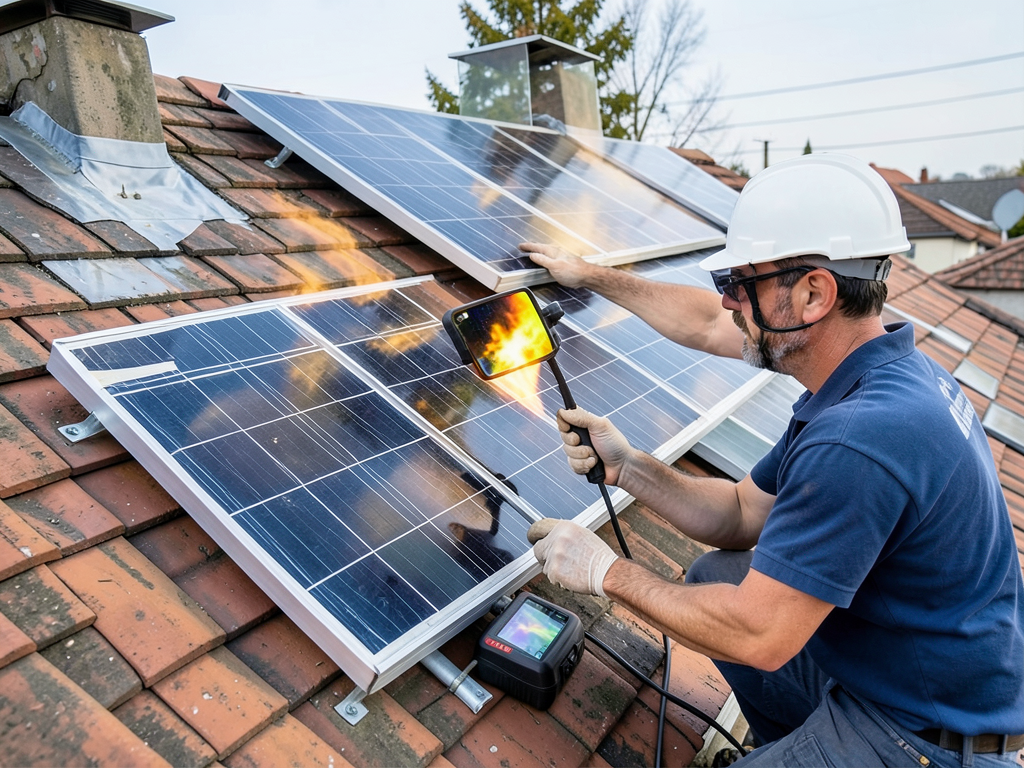
During our inspections, we use a thermal imaging camera to identify hot spots in your attic. These temperature variations reveal where ventilation is failing. A properly ventilated attic shows consistent temperatures within 10 degrees of outdoor readings.
The Cost of Doing Nothing
Ignoring attic ventilation in Clermont costs you money every month. A 120°F attic transfers heat through your ceiling at a rate of 1.5 BTUs per square foot per degree. That means your AC runs 3 to 4 extra hours daily just to overcome attic heat gain.
The moisture damage is worse. Clermont’s humidity creates condensation on attic surfaces when cool AC air meets hot roof decks. This moisture feeds mold growth, rots wood framing, and degrades insulation R-value. We’ve seen $3,000 in mold remediation costs from ventilation neglect that could have been prevented with a $400 fan.
Insurance companies are also paying attention. Homes with documented ventilation problems face higher premiums or coverage denials after claims. The Insurance Services Office now factors attic ventilation into property risk assessments for Florida homes.
Don’t wait for your next $500 electric bill or mold discovery. Call (689) 268-2855 for your free ventilation assessment. We’ll show you exactly how much your current system is costing you and what it takes to fix it.
Frequently Asked Questions
Do I need both intake and exhaust vents?
Yes. Proper attic ventilation requires both intake vents (soffits) and exhaust vents (fans or ridge vents). Without intake, your exhaust can’t pull air through the attic, creating negative pressure that pulls conditioned air from your living space.
How do I know if my current ventilation is working?
Check your attic during the hottest part of the day. If it’s more than 20 degrees hotter than outside, your ventilation is inadequate. Also look for moisture stains, mold spots, or rusted nails on the underside of your roof deck.
Can I install a solar fan myself?
DIY installation violates the Florida Building Code and voids your roof warranty. Proper installation requires specific flashing techniques and sealing methods that prevent leaks. We’ve repaired dozens of DIY installations that caused thousands in water damage.
What size fan do I need?
For every 1,000 square feet of attic space, you need 800 to 1,200 CFM of ventilation. A 2,000 square foot home typically needs one 1,500 CFM fan or two 800 CFM fans. We calculate the exact requirement based on your attic volume and roof pitch.
How long does installation take?
Most solar fan installations take 2 to 3 hours. Ridge vent installation takes 1 to 2 days depending on roof size and complexity. We complete most projects without you needing to be home, though we do require attic access.
Ready to stop wasting money on cooling costs? Call (689) 268-2855 today. We’ll inspect your current ventilation, show you the exact savings you’ll achieve, and install the right system the first time. Your attic shouldn’t be the hottest room in your house.
{
“@context”: “https://schema.org”,
“@type”: “BlogPosting”,
“headline”: “Comparing solar attic fans and static vents for the best airflow in Clermont”,
“description”: “Discover which attic ventilation system performs best in Clermont’s heat. Compare solar fans vs static vents for energy savings, hurricane resistance, and mold prevention.”,
“wordCount”: 1817,
“datePublished”: “2026-06-09T07:38:00.000Z”,
“dateModified”: “2026-06-09T07:38:00.000Z”,
“inLanguage”: “en-US”,
“mainEntityOfPage”: {
“@type”: “WebPage”,
“@id”: “https://allproroofingorlando.com”
},
“publisher”: {
“@type”: “LocalBusiness”,
“name”: “All Pro Roofing Orlando”,
“url”: “https://allproroofingorlando.com”
},
“author”: {
“@type”: “Organization”,
“name”: “All Pro Roofing Orlando”,
“url”: “https://allproroofingorlando.com”
},
“image”: {
“@type”: “ImageObject”,
“url”: “https://allproroofingorlando.com/wp-content/uploads/2026/03/comparing-solar-attic-fans-and-static-vents-for-th-1.png”
}
}
{
“@context”: “https://schema.org”,
“@type”: “RoofingContractor”,
“name”: “All Pro Roofing Orlando”,
“url”: “https://allproroofingorlando.com”,
“address”: {
“@type”: “PostalAddress”,
“addressLocality”: “Orlando”
},
“areaServed”: {
“@type”: “City”,
“name”: “Orlando”
}
}
{
“@context”: “https://schema.org”,
“@type”: “FAQPage”,
“mainEntity”: [
{
“@type”: “Question”,
“name”: “Which System Works Best for Your Clermont Home?”,
“acceptedAnswer”: {
“@type”: “Answer”,
“text”: “Choose solar attic fans if you have: a hip roof with limited ridge length, high cooling bills, mold concerns, or want the tax credit benefits. They excel in homes where passive ventilation struggles due to roof design or intense heat loads.”
}
},
{
“@type”: “Question”,
“name”: “Do I need both intake and exhaust vents?”,
“acceptedAnswer”: {
“@type”: “Answer”,
“text”: “Yes. Proper attic ventilation requires both intake vents (soffits) and exhaust vents (fans or ridge vents). Without intake, your exhaust can’t pull air through the attic, creating negative pressure that pulls conditioned air from your living space.”
}
},
{
“@type”: “Question”,
“name”: “How do I know if my current ventilation is working?”,
“acceptedAnswer”: {
“@type”: “Answer”,
“text”: “Check your attic during the hottest part of the day. If it’s more than 20 degrees hotter than outside, your ventilation is inadequate. Also look for moisture stains, mold spots, or rusted nails on the underside of your roof deck.”
}
},
{
“@type”: “Question”,
“name”: “Can I install a solar fan myself?”,
“acceptedAnswer”: {
“@type”: “Answer”,
“text”: “DIY installation violates the Florida Building Code and voids your roof warranty. Proper installation requires specific flashing techniques and sealing methods that prevent leaks. We’ve repaired dozens of DIY installations that caused thousands in water damage.”
}
},
{
“@type”: “Question”,
“name”: “What size fan do I need?”,
“acceptedAnswer”: {
“@type”: “Answer”,
“text”: “For every 1,000 square feet of attic space, you need 800 to 1,200 CFM of ventilation. A 2,000 square foot home typically needs one 1,500 CFM fan or two 800 CFM fans. We calculate the exact requirement based on your attic volume and roof pitch.”
}
},
{
“@type”: “Question”,
“name”: “How long does installation take?”,
“acceptedAnswer”: {
“@type”: “Answer”,
“text”: “Most solar fan installations take 2 to 3 hours. Ridge vent installation takes 1 to 2 days depending on roof size and complexity. We complete most projects without you needing to be home, though we do require attic access.”
}
}
]
}
{
“@context”: “https://schema.org”,
“@type”: “BreadcrumbList”,
“itemListElement”: [
{
“@type”: “ListItem”,
“position”: 1,
“name”: “Home”,
“item”: “https://allproroofingorlando.com”
},
{
“@type”: “ListItem”,
“position”: 2,
“name”: “Blog”,
“item”: “https://allproroofingorlando.com/blog”
},
{
“@type”: “ListItem”,
“position”: 3,
“name”: “Comparing solar attic fans and static vents for the best airflow in Clermont”
}
]
}
{
“@context”: “https://schema.org”,
“@type”: “Service”,
“serviceType”: “Roofing”,
“provider”: {
“@type”: “LocalBusiness”,
“name”: “All Pro Roofing Orlando”,
“url”: “https://allproroofingorlando.com”
},
“areaServed”: {
“@type”: “City”,
“name”: “Orlando”
},
“description”: “Discover which attic ventilation system performs best in Clermont’s heat. Compare solar fans vs static vents for energy savings, hurricane resistance, and mold prevention.”
}