
Managing Heavy Pine Needle Debris on Metal Roofs in the Wedgefield Area
Pine needles accumulate on metal roofs in Wedgefield and create a serious problem that most homeowners don’t recognize until it’s too late. The combination of Florida’s high humidity afternoon thunderstorms and the acidic nature of decomposing pine needles accelerates corrosion on metal roofing surfaces. This guide explains why pine needles are particularly dangerous for metal roofs and provides specific solutions for Wedgefield properties. Florida Building Code.
The Hidden Danger Why Pine Needles are a Metal Roof’s Silent Enemy
Pine needles contain tannic acid which has a pH between 3.5 and 4.0. When needles decompose on metal surfaces they create an acidic environment that breaks down protective coatings like Kynar 500 and Galvalume finishes. The needles also trap moisture against the metal creating perfect conditions for electrolytic corrosion. Choosing Between Shingle and Tile Roofs for Your Central Florida Home.
In Wedgefield the problem is compounded by our slash pine and longleaf pine trees which produce needles that are 8 to 12 inches long. These needles interlock when they fall creating dense mats that hold water like a sponge. During Orlando’s summer rainy season these mats can stay wet for days accelerating the corrosion process.
The moisture trapped under pine needle mats also promotes algae and moss growth. These organisms produce organic acids that further degrade metal coatings. The combination of acidic needles trapped moisture and biological growth can reduce a metal roof’s lifespan by 30 to 40 percent if left unchecked.
Step-by-Step Safely Removing Pine Needles
Safety comes first when working on metal roofs. The Occupational Safety and Health Administration requires fall protection for any work on roofs with a pitch greater than 4:12. In Wedgefield’s humid climate morning dew makes metal surfaces extremely slippery. Always use a safety harness with a roof anchor point rated for 5,000 pounds.
Never use pressure washers on metal roofs. High pressure can strip protective coatings and force water under panels. Instead use a soft-bristle brush with a telescoping handle to sweep needles toward the roof edge. Work from the ridge down to avoid walking on areas you’ve already cleaned.
For stubborn accumulations use a leaf blower on low setting. Keep the nozzle at least 12 inches from the surface to prevent damage. Pay special attention to valleys and behind chimneys where needles collect. These areas trap the most moisture and require extra attention.
After removing needles inspect the roof for damaged coatings. Look for areas where the metal appears dull or where you can see bare metal through the finish. These spots need immediate attention to prevent rust formation.
The Orlando Factor Heat Humidity and Needle Decay
Orlando’s climate creates unique challenges for metal roof maintenance. Our average humidity of 74 percent means pine needles stay wet longer than in other regions. When combined with temperatures that often exceed 90 degrees Fahrenheit the decomposition process accelerates dramatically.
Florida’s afternoon thunderstorms dump heavy rain in short bursts. Pine needle mats prevent proper water drainage creating standing water that seeps under roof panels. The Florida Building Code requires secondary water barriers in high wind zones but these barriers can fail if water pools for extended periods.
The heat and humidity also affect the chemical composition of decomposing needles. As needles break down they release organic compounds that react with metal at the molecular level. This reaction is accelerated by Orlando’s intense UV radiation which breaks down protective coatings faster than in northern climates.
Wedgefield’s rural setting means many properties have mature pine trees within 10 feet of roof edges. This proximity ensures a constant supply of needles throughout the year. Properties near the Econlockhatchee River often experience higher needle accumulation due to prevailing winds that carry debris from surrounding forests.
Preventative Measures Gutter Guards and Tree Trimming
Micro-mesh gutter guards specifically designed for pine needles are essential in Wedgefield. Standard guards allow needles to pass through while micro-mesh with openings smaller than 50 microns blocks even the smallest debris. These guards prevent gutters from becoming clogged which can cause water to back up under roof panels.
Tree trimming should maintain at least 10 feet of clearance between pine branches and roof edges. This distance reduces needle fall by approximately 70 percent while still providing shade benefits. For properties with heritage trees consult an arborist before major trimming to ensure compliance with local ordinances.
Consider installing valley guards in roof valleys where needles accumulate most heavily. These metal strips with raised edges prevent debris from settling in low spots. They’re particularly effective in Wedgefield where many homes have complex roof designs that create multiple valleys.
Regular gutter cleaning is critical even with guards installed. Small particles and pollen can still accumulate and create drainage issues. Clean gutters at least twice yearly in spring and fall when needle drop is heaviest.
Professional Maintenance vs DIY
Professional maintenance costs between $250 and $500 for an average Wedgefield home but provides several advantages over DIY methods. Professionals have industrial-grade equipment that removes needles without damaging coatings. They also carry insurance that protects homeowners from liability if accidents occur.
Many metal roof manufacturers require professional cleaning to maintain warranty coverage. The warranty may be voided if improper cleaning methods damage the roof. Professional services provide documentation of maintenance which is essential for warranty claims.
The safety risks of DIY cleaning are significant. Falls from roofs account for approximately 30 percent of construction-related fatalities. In Wedgefield’s humid conditions the risk increases as metal surfaces become extremely slippery when wet.
Professionals also perform inspections during cleaning that homeowners often miss. They check for loose fasteners damaged coatings and potential leak points. Early detection of these issues can prevent thousands of dollars in water damage repairs. Reliable Roof Inspection Services for Home Buyers in Winter Garden.
For DIY cleaning always work with a partner who can assist in case of emergencies. Use proper safety equipment including non-slip shoes safety harness and eye protection. Never work on wet roofs or during high wind conditions common in Wedgefield during summer afternoons.
Frequently Asked Questions
How often should I clean pine needles off my metal roof in Wedgefield
Clean your metal roof at least twice yearly in spring and fall. In Wedgefield with heavy pine coverage you may need quarterly cleaning. After major storms check for accumulated debris as wind can deposit needles in new areas.
Can pine needles void my metal roof warranty
Most manufacturers require regular maintenance to keep warranties valid. Accumulated debris that causes damage is typically not covered. Some warranties specifically mention pine needle removal as required maintenance. Check your warranty documents for specific requirements.
What’s the best time of day to clean a metal roof
Clean metal roofs in late morning after dew has evaporated but before afternoon heat builds. Avoid cleaning during midday when surfaces are hottest. Early morning cleaning is dangerous due to slippery conditions from overnight moisture.
Are certain metal roof types more resistant to pine needle damage
Aluminum roofs resist corrosion better than steel but all metals are vulnerable to acidic pine needles. Standing seam roofs with fewer fasteners have fewer leak points but still require regular cleaning. The coating type matters more than the base metal for needle resistance.
How do I know if pine needles have already damaged my roof
Look for discolored areas where the metal appears dull or where you can see through the finish. Check for rust spots especially around fasteners and in valleys. Water stains on interior ceilings indicate moisture has penetrated the roof system.
| Metal Roof Type | Pine Needle Resistance | Maintenance Frequency |
|---|---|---|
| Galvalume Steel | Low | Every 2-3 months |
| Aluminum | Medium | Every 3-4 months |
| Kynar Coated Steel | Medium-High | Every 3 months |
| Copper | High | Every 4-6 months |
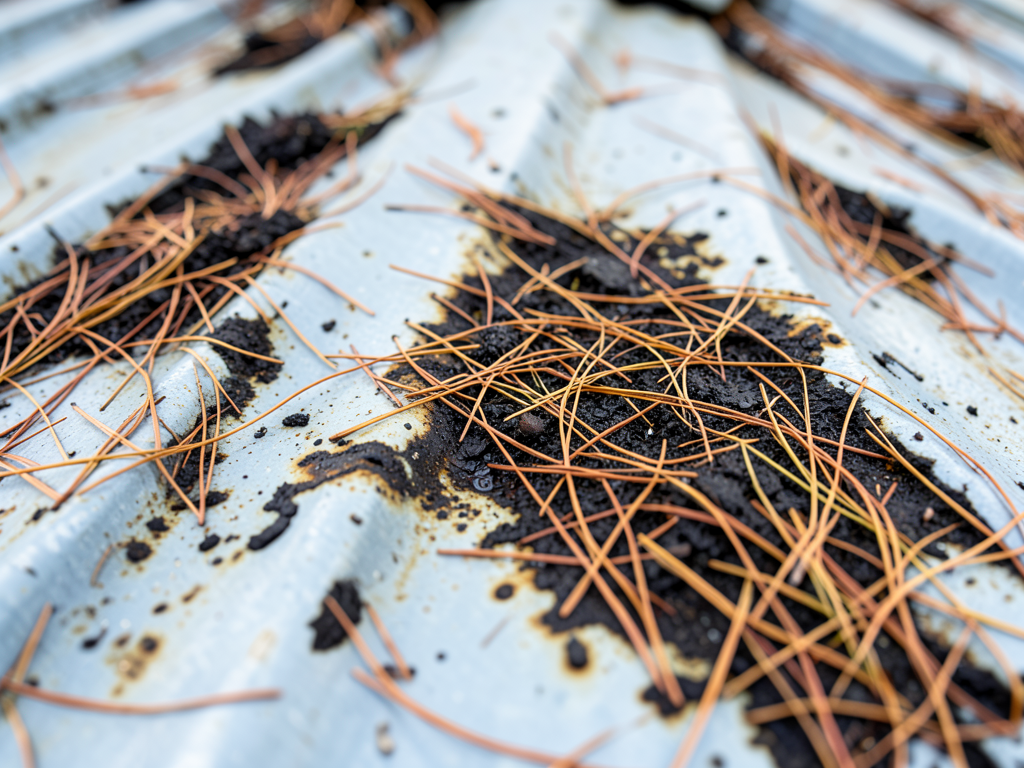
Diagram showing how tannic acid from pine needles breaks down metal roof coatings over time.
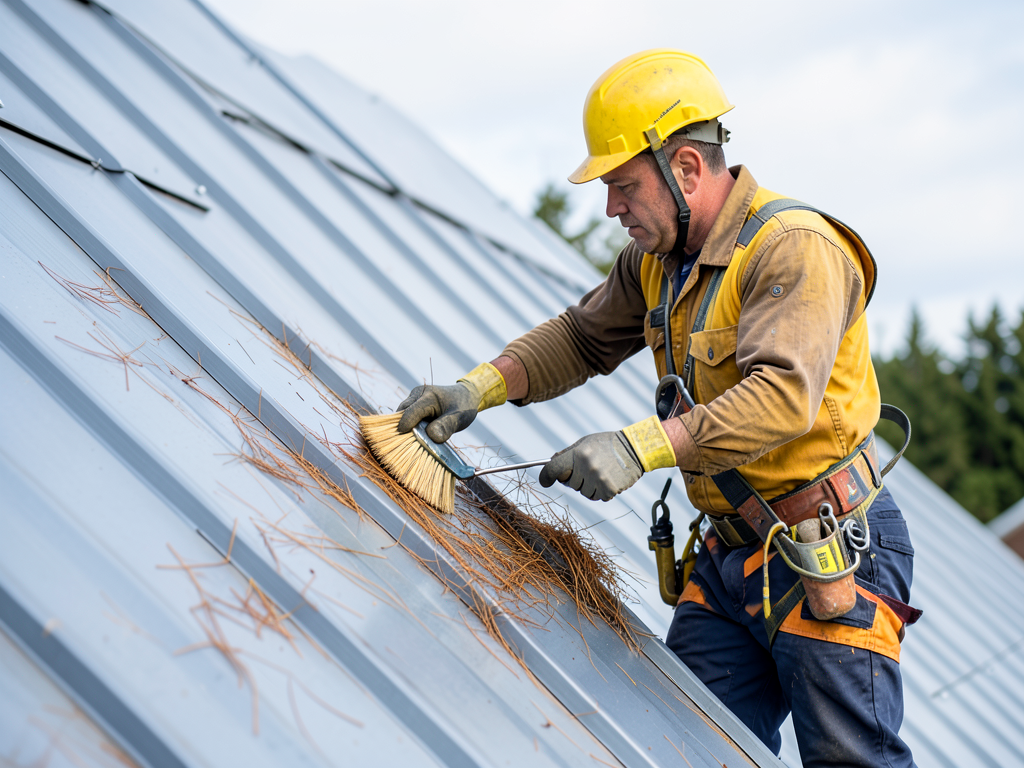
Photo of micro-mesh gutter guards specifically designed to block pine needles while allowing water flow.
Before and after comparison of a metal roof with heavy pine needle accumulation versus properly cleaned surface.
Take Action Before Damage Occurs
Pine needle accumulation on metal roofs in Wedgefield creates a serious threat to your home’s protection and value. The acidic nature of decomposing needles combined with Florida’s humid climate accelerates corrosion and can reduce your roof’s lifespan by decades. Don’t wait until you see rust spots or water stains to take action.
Call (689) 268-2855 today to schedule a professional inspection and cleaning. Our team understands the specific challenges that Wedgefield homeowners face with pine needle management and uses proper techniques that protect your roof warranty. We’ll identify potential problems before they become expensive repairs.
Pick up the phone and call (689) 268-2855 before the next storm hits. Your metal roof protects everything you own and requires proper maintenance to perform as designed. Don’t risk voiding your warranty or facing costly water damage repairs that could have been prevented with regular professional cleaning.
Remember that most metal roof warranties require documented professional maintenance. Without this documentation you may be responsible for repairs that would otherwise be covered. Protect your investment by calling (689) 268-2855 now to schedule your Wedgefield metal roof inspection and cleaning service. For more information, visit OSHA fall protection requirements.
{
“@context”: “https://schema.org”,
“@type”: “BlogPosting”,
“headline”: “Managing Heavy Pine Needle Debris on Metal Roofs in the Wedgefield Area”,
“description”: “Learn how pine needles damage metal roofs in Wedgefield. Discover specific cleaning methods, preventative measures, and when to call professionals to protect your roof.”,
“wordCount”: 1535,
“datePublished”: “2026-04-30T10:16:00.000Z”,
“dateModified”: “2026-04-30T10:16:00.000Z”,
“inLanguage”: “en-US”,
“mainEntityOfPage”: {
“@type”: “WebPage”,
“@id”: “https://allproroofingorlando.com”
},
“publisher”: {
“@type”: “LocalBusiness”,
“name”: “All Pro Roofing Orlando”,
“url”: “https://allproroofingorlando.com”
},
“author”: {
“@type”: “Organization”,
“name”: “All Pro Roofing Orlando”,
“url”: “https://allproroofingorlando.com”
},
“image”: {
“@type”: “ImageObject”,
“url”: “https://allproroofingorlando.com/wp-content/uploads/2026/03/managing-heavy-pine-needle-debris-on-metal-roofs-i-1.png”
}
}
{
“@context”: “https://schema.org”,
“@type”: “RoofingContractor”,
“name”: “All Pro Roofing Orlando”,
“url”: “https://allproroofingorlando.com”,
“address”: {
“@type”: “PostalAddress”,
“addressLocality”: “Orlando”
},
“areaServed”: {
“@type”: “City”,
“name”: “Orlando”
}
}
{
“@context”: “https://schema.org”,
“@type”: “BreadcrumbList”,
“itemListElement”: [
{
“@type”: “ListItem”,
“position”: 1,
“name”: “Home”,
“item”: “https://allproroofingorlando.com”
},
{
“@type”: “ListItem”,
“position”: 2,
“name”: “Blog”,
“item”: “https://allproroofingorlando.com/blog”
},
{
“@type”: “ListItem”,
“position”: 3,
“name”: “Managing Heavy Pine Needle Debris on Metal Roofs in the Wedgefield Area”
}
]
}
{
“@context”: “https://schema.org”,
“@type”: “Service”,
“serviceType”: “Roofing”,
“provider”: {
“@type”: “LocalBusiness”,
“name”: “All Pro Roofing Orlando”,
“url”: “https://allproroofingorlando.com”
},
“areaServed”: {
“@type”: “City”,
“name”: “Orlando”
},
“description”: “Learn how pine needles damage metal roofs in Wedgefield. Discover specific cleaning methods, preventative measures, and when to call professionals to protect your roof.”
}