
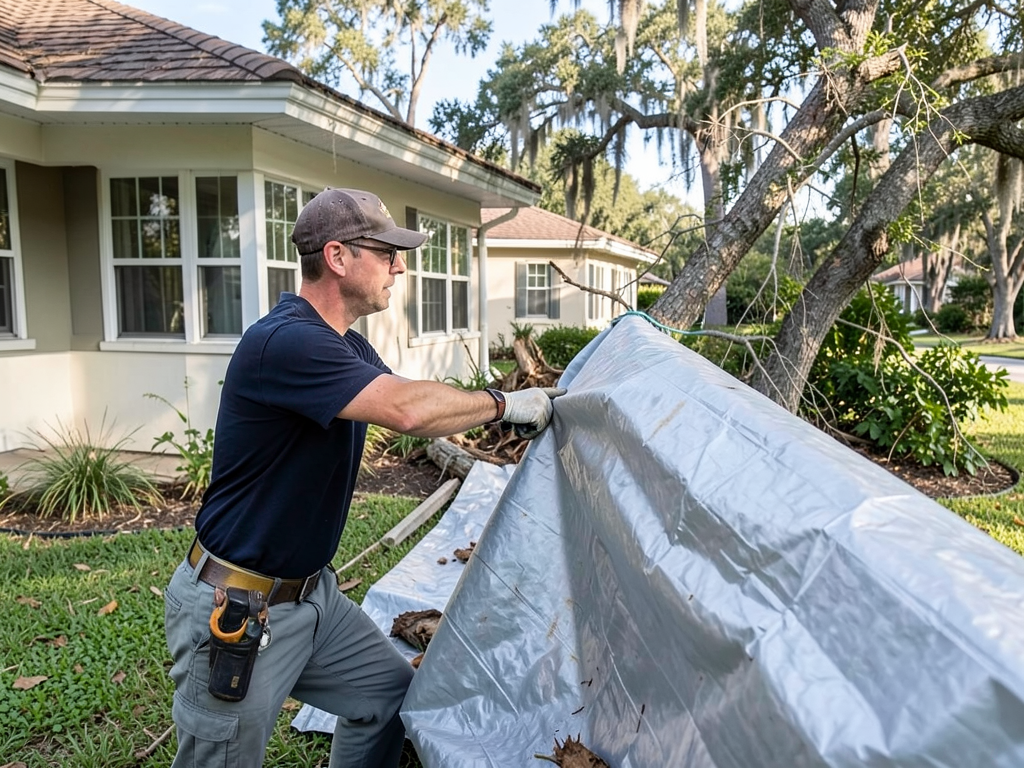
What to do when a tree limb falls on your roof in the middle of a storm
When a massive oak limb crashes through your Orlando roof during a thunderstorm, panic sets in fast. You hear the crack, feel the impact, and suddenly water pours into your living room. This guide gives you the exact steps to protect your family, minimize damage, and get professional help immediately. TPO vs EPDM Roofing Guide.
Central Florida’s mature tree canopy creates beautiful neighborhoods but also serious storm risks. Live oaks, pines, and magnolias common in areas like Winter Park and Conway can weigh hundreds of pounds. When hurricane-force winds hit, these giants become dangerous projectiles. The first 60 minutes after impact determine whether you face thousands in damage or a quick recovery. Florida Building Code.
- Evacuate Immediately
Listen for creaking sounds, popping noises, or visible sagging ceilings. These indicate structural failure. Get everyone out now. Don’t wait for water to spread.
- Call 911 for Immediate Danger
If you smell gas, see sparks from electrical fixtures, or notice walls bowing, emergency services need to secure the scene first. Emergency Tarping Service.
- Document Everything
Take photos from multiple angles before cleanup. Include date stamps. This becomes crucial for insurance claims under Florida Statute 627.7011.. Read more about What to Do When Your Orlando Homeowners Insurance Denies a Valid Roof Claim.
- Call (689) 268-2855 for 24/7 Emergency Response
Our Orlando-based crews arrive within 2 hours with proper equipment and insurance coordination experience.
Step 1: Immediate Safety and Evacuation Protocols
Structural damage creates invisible dangers. Your roof trusses may have shifted, causing walls to lose alignment. Check for these warning signs:
- Ceiling drywall bubbling or sagging under water weight
- Doors suddenly sticking or swinging open on their own
- Windows cracking without impact
- Strange creaking sounds from upper floors
Florida Building Code requires secondary water barriers in high-wind zones, but older homes in College Park and Audubon Park may lack this protection. When a tree penetrates the primary layer, water flows directly onto your decking. The weight of saturated insulation can cause ceilings to collapse within 30 minutes.
Evacuation Checklist:
- Turn off main electrical breaker if water contacts outlets
- Shut off gas valve if you smell rotten eggs
- Grab medications, important documents, pets
- Move to a neighbor’s house or designated shelter
Step 2: Who to Call First? (Tree Service vs. Emergency Roofer)
This decision determines your recovery timeline. In Orlando’s storm season, tree services and roofers work as coordinated teams. Here’s the critical sequence:
| Problem | First Call | Why |
|---|---|---|
| Tree on roof, active rain | (689) 268-2855 | Emergency tarping prevents interior damage |
| Tree blocking driveway | Local tree service | Access for emergency crews |
| Downed power lines | 911 then Duke Energy | Life-threatening electrical hazard |
Orlando’s tree canopy averages 25 feet above rooflines. When a 60-foot oak falls, it often spans multiple properties. Our emergency crews coordinate with certified arborists who understand Florida’s specific tree species and root systems. Live oaks have extensive lateral roots that can destabilize during saturated soil conditions common after afternoon thunderstorms.
Professional emergency tarping involves more than throwing a blue tarp. We use 20-mil reinforced polyethylene with aluminum grommets spaced every 2 feet. The tarp extends 4 feet beyond damage on all sides and is secured with pressure-treated lumber strips screwed through the tarp into sound decking. This meets Florida Building Code requirements for temporary weather protection.
Step 3: Documenting Damage for Florida Insurance Claims
Florida’s hurricane deductible applies to tree damage when winds exceed 74 mph. This means you’ll pay 2-5% of your home’s insured value before coverage kicks in. Proper documentation proves the extent of damage and protects your claim under Florida Statute 627.7011.
Documentation Checklist:
- Wide-angle photos of entire damaged area
- Close-ups of penetration points and structural damage
- Video walkthrough showing water flow patterns
- Time-stamped photos of personal property damage
- Weather reports confirming storm conditions
Insurance adjusters look for secondary damage indicators: water stains spreading beyond initial impact, mold growth starting within 24-48 hours in Florida’s humidity, and compromised structural elements. Our team provides detailed damage assessments that insurance companies trust because we understand Florida’s specific building practices and common failure points in different roof types.
Document the tree itself if possible. Note species, approximate age, and whether it was dead or diseased. This information helps determine if the damage falls under your policy’s negligence clauses. Healthy trees damaged by covered perils are typically covered, while neglected dead trees may not be.
Professional Emergency Tarping and Structural Stabilization
Emergency tarping requires specific techniques for different roof types. Tile roofs need individual cap replacement and underlayment repair. Shingle roofs require careful removal of damaged materials to prevent further granule loss. Flat commercial roofs use heat-welded EPDM patches that cure within hours. EPA mold prevention guidelines.
Tarping Process:
- Safety assessment of damaged area
- Water extraction from interior spaces
- Decking inspection for rot or termite damage
- Underlayment replacement if compromised
- Professional tarp installation with proper fastening
- Interior drying setup to prevent mold
Central Florida’s high humidity means mold can begin growing within 24-48 hours. We deploy commercial dehumidifiers and air movers immediately. The EPA recommends maintaining indoor humidity below 60% to prevent mold growth, but Florida’s outdoor humidity often exceeds 80%, making rapid response critical.
Structural stabilization involves temporary supports for sagging areas. We use hydraulic jacks and engineered lumber to prevent further collapse while permanent repairs are planned. This prevents additional damage from normal activities like walking on the roof or opening doors that stress the structure.
Why Orlando Storm Damage Requires Local Expertise
Orlando’s unique climate creates specific damage patterns. Afternoon thunderstorms build quickly, often producing microbursts with winds exceeding 60 mph. These localized events can cause more damage than approaching hurricanes because they strike with little warning.
Florida Building Code Section 1609.1.1 requires specific fastening patterns for different wind zones. Orlando falls in Wind Zone III, requiring 6 nails per shingle and specific underlayment requirements. Many homes in older neighborhoods like Delaney Park and Bryn Mawr were built before these codes, making them more vulnerable to tree impact.. Read more about Why Peel and Stick Underlayment is Worth the Extra Cost for Your Lake Conway Home.
Soil conditions affect tree stability. Orlando’s sandy soil drains quickly but becomes unstable when saturated. Live oaks with shallow root systems are particularly vulnerable during prolonged rain events. The combination of saturated soil and high winds creates the perfect conditions for tree failure.
Local building permits may be required even for emergency repairs. Orange County allows emergency repairs without permits for life safety issues, but permanent repairs require proper permitting. Our team handles all permit requirements and ensures repairs meet current Florida Building Code standards.. Read more about How to Read a Roofing Estimate Without Getting Confused (Advice for Lake Hart Homeowners).
Insurance claim navigation requires understanding Florida’s specific requirements. The state mandates that insurers respond to claims within 30 days. If they fail to do so, they must pay interest on the claim amount. We work directly with insurance companies to expedite approvals and prevent delays.
Frequently Asked Questions About Tree-on-Roof Emergencies
How long does emergency tarping take?
Our Orlando crews typically arrive within 2 hours of your call and complete emergency tarping within 1-2 hours depending on damage extent and weather conditions.
Will my insurance cover tree removal?
Most policies cover tree removal if the tree falls due to a covered peril like wind or lightning. Coverage usually applies to trees blocking access or damaging structures, with limits around $500-$1,000 for removal costs.
Can I stay in my house after a tree hits the roof?
Only if the damage is minor and there’s no structural compromise. Signs you should leave include sagging ceilings, popping sounds, or water pouring through multiple locations. When in doubt, evacuate and call (689) 268-2855 for assessment.
What if the tree is still on the roof?
Don’t attempt removal yourself. The tree may be supporting damaged roof sections. Our team coordinates with certified arborists who use cranes and specialized equipment to safely remove trees without causing additional damage.
How do I prevent this from happening again?
Regular tree maintenance is key. Remove dead branches, thin canopy to reduce wind resistance, and maintain proper distance between trees and structures. Consider removing trees within 10 feet of your home that show signs of disease or instability. Choosing Between Shingle and Tile Roofs for Your Central Florida Home.
Don’t Wait Until It’s Too Late
Tree damage during storms creates a race against time. Every hour without proper protection means more water damage, higher mold risk, and increased repair costs. Orlando’s afternoon thunderstorms can drop 2-3 inches of rain in an hour, overwhelming even minor roof breaches.
Our emergency response team stands ready 24/7. We’ve handled hundreds of tree-on-roof situations throughout Winter Park, College Park, and the greater Orlando area. We understand the specific challenges of Florida’s climate, building codes, and insurance requirements.
Call (689) 268-2855 now for immediate emergency response. Don’t let a tree limb turn into a major disaster. Our Orlando-based crews will secure your home, prevent further damage, and start the insurance claim process immediately.
Remember, the first 60 minutes after impact determine your recovery timeline. Quick action prevents thousands in additional damage and gets you back to normal faster. We’re not just roofers; we’re your neighbors who understand Orlando’s specific storm risks and building requirements.
Don’t face this emergency alone. Call (689) 268-2855 today. Your home deserves expert care from local professionals who understand Florida’s unique challenges.
You may also find this helpful. Why 6-Inch Gutters are Necessary for the Heavy Downpours in South Semoran.
You may also find this helpful. Why a Handyman Legally Cannot Fix the Roof on Your Fairview Shores Home.
{
“@context”: “https://schema.org”,
“@type”: “BlogPosting”,
“headline”: “What to do when a tree limb falls on your roof in the middle of a storm”,
“description”: “Orlando homeowner’s guide for emergency tree damage. Learn immediate safety steps, insurance documentation, and 24/7 tarping services from local experts.”,
“wordCount”: 1528,
“datePublished”: “2026-04-15T09:04:00.000Z”,
“dateModified”: “2026-04-15T09:04:00.000Z”,
“inLanguage”: “en-US”,
“mainEntityOfPage”: {
“@type”: “WebPage”,
“@id”: “https://allproroofingorlando.com”
},
“publisher”: {
“@type”: “LocalBusiness”,
“name”: “All Pro Roofing Orlando”,
“url”: “https://allproroofingorlando.com”
},
“author”: {
“@type”: “Organization”,
“name”: “All Pro Roofing Orlando”,
“url”: “https://allproroofingorlando.com”
},
“image”: {
“@type”: “ImageObject”,
“url”: “https://allproroofingorlando.com/wp-content/uploads/2026/03/what-to-do-when-a-tree-limb-falls-on-your-roof-in-1.png”
}
}
{
“@context”: “https://schema.org”,
“@type”: “RoofingContractor”,
“name”: “All Pro Roofing Orlando”,
“url”: “https://allproroofingorlando.com”,
“address”: {
“@type”: “PostalAddress”,
“addressLocality”: “Orlando”
},
“areaServed”: {
“@type”: “City”,
“name”: “Orlando”
}
}
{
“@context”: “https://schema.org”,
“@type”: “FAQPage”,
“mainEntity”: [
{
“@type”: “Question”,
“name”: “How long does emergency tarping take?”,
“acceptedAnswer”: {
“@type”: “Answer”,
“text”: “Our Orlando crews typically arrive within 2 hours of your call and complete emergency tarping within 1-2 hours depending on damage extent and weather conditions.”
}
},
{
“@type”: “Question”,
“name”: “Will my insurance cover tree removal?”,
“acceptedAnswer”: {
“@type”: “Answer”,
“text”: “Most policies cover tree removal if the tree falls due to a covered peril like wind or lightning. Coverage usually applies to trees blocking access or damaging structures, with limits around $500-$1,000 for removal costs.”
}
},
{
“@type”: “Question”,
“name”: “Can I stay in my house after a tree hits the roof?”,
“acceptedAnswer”: {
“@type”: “Answer”,
“text”: “Only if the damage is minor and there’s no structural compromise. Signs you should leave include sagging ceilings, popping sounds, or water pouring through multiple locations. When in doubt, evacuate and call (689) 268-2855 for assessment.”
}
},
{
“@type”: “Question”,
“name”: “What if the tree is still on the roof?”,
“acceptedAnswer”: {
“@type”: “Answer”,
“text”: “Don’t attempt removal yourself. The tree may be supporting damaged roof sections. Our team coordinates with certified arborists who use cranes and specialized equipment to safely remove trees without causing additional damage.”
}
},
{
“@type”: “Question”,
“name”: “How do I prevent this from happening again?”,
“acceptedAnswer”: {
“@type”: “Answer”,
“text”: “Regular tree maintenance is key. Remove dead branches, thin canopy to reduce wind resistance, and maintain proper distance between trees and structures. Consider removing trees within 10 feet of your home that show signs of disease or instability. Choosing Between Shingle and Tile Roofs for Your Central Florida Home.”
}
}
]
}
{
“@context”: “https://schema.org”,
“@type”: “HowTo”,
“name”: “Emergency Tree Damage Response”,
“step”: [
{
“@type”: “HowToStep”,
“position”: 1,
“name”: “Evacuate Immediately”,
“text”: “Listen for creaking sounds, popping noises, or visible sagging ceilings. These indicate structural failure. Get everyone out now. Don’t wait for water to spread.”
},
{
“@type”: “HowToStep”,
“position”: 2,
“name”: “Call 911 for Immediate Danger”,
“text”: “If you smell gas, see sparks from electrical fixtures, or notice walls bowing, emergency services need to secure the scene first. Emergency Tarping Service.”
},
{
“@type”: “HowToStep”,
“position”: 3,
“name”: “Document Everything”,
“text”: “Take photos from multiple angles before cleanup. Include date stamps. This becomes crucial for insurance claims under Florida Statute 627.7011.”
},
{
“@type”: “HowToStep”,
“position”: 4,
“name”: “Call (689) 268-2855 for 24/7 Emergency Response”,
“text”: “Our Orlando-based crews arrive within 2 hours with proper equipment and insurance coordination experience.”
}
],
“image”: “https://allproroofingorlando.com/wp-content/uploads/2026/03/what-to-do-when-a-tree-limb-falls-on-your-roof-in-1.png”
}
{
“@context”: “https://schema.org”,
“@type”: “BreadcrumbList”,
“itemListElement”: [
{
“@type”: “ListItem”,
“position”: 1,
“name”: “Home”,
“item”: “https://allproroofingorlando.com”
},
{
“@type”: “ListItem”,
“position”: 2,
“name”: “Blog”,
“item”: “https://allproroofingorlando.com/blog”
},
{
“@type”: “ListItem”,
“position”: 3,
“name”: “What to do when a tree limb falls on your roof in the middle of a storm”
}
]
}
{
“@context”: “https://schema.org”,
“@type”: “Service”,
“serviceType”: “Roofing”,
“provider”: {
“@type”: “LocalBusiness”,
“name”: “All Pro Roofing Orlando”,
“url”: “https://allproroofingorlando.com”
},
“areaServed”: {
“@type”: “City”,
“name”: “Orlando”
},
“description”: “Orlando homeowner’s guide for emergency tree damage. Learn immediate safety steps, insurance documentation, and 24/7 tarping services from local experts.”
}