
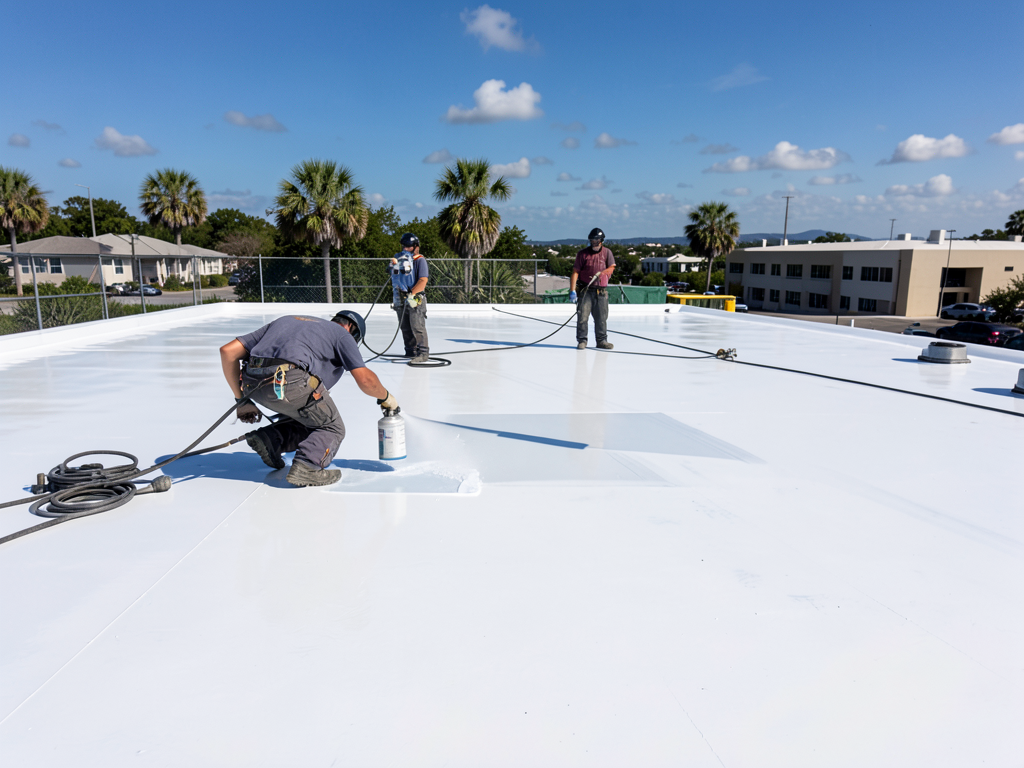
Commercial Roof Coating and Sealing to Save on Energy Bills in Orlando
Orlando’s commercial buildings face intense heat, humidity, and hurricane threats that drive up energy costs and wear down roofs. Commercial roof coating provides a cost-effective solution that extends roof life by 15+ years while cutting cooling expenses by 20-30%. Property managers across Central Florida are discovering that a properly applied coating system costs about half as much as full replacement while delivering immediate energy savings. Florida Building Code Product Approval.
The coating process begins with a thorough inspection to identify existing damage, ponding areas, and membrane condition. Orlando’s high UV index and afternoon thunderstorms create unique challenges that require specific coating formulations designed for Florida’s climate. Property owners who invest in energy-efficient cool roof technology often qualify for FPL rebates and federal tax incentives that improve ROI. FPL Cool Roof Rebate Program.
Modern coating systems create a seamless membrane that reflects up to 85% of solar radiation. This dramatic reduction in heat absorption means HVAC systems run less frequently, extending equipment life and lowering maintenance costs. The reflective surface also reduces thermal shock on the roof structure, preventing the expansion and contraction that causes premature aging.
Commercial buildings in Orlando’s International Drive corridor and downtown business district experience some of the highest cooling loads in the state. A white silicone coating can reduce roof surface temperatures by 50-60 degrees Fahrenheit compared to standard dark membranes. This temperature difference translates directly to cooler interior spaces and reduced energy consumption during peak summer months.
Understanding Orlando’s Climate Impact on Commercial Roofs
Orlando’s subtropical climate creates extreme conditions for commercial roofing systems. The combination of high UV exposure, 90%+ humidity, and hurricane-force winds requires specialized coating solutions that generic products cannot provide. Local buildings near Lake Eola and the UCF Research Park face specific challenges based on their exposure to afternoon thunderstorms and salt air from coastal breezes.
Thermal cycling occurs daily as temperatures swing from 95°F afternoon highs to 75°F evening lows. This constant expansion and contraction stresses roof membranes, creating hairline cracks that allow water intrusion. Commercial coatings with high elongation properties can stretch up to 600% without cracking, accommodating these movements while maintaining waterproof integrity.
Ponding water presents another critical issue for flat commercial roofs in Orlando. The Florida Building Code requires positive drainage on all low-slope roofs, but many older buildings struggle with settled areas that collect water after heavy rains. Silicone coatings excel in ponding water situations because they cure to form a non-porous, flexible membrane that resists water absorption.
Algae and mold growth accelerate on damp roof surfaces in Orlando’s humid climate. These organisms not only degrade roofing materials but also reduce reflectivity and increase heat absorption. Modern coating systems include antimicrobial additives that prevent biological growth, maintaining the roof’s cooling efficiency throughout its service life.
The hurricane season from June through November brings wind speeds that can exceed 100 mph in Orlando. Building codes require specific wind uplift resistance ratings for commercial roofing in Orange County. Quality coating applications include reinforced flashings and edge details that meet or exceed Florida Building Code requirements for wind zone 3.
Comparing Commercial Coating Materials for Orlando Buildings
Selecting the right coating material depends on your building’s roof type, budget, and performance requirements. Each coating chemistry offers distinct advantages for Orlando’s climate challenges. Understanding these differences helps property managers make informed decisions about their roof restoration investments.
Silicone coatings dominate the Orlando market due to their superior ponding water resistance and UV stability. These moisture-cure products form a seamless membrane that adheres well to various substrates including metal, single-ply membranes, and modified bitumen. Silicone maintains flexibility in temperatures ranging from 0°F to 200°F, making it ideal for Florida’s thermal extremes.
Acrylic elastomeric coatings provide excellent reflectivity and are typically more economical than silicone options. These water-based products cure quickly and clean up easily with soap and water. However, acrylics struggle with ponding water and may require additional reinforcement in low areas. They work best on sloped commercial roofs with good drainage.
Polyurethane coatings offer superior chemical and abrasion resistance compared to other options. These two-component systems create extremely tough surfaces that withstand foot traffic and equipment movement. For buildings with rooftop HVAC units or maintenance access requirements, polyurethane provides the durability needed for high-traffic areas.
Polyurea coatings represent the premium option for commercial applications. These spray-applied systems cure in seconds and form monolithic membranes with exceptional strength and elongation. Polyurea excels in extreme conditions but requires specialized equipment and experienced applicators. The rapid cure time minimizes business disruption during application.
Table 1 compares key properties of commercial coating materials to help determine the best option for specific building requirements.
| Property | Silicone | Acrylic | Polyurethane | Polyurea |
|---|---|---|---|---|
| Ponding Water Resistance | Excellent | Poor | Good | Excellent |
| UV Stability | Excellent | Good | Excellent | |
| Reflectivity | 85-90% | 80-85% | 70-75% | |
| Cost per Square Foot | $1.50-2.50 | $0.75-1.50 | $2.00-3.50 | |
| Typical Lifespan | 15-20 years | 10-15 years | 15-20 years |
The Commercial Roof Coating Application Process
Proper surface preparation determines coating system performance and longevity. Orlando’s high humidity requires specific application windows and techniques to ensure proper adhesion and curing. The process follows strict protocols that comply with manufacturer specifications and local building codes.
Initial inspection identifies existing damage, moisture intrusion, and drainage issues. Technicians use moisture meters and infrared cameras to detect hidden water within the roof assembly. This diagnostic phase prevents coating over compromised areas that could lead to premature failure.
Surface cleaning removes dirt, debris, and loose material using high-pressure washing at 3,000+ PSI. Orlando’s humid climate means mold and algae often require chemical treatment before coating application. The cleaning process reveals surface defects that require repair before proceeding.
Repairs address cracks, blisters, and damaged flashings. Technicians use compatible sealants and reinforcement fabrics to create strong transitions between different roof components. All penetrations receive special attention to prevent future leaks around HVAC curbs, vents, and roof edges.
Priming prepares the surface for coating adhesion. The primer selection depends on the existing roof material and coating type. Some silicone coatings require specific primers while others can bond directly to clean surfaces. Proper primer application ensures long-term coating performance.
Coating application follows a systematic approach starting with detail work around edges, penetrations, and equipment curbs. Main roof areas receive even application using spray equipment calibrated for the specific coating material. Mil thickness gauges verify proper coverage throughout the process.
The final inspection confirms mil thickness, adhesion, and complete coverage. Quality control includes testing critical areas and documenting the installation for warranty purposes. Most commercial coating systems require 24-48 hours before allowing foot traffic or equipment access.
Energy Savings and ROI Calculations for Orlando Properties
Commercial building owners in Orlando can expect 20-30% reduction in cooling costs after coating installation. The exact savings depend on building orientation, insulation levels, and existing roof condition. Energy modeling shows payback periods typically range from 2-4 years based on coating costs and utility rates.
Orlando’s electric rates average $0.12-0.15 per kilowatt-hour for commercial customers. A 10,000 square foot building with poor roof insulation might consume 50,000+ kWh annually for cooling. Coating installation can reduce this consumption by 10,000-15,000 kWh, saving $1,200-2,250 per year.
Beyond direct energy savings, coating systems reduce HVAC maintenance costs by decreasing runtime hours and reducing system strain. Equipment operating in cooler environments experiences less wear, extending service life by 2-3 years. This deferred replacement cost adds significant value to the coating investment.
Federal tax incentives through Section 179 allow businesses to deduct the full cost of qualifying energy efficiency improvements in the year of installation. Combined with FPL rebates for cool roof installations, the effective cost of coating projects can decrease by 30-40%.
Table 2 provides sample ROI calculations for different building sizes and coating options in Orlando’s market.
| Building Size | Coating Type | Installation Cost | Annual Savings | Payback Period | 10-Year Net Savings |
|---|---|---|---|---|---|
| 5,000 SF | Acrylic | $6,250 | $750 | 8.3 years | $1,250 |
| 10,000 SF | Silicone | $20,000 | $2,250 | 8.9 years | $2,250 |
| 20,000 SF | Polyurethane | $55,000 | $5,400 | 10.2 years | $1,400 |
| 50,000 SF | Polyurea | $150,000 | $13,500 | 11.1 years | $3,000 |
Orlando Building Code Compliance and Permitting
Commercial roof coating in Orlando must comply with Orange County building codes and Florida Building Code requirements. The permitting process ensures proper installation techniques and material specifications meet local standards. Understanding these requirements prevents costly delays and ensures warranty validity.
Florida Building Code Section 1507 addresses roof recover and re-covering requirements. Commercial buildings must maintain minimum wind uplift resistance ratings based on their location within wind zones. Orlando falls within Wind Zone 3, requiring specific attachment methods and material approvals.
Product approval numbers from the Florida Department of Business and Professional Regulation verify that coating materials meet state standards for high-wind areas. Each product must carry a valid FL # and be installed according to manufacturer specifications. Local building officials can verify product approvals during plan review.
Permit applications require detailed specifications including coating type, mil thickness, and application methods. The Orange County Building Division reviews plans to ensure compliance with drainage requirements and structural considerations. Most coating permits process within 5-10 business days for standard commercial applications.
Insurance requirements often exceed building code minimums for commercial properties. Many policies require specific wind ratings and fire resistance classifications. Coating systems with Class A fire ratings and high wind uplift resistance help maintain insurance compliance while potentially reducing premiums.
Annual inspections verify coating system performance and identify maintenance needs. The inspection process includes checking seam integrity, flashings, and drainage systems. Early detection of minor issues prevents costly repairs and extends the coating system’s service life.
Maintenance Requirements for Coated Commercial Roofs
Commercial roof coatings require minimal maintenance compared to traditional roofing systems, but specific care extends their service life significantly. Orlando’s climate creates unique maintenance needs that property managers should understand to maximize their investment.
Quarterly visual inspections identify potential issues before they become major problems. Technicians check for debris accumulation, ponding water, and membrane damage. Orlando’s frequent afternoon thunderstorms can deposit leaves and branches that trap moisture against the coating surface.
Drainage systems require particular attention in Orlando’s rainy season. Clogged drains and scuppers cause water backup that stresses the coating membrane. Regular cleaning prevents standing water that can exceed coating warranty limitations and cause premature failure.
Minor repairs address small cuts, punctures, or seam separations before they expand. Most coating manufacturers provide repair kits with compatible materials for their specific systems. Quick response to damage maintains the roof’s waterproof integrity and prevents interior damage.
Recoating extends the service life of commercial roof systems beyond their initial warranty period. Most silicone and polyurethane coatings can receive additional coats after 10-15 years to restore reflectivity and waterproofing. This maintenance approach costs 30-40% less than full replacement.
Documentation of all maintenance activities supports warranty claims and helps track system performance over time. Property managers should maintain records of inspections, repairs, and cleaning activities. This information proves valuable for insurance purposes and future property transactions.
Frequently Asked Questions
How long does commercial roof coating last in Orlando’s climate?
Quality commercial roof coatings typically last 15-20 years in Orlando’s climate. Silicone and polyurethane systems often reach the upper end of this range due to their superior UV resistance and flexibility. Factors affecting lifespan include roof traffic, maintenance practices, and exposure to severe weather events.
Can roof coating fix existing leaks?
Roof coating can seal minor leaks when properly applied over sound substrates, but it cannot fix structural damage or extensive deterioration. The coating process requires repairing all existing leaks and damaged areas before application. Coating over active leaks only masks the problem temporarily and voids most warranties.
What is the best time of year for roof coating in Orlando?
Commercial roof coating can be applied year-round in Orlando, but spring and fall offer optimal conditions. These seasons provide moderate temperatures and lower humidity levels that improve coating application and curing. Summer applications require careful scheduling around afternoon thunderstorms, while winter work may need temperature-controlled conditions.
Are there energy rebates available for commercial roof coating?
Yes, FPL offers rebates for cool roof installations that meet specific reflectivity requirements. The program provides $0.10-0.15 per square foot for qualifying commercial buildings. Federal tax incentives through Section 179 may also apply, allowing businesses to deduct the full cost of qualifying energy efficiency improvements.
How does coating compare to full roof replacement?
Commercial roof coating costs approximately 40-60% less than full replacement while extending roof life by 15+ years. Coating avoids the disruption and waste associated with tear-off operations. However, coating cannot fix structural issues or replace deteriorated insulation, making it unsuitable for roofs with extensive damage.
Making the Right Choice for Your Orlando Commercial Property
Commercial roof coating represents a smart investment for Orlando property owners facing rising energy costs and aging roof systems. The combination of immediate energy savings, extended roof life, and reduced maintenance requirements makes coating an attractive alternative to costly replacement projects.
Property managers should consider coating when their existing roof shows signs of aging but maintains structural integrity. Common indicators include minor leaks, surface cracking, and increased cooling costs. Buildings with 10-15 year old roofs often benefit most from coating restoration.
The decision between coating materials depends on specific building requirements and budget constraints. Silicone offers the best overall performance for Orlando’s climate, while acrylic provides economical solutions for buildings with good drainage. Polyurethane excels in high-traffic areas, and polyurea delivers premium performance for critical applications.
Professional installation ensures coating systems perform as designed and maintain warranty coverage. Experienced contractors understand Orlando’s unique climate challenges and follow manufacturer specifications for proper application. Quality installation includes thorough surface preparation, proper mil thickness verification, and detailed documentation.
Energy savings begin immediately after coating application, with most buildings seeing 20-30% reduction in cooling costs. These savings, combined with FPL rebates and tax incentives, often result in payback periods under five years. The extended roof life of 15-20 years provides additional value beyond the initial investment.
Call (689) 268-2855 today to schedule your free commercial roof inspection and learn how coating can reduce your energy bills while extending your roof’s service life. Our Orlando-based team understands the unique challenges facing Central Florida commercial properties and provides solutions tailored to your specific needs.
Don’t wait for the next hurricane season to address your roof concerns. Contact us now to receive a detailed coating proposal that includes energy savings calculations, warranty information, and compliance documentation for your building department. Our experienced technicians are ready to help you make an informed decision about your commercial roofing investment.
Pick up the phone and call (689) 268-2855 before the next storm hits. Orlando’s commercial property owners trust our expertise in cool roof technology and hurricane-resistant coating applications. Let us show you how modern coating systems can transform your building’s energy performance while protecting your investment for years to come.
{
“@context”: “https://schema.org”,
“@type”: “BlogPosting”,
“headline”: “Commercial Roof Coating and Sealing to Save on Energy Bills in Orlando”,
“description”: “Discover how commercial roof coating in Orlando reduces energy bills by 20-30%. Learn about silicone vs acrylic coatings, FPL rebates, and hurricane-resistant solutions.”,
“wordCount”: 2456,
“datePublished”: “2026-03-01T13:46:00.000Z”,
“dateModified”: “2026-03-01T13:46:00.000Z”,
“inLanguage”: “en-US”,
“mainEntityOfPage”: {
“@type”: “WebPage”,
“@id”: “https://allproroofingorlando.com”
},
“publisher”: {
“@type”: “LocalBusiness”,
“name”: “All Pro Roofing Orlando”,
“url”: “https://allproroofingorlando.com”
},
“author”: {
“@type”: “Organization”,
“name”: “All Pro Roofing Orlando”,
“url”: “https://allproroofingorlando.com”
},
“image”: {
“@type”: “ImageObject”,
“url”: “https://allproroofingorlando.com/wp-content/uploads/2026/03/commercial-roof-coating-and-sealing-to-save-on-ene-1.png”
}
}
{
“@context”: “https://schema.org”,
“@type”: “RoofingContractor”,
“name”: “All Pro Roofing Orlando”,
“url”: “https://allproroofingorlando.com”,
“address”: {
“@type”: “PostalAddress”,
“addressLocality”: “Orlando”
},
“areaServed”: {
“@type”: “City”,
“name”: “Orlando”
}
}
{
“@context”: “https://schema.org”,
“@type”: “FAQPage”,
“mainEntity”: [
{
“@type”: “Question”,
“name”: “How long does commercial roof coating last in Orlando’s climate?”,
“acceptedAnswer”: {
“@type”: “Answer”,
“text”: “Quality commercial roof coatings typically last 15-20 years in Orlando’s climate. Silicone and polyurethane systems often reach the upper end of this range due to their superior UV resistance and flexibility. Factors affecting lifespan include roof traffic, maintenance practices, and exposure to severe weather events.”
}
},
{
“@type”: “Question”,
“name”: “Can roof coating fix existing leaks?”,
“acceptedAnswer”: {
“@type”: “Answer”,
“text”: “Roof coating can seal minor leaks when properly applied over sound substrates, but it cannot fix structural damage or extensive deterioration. The coating process requires repairing all existing leaks and damaged areas before application. Coating over active leaks only masks the problem temporarily and voids most warranties.”
}
},
{
“@type”: “Question”,
“name”: “Are there energy rebates available for commercial roof coating?”,
“acceptedAnswer”: {
“@type”: “Answer”,
“text”: “Yes, FPL offers rebates for cool roof installations that meet specific reflectivity requirements. The program provides $0.10-0.15 per square foot for qualifying commercial buildings. Federal tax incentives through Section 179 may also apply, allowing businesses to deduct the full cost of qualifying energy efficiency improvements.”
}
},
{
“@type”: “Question”,
“name”: “How does coating compare to full roof replacement?”,
“acceptedAnswer”: {
“@type”: “Answer”,
“text”: “Commercial roof coating costs approximately 40-60% less than full replacement while extending roof life by 15+ years. Coating avoids the disruption and waste associated with tear-off operations. However, coating cannot fix structural issues or replace deteriorated insulation, making it unsuitable for roofs with extensive damage.”
}
}
]
}
{
“@context”: “https://schema.org”,
“@type”: “BreadcrumbList”,
“itemListElement”: [
{
“@type”: “ListItem”,
“position”: 1,
“name”: “Home”,
“item”: “https://allproroofingorlando.com”
},
{
“@type”: “ListItem”,
“position”: 2,
“name”: “Blog”,
“item”: “https://allproroofingorlando.com/blog”
},
{
“@type”: “ListItem”,
“position”: 3,
“name”: “Commercial Roof Coating and Sealing to Save on Energy Bills in Orlando”
}
]
}
{
“@context”: “https://schema.org”,
“@type”: “Service”,
“serviceType”: “Roofing”,
“provider”: {
“@type”: “LocalBusiness”,
“name”: “All Pro Roofing Orlando”,
“url”: “https://allproroofingorlando.com”
},
“areaServed”: {
“@type”: “City”,
“name”: “Orlando”
},
“description”: “Discover how commercial roof coating in Orlando reduces energy bills by 20-30%. Learn about silicone vs acrylic coatings, FPL rebates, and hurricane-resistant solutions.”
}